

A vintage garden fence is becoming a popular choice for homeowners who want to add character and timeless charm to their outdoor spaces. Unlike modern privacy fencing that often focuses on clean lines and solid panels, vintage inspired fences bring texture, craftsmanship, and a sense of history to the garden. Whether made from weathered wood, wrought iron, or traditional pickets, these fences help create an outdoor space that feels welcoming and established.

The appeal of vintage fencing comes from its ability to blend naturally with flowers, climbing plants, and traditional landscaping. Instead of standing out as a barrier, it becomes part of the garden itself. With thoughtful materials and classic details, a vintage fence can completely change the atmosphere of a front yard, backyard, or cottage garden without requiring a major renovation.
Choose Traditional Wooden Picket Fencing
One of the most recognizable vintage garden fence styles is the classic wooden picket fence. Its simple design works beautifully with cottage gardens, farmhouse landscapes, and traditional homes because it creates definition without blocking views of the surrounding flowers and greenery. Natural wood finishes, painted white pickets, or softly weathered boards all contribute to the relaxed appearance that makes this style so timeless. Keeping the fence slightly lower than modern privacy fencing also helps the garden feel open and inviting.
Add Wrought Iron Details
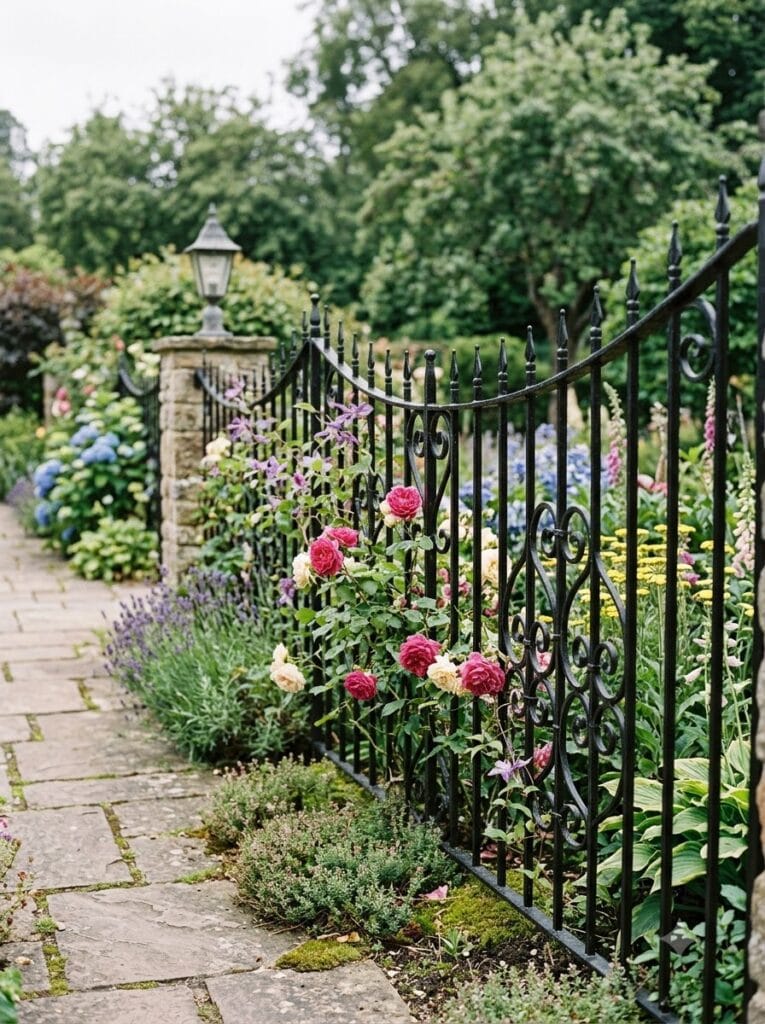
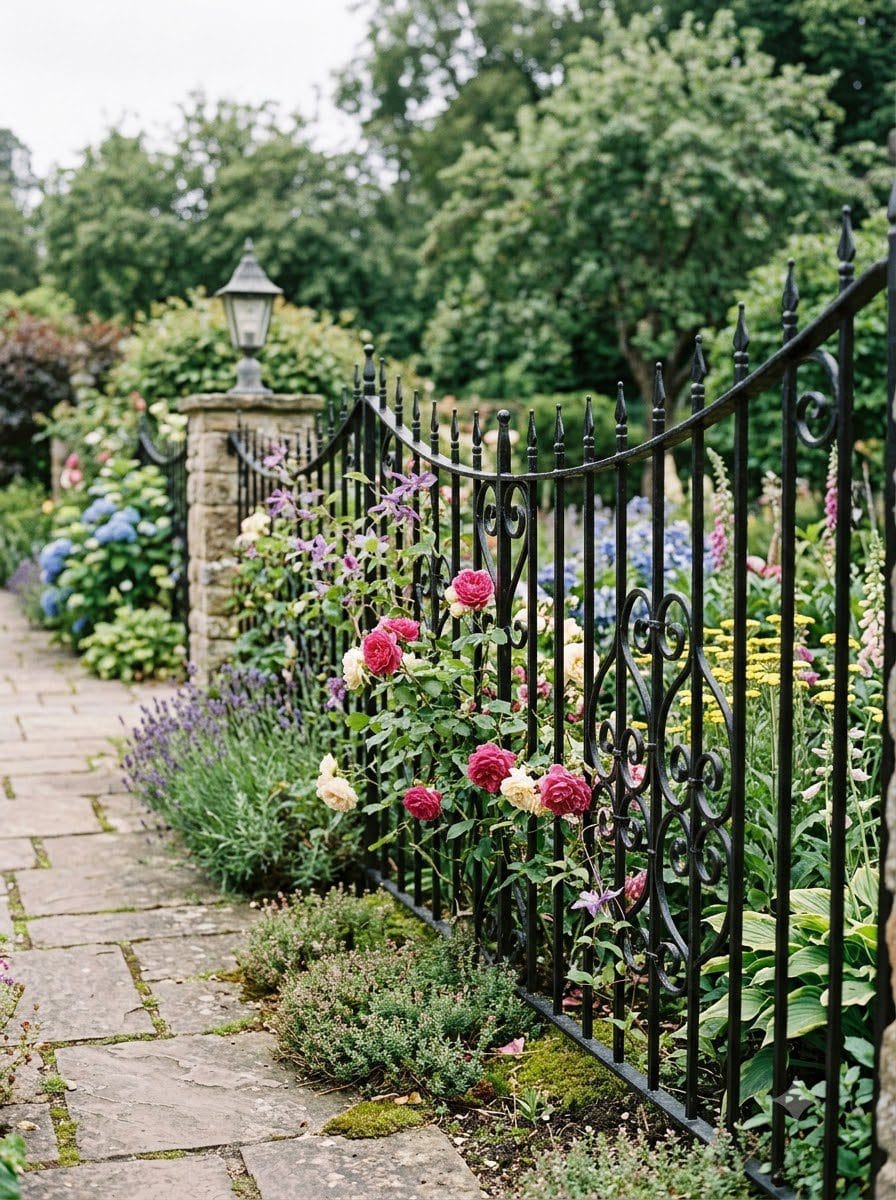
Wrought iron fencing introduces elegance while preserving the vintage character of the landscape. Decorative scrollwork, spear tops, and gently curved designs create visual interest without overwhelming the surrounding plants. Because iron fencing allows light and airflow to pass through, flowers and climbing vines remain visible from every angle. Combining black iron with colorful planting beds creates an attractive contrast that suits both formal and informal garden styles.
Let Climbing Plants Soften the Fence
A vintage garden fence looks even more established when climbing plants are encouraged to grow across parts of its surface. Roses, clematis, jasmine, honeysuckle, and ivy naturally soften straight lines while adding seasonal color and fragrance. Allowing plants to weave gently through the fence creates the impression that the garden has developed gradually over many years. Careful pruning keeps the plants healthy while preventing them from completely covering the fence’s decorative features.
Garden Tip
Choose climbing plants that suit your local climate and leave enough space between the fence and planting bed for healthy airflow and easier maintenance.
Use Weathered Natural Finishes
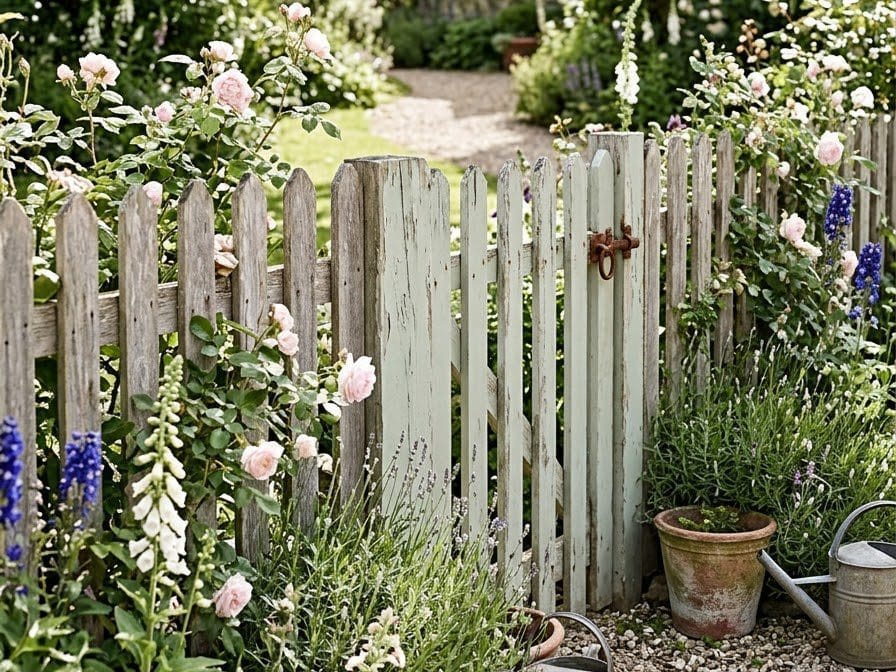
Perfectly polished finishes are not necessary for a vintage inspired garden. Softly aged wood, natural patina on metal, and lightly weathered paint all contribute to the authentic appearance that defines older garden fences. These finishes blend beautifully with surrounding plants while giving the landscape a relaxed character. If installing a new fence, selecting stains or paints that age gracefully helps recreate the timeless look without making the fence appear artificially distressed.
Include a Decorative Garden Gate
A charming gate often becomes the focal point of a vintage garden fence. Arched wooden gates, wrought iron entrances, or simple cottage style designs create an inviting transition between different parts of the garden. Decorative latches, traditional hardware, and climbing flowers surrounding the entrance strengthen the vintage atmosphere while making the outdoor space feel more personal. Even a modest gate can become a memorable feature when paired with thoughtful landscaping.
Pro Tip
Repeat the same wood or metal finish on planters, benches, or garden accessories to create a more cohesive outdoor design.
Pair the Fence With Cottage Style Planting
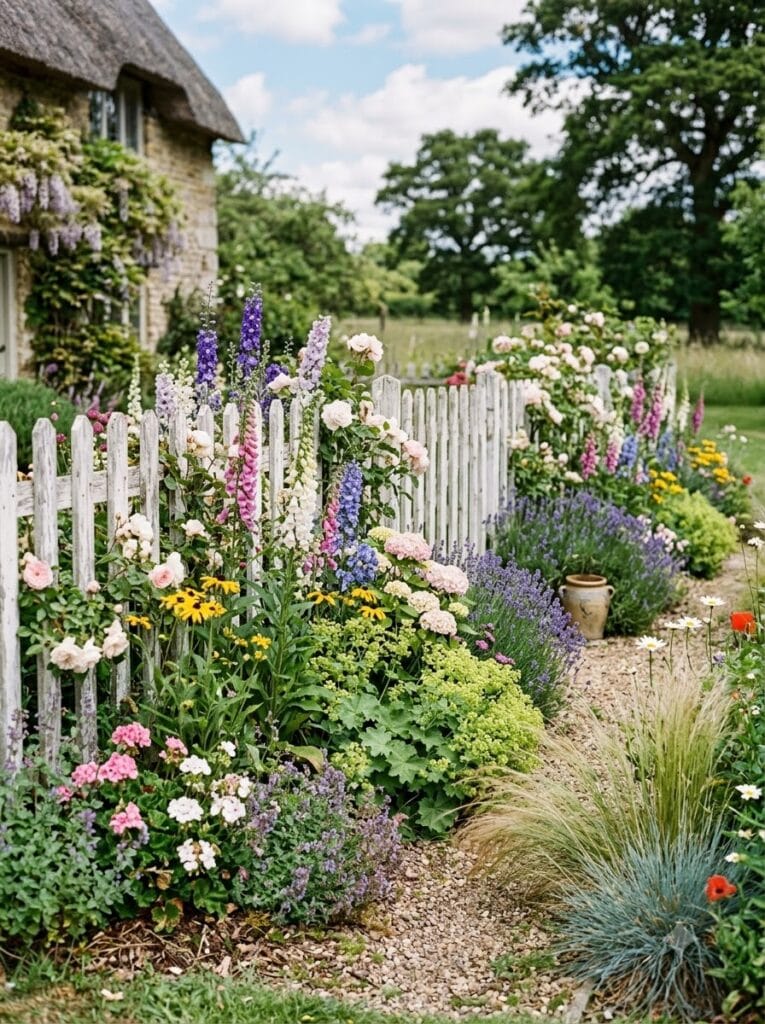
A vintage garden fence looks most natural when surrounded by abundant planting rather than wide areas of bare lawn. Layer flowering perennials, ornamental grasses, lavender, hydrangeas, foxgloves, daisies, and other cottage garden favorites along the fence line to soften its appearance. Mixing different plant heights creates depth while allowing the fence to peek through the greenery instead of disappearing completely. As the garden matures, the combination of flowers and traditional fencing develops the relaxed character that makes vintage landscapes so appealing.
Add Classic Garden Accessories
Traditional accessories help reinforce the timeless feel of a vintage garden without making the space feel overdecorated. Wooden benches, weathered terracotta pots, birdbaths, watering cans, and stone pathways all complement the fence while adding practical function and visual interest. Choosing a few carefully selected pieces instead of filling every corner with decorations allows the garden to feel collected over time rather than newly designed. These details also help connect the fence with the rest of the landscape.
Garden Tip
Leave enough planting space between the fence and pathways so flowers have room to grow naturally without blocking access for maintenance.
Mix Old and New Materials
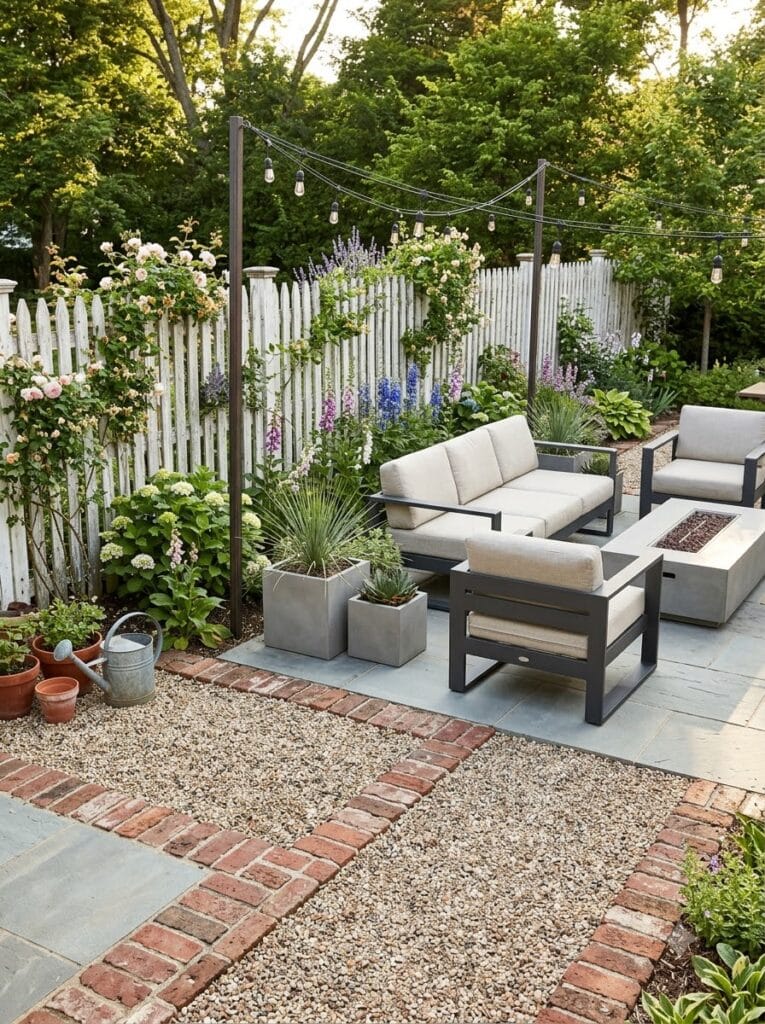
A vintage inspired garden does not require every feature to be antique. Combining a traditional fence with newer paving, modern outdoor furniture, or updated lighting can create a balanced landscape that feels timeless while remaining practical for everyday living. Natural stone, brick, gravel, and reclaimed wood blend especially well with vintage fencing because they share similar textures and age gracefully over time. Mixing materials thoughtfully helps the garden feel authentic rather than overly themed.
Maintain the Fence Naturally
Regular maintenance helps a vintage garden fence keep its character without allowing it to fall into disrepair. Clean away dirt, inspect for loose boards or rust, trim climbing plants when necessary, and refresh protective finishes as they wear. Allowing wood to weather gently or metal to develop a soft patina can enhance the vintage appearance, but structural repairs should never be ignored. Consistent care keeps the fence safe while preserving the timeless charm that makes it such an attractive garden feature.
Quick Fix
Refresh the area around the fence by removing weeds, trimming overgrown plants, and adding a fresh layer of mulch. Small improvements often make the entire fence look newer without replacing it.
Frequently Asked Questions
What is a vintage garden fence?
A vintage garden fence is a traditional style fence inspired by older garden designs, often featuring wooden pickets, wrought iron, weathered finishes, and classic craftsmanship.
What plants look best with a vintage garden fence?
Climbing roses, clematis, jasmine, lavender, foxgloves, hydrangeas, daisies, and other cottage garden plants pair beautifully with vintage style fencing.
Can a new fence look vintage?
Yes. Choosing traditional designs, natural materials, weathered finishes, and classic hardware can give a new fence the timeless appearance of an older garden feature.
What materials are best for a vintage garden fence?
Wood and wrought iron are the most popular choices because they develop character over time and complement both cottage and traditional garden styles.
Bottom Line
A vintage garden fence adds more than a boundary to your landscape. It introduces timeless character, defines outdoor spaces, and provides the perfect backdrop for flowers, climbing plants, and traditional garden features. With thoughtful materials and simple design details, it can make a new garden feel established while enhancing the overall charm of your outdoor space.
Focus on pairing the fence with natural planting, classic accessories, and finishes that age gracefully. A well maintained vintage garden fence becomes part of the landscape itself, creating a garden that feels welcoming, relaxed, and full of lasting character.