

The easiest way to keep kitchen appliances organized without losing counter space is to store rarely used appliances inside cabinets, group frequently used ones into a dedicated zone, and use vertical or hidden storage wherever possible. When learning how to organize kitchen appliances, start by deciding which appliances deserve permanent counter space and which can be stored away between uses. This keeps the kitchen functional while giving you more room for food preparation.
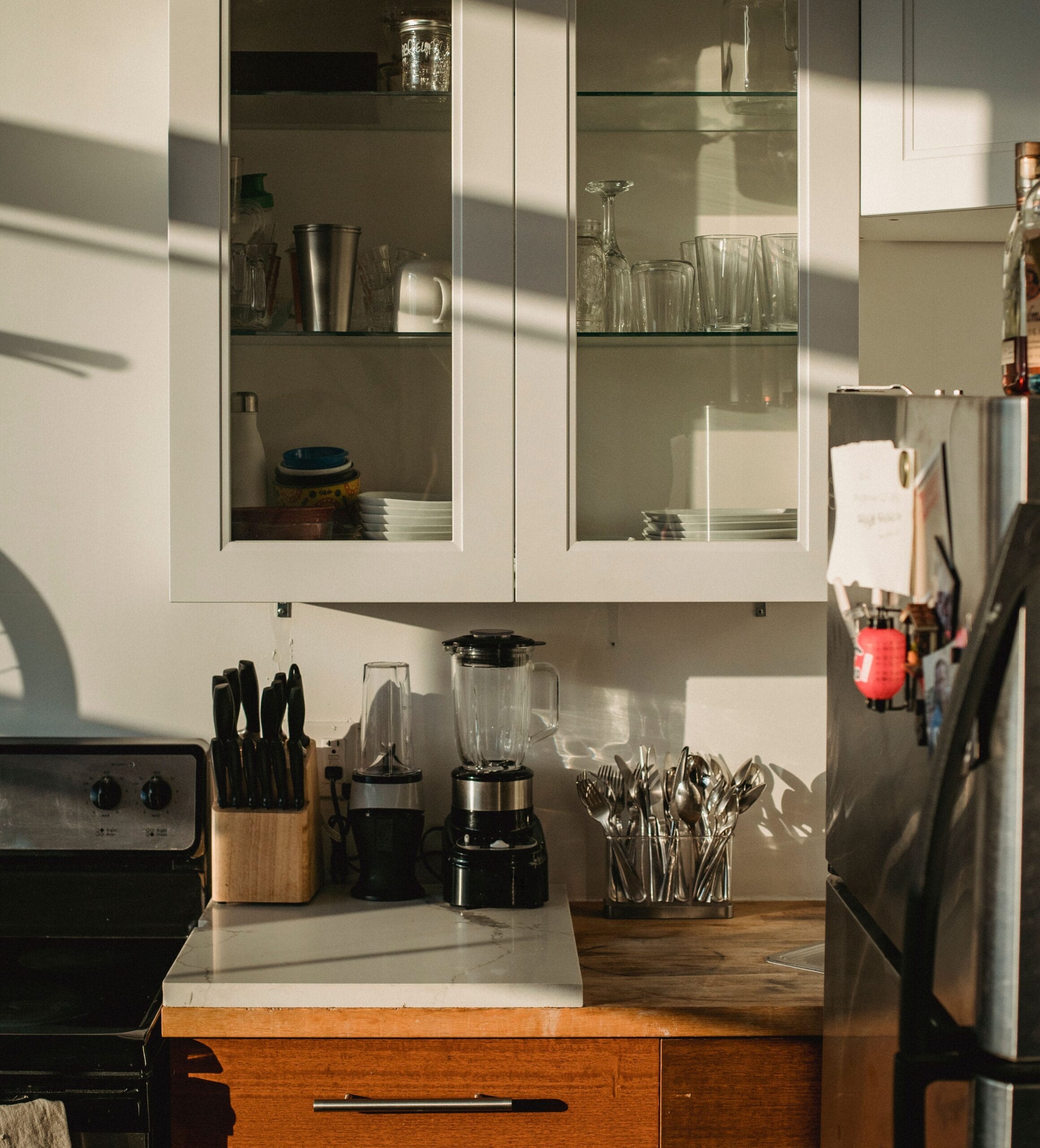
Kitchen appliances can quickly take over a countertop because many of them are bulky and awkward to store. Coffee makers, air fryers, blenders, mixers, toasters, and other tools all compete for the same limited surface area. A simple system based on frequency of use can make the kitchen much easier to maintain without requiring additional cabinets.
Keep Everyday Appliances Accessible
The appliances you use every day should be the easiest to reach, but they do not necessarily need to stay on the counter all the time. Store frequently used items in the most accessible cabinet or pantry area when possible, while keeping one or two appliances that are used constantly on the countertop. This prevents the counter from becoming a permanent appliance parking area while still keeping your routine convenient.
Create Appliance Zones
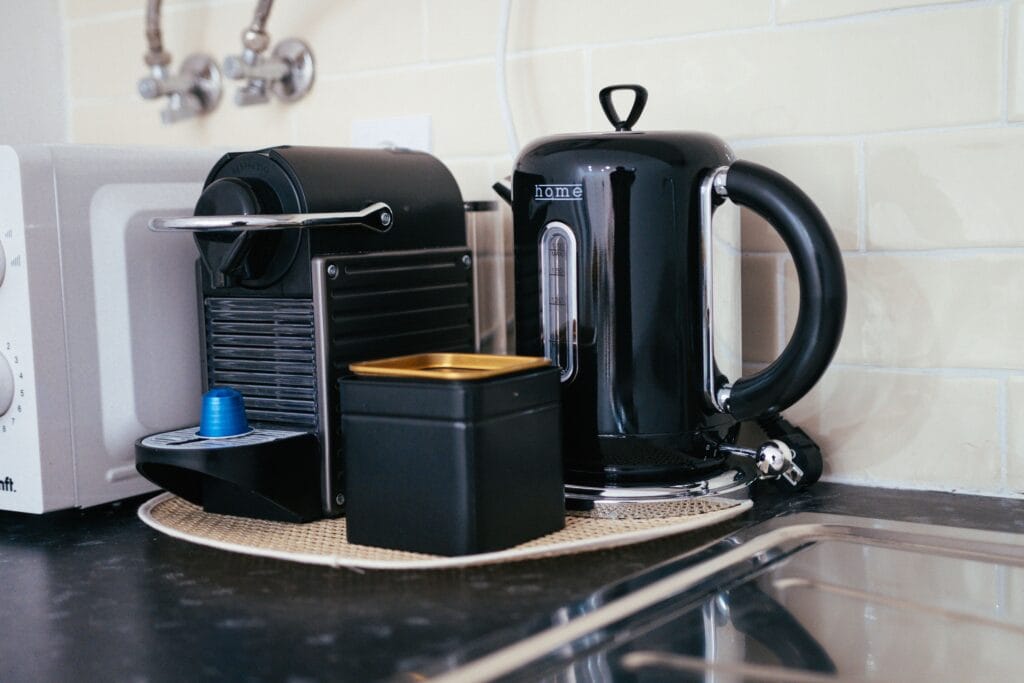
Grouping appliances according to how you use them can make a small kitchen more efficient. Keep the coffee maker, kettle, and mugs together if you have a coffee area, while storing the blender, food processor, and other preparation tools near your main workspace. Baking appliances can stay together in a cabinet or pantry section, while cooking appliances can be stored closer to the stove. Creating zones means you spend less time searching for appliances and makes putting everything away much easier.
Pro Tip
Store appliances near the area where they are actually used rather than wherever there happens to be empty space. A slightly less convenient cabinet can create a much better overall workflow when the rest of the kitchen stays organized.
Use Appliance Garages
An appliance garage can hide frequently used appliances while keeping them accessible. These enclosed spaces can sit beneath upper cabinets or inside a dedicated cabinet and provide a place for a coffee maker, toaster, blender, or other small appliance. When the doors are closed, the countertop looks much cleaner while the appliances remain nearby. Make sure the space has enough clearance for the appliance you plan to store there and avoid overcrowding the area.
Make Use of Deep Cabinets
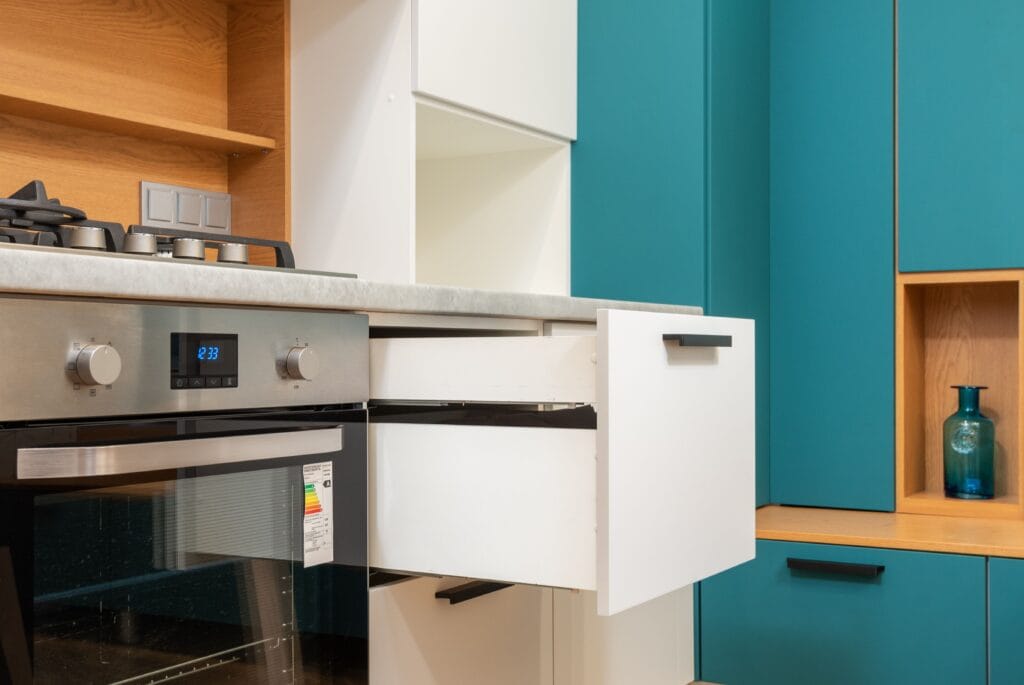
Deep cabinets are useful for larger appliances, but they can become difficult to manage when everything is stacked together. Use pull out shelves, baskets, or sturdy organizers to make heavy appliances easier to reach. Keep the appliances you use most often toward the front and move seasonal or occasional items farther back. This allows you to use deep storage without forgetting what you already own or constantly moving several appliances to reach one.
Use Vertical Cabinet Space
Tall cabinets often contain unused vertical space above or beside appliances. Adjustable shelves, shelf risers, and stacking solutions can help you use that space more efficiently. Store smaller appliances on one level and accessories or attachments above them where appropriate. Keeping heavier appliances on lower shelves can also make them easier to lift safely. Using vertical space means you can gain storage capacity without using another section of countertop.
Quick Fix
Look inside your largest kitchen cabinet and check whether there is unused space above the appliances. A shelf riser can sometimes create an extra storage level immediately.
Store Appliances on a Pantry Shelf
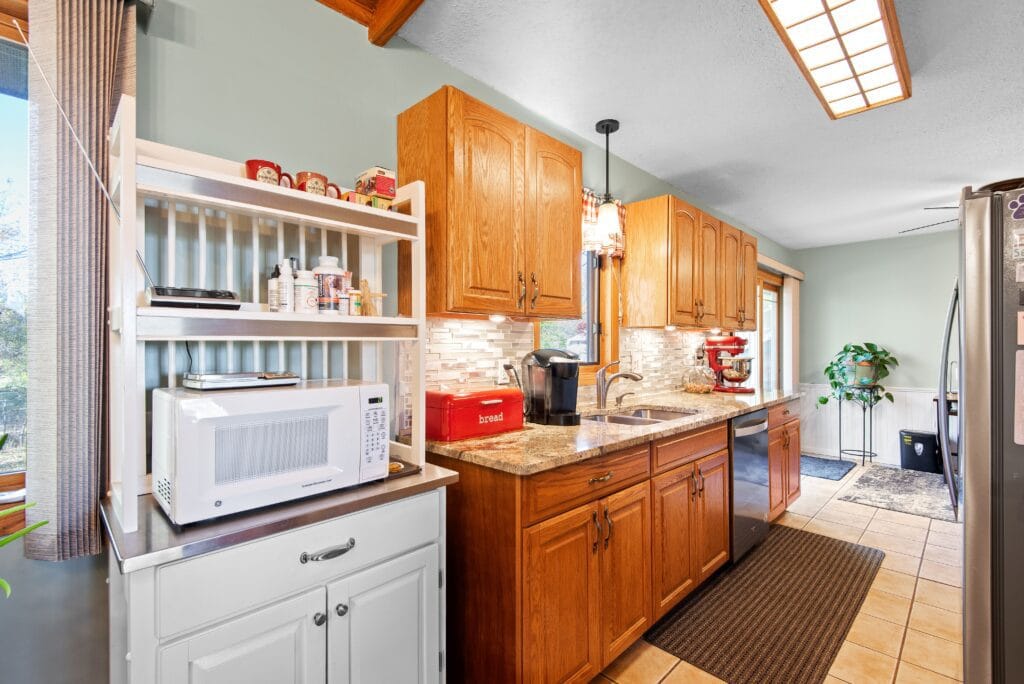
A pantry can be an excellent place for appliances that are used regularly but do not need permanent counter space. Dedicate one shelf to appliances and arrange them by size and frequency of use. Keep lighter items that you reach for often toward the front and larger or less frequently used appliances farther back. This approach can work especially well for air fryers, slow cookers, blenders, and other bulky appliances when the pantry has enough depth.
Use a Rolling Cart for Bulky Appliances
A slim rolling cart can provide flexible appliance storage when cabinets and pantry space are limited. Use it for appliances that are too large for regular cabinets and move the cart closer to your workspace when needed. A cart can also keep attachments and accessories together instead of spreading them throughout multiple drawers. Choose a sturdy design and position it somewhere that does not interfere with the main kitchen walkway.
Time Saver
Measure the width of the cart and the area where you plan to store it before buying. Make sure it can move in and out easily without blocking cabinets or doors.
Remove Appliances You Rarely Use

Some appliances take up valuable storage and counter space despite being used only once or twice a year. Review your collection and consider whether each appliance earns the space it occupies. Duplicate appliances, outdated models, or gadgets that rarely leave the cabinet may be better removed or stored elsewhere. Fewer appliances make the entire storage system easier to maintain and give you more room for the tools you genuinely rely on.
Keep Appliance Accessories Together
Attachments, cords, blades, bowls, and other accessories can make appliance storage much harder when they are separated from the main appliance. Keep related pieces together in one bin, drawer, or cabinet section so everything is easy to find. Use dividers or containers for small attachments and keep cords neatly contained. A well organized accessory area prevents loose parts from spreading throughout the kitchen and taking over valuable drawer space.
Frequently Asked Questions
How do I organize kitchen appliances in a small kitchen?
Keep only the appliances you use constantly on the counter and store the rest in cabinets, pantry shelves, appliance garages, or other designated areas. Group appliances into zones based on how you use them.
Which kitchen appliances should stay on the counter?
Appliances you use every day or several times a day are the strongest candidates for permanent counter space. Everything else can usually be stored nearby and brought out when needed.
How do I store large kitchen appliances?
Use deep cabinets, pantry shelves, rolling carts, or dedicated lower storage. Pull out shelves and sturdy organizers can make heavy appliances easier to access.
How can I keep appliance cords organized?
Keep each cord with its appliance and use simple cord ties or storage containers to prevent loose cables from spreading through drawers and cabinets.
Where should I store an air fryer in a small kitchen?
A lower cabinet, pantry shelf, appliance garage, or sturdy rolling cart can work well depending on the size of the air fryer and how often you use it. Keep it close enough to the cooking area that storing it away does not become inconvenient.
Bottom Line
Knowing how to organize kitchen appliances is mainly about deciding what deserves easy access and what can be stored away. Create appliance zones, use cabinets and pantry shelves efficiently, take advantage of vertical space, and keep accessories together so the kitchen stays organized without sacrificing valuable counter space.
A clear countertop does not mean giving up convenient appliances. When each appliance has a designated home based on how often and where you use it, the kitchen becomes easier to cook in, easier to clean, and much more functional.