
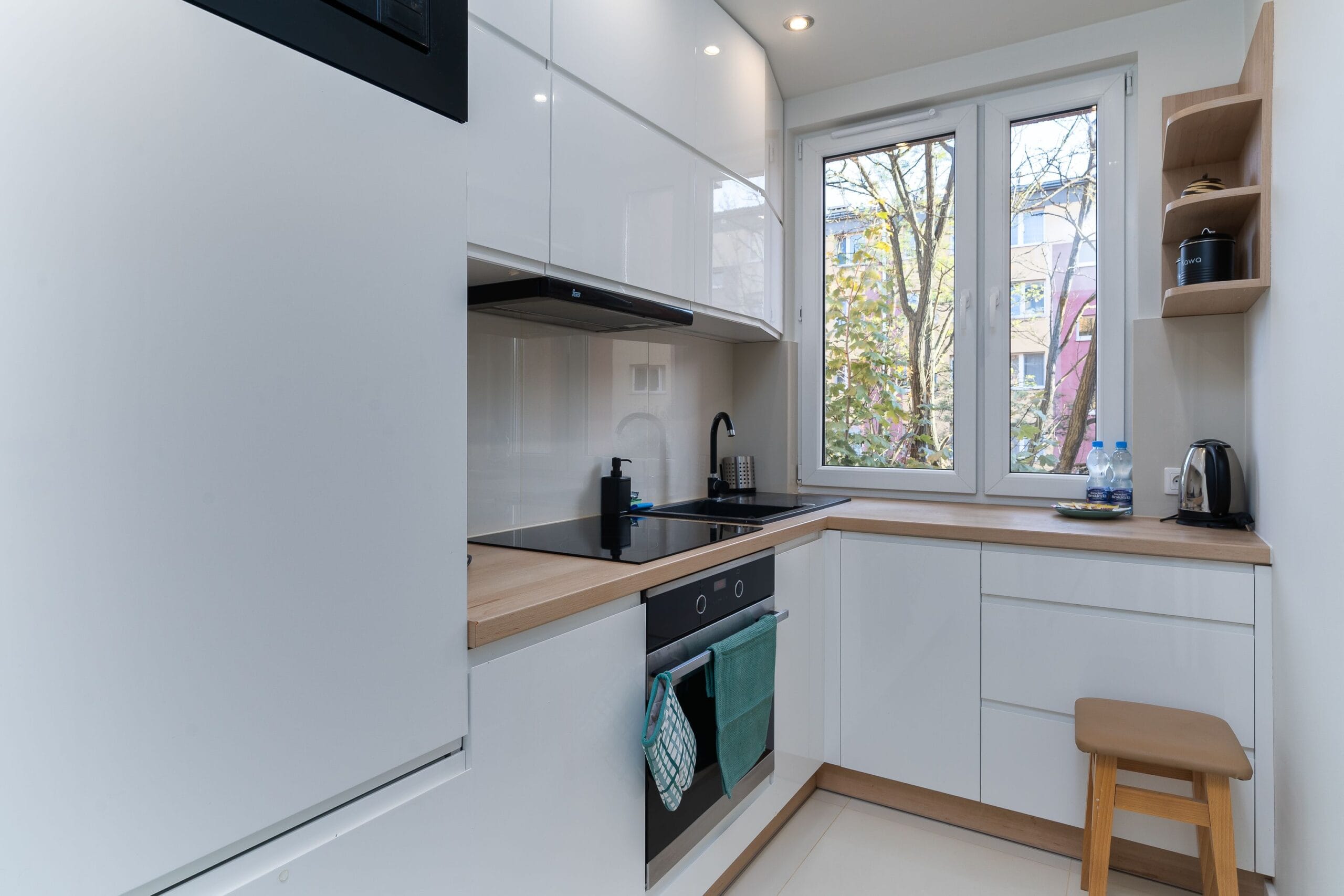
The easiest way to keep a small kitchen clutter free is to remove items you rarely use, give everyday essentials a designated home, use vertical storage, and keep countertops reserved for the things you use regularly. When learning how to organize a small kitchen, focus on making frequently used items easy to reach while moving occasional items into less convenient storage areas. This approach creates more usable space without adding more cabinets.
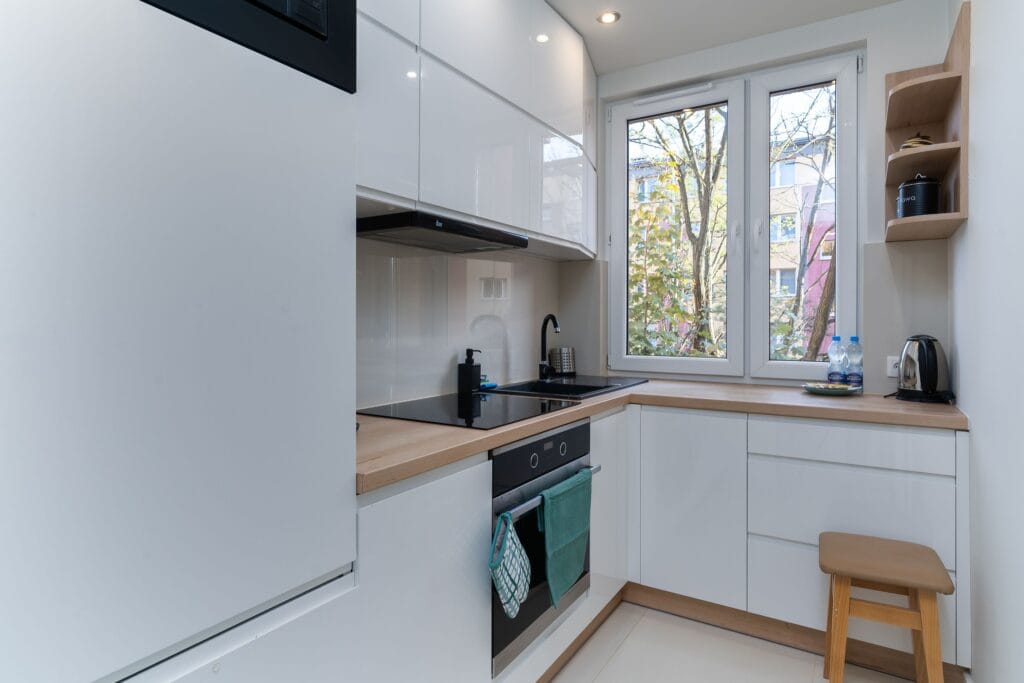
A small kitchen can feel crowded very quickly because cabinets, drawers, countertops, and shelves all have limited capacity. The goal is not to store more things but to use the available space more efficiently. Simple zones, better storage habits, and regular decluttering can make the kitchen easier to cook in and much easier to maintain.
Start by Removing Unused Items
Before reorganizing anything, take everything out of the cabinets, drawers, and pantry areas that need attention and decide what you actually use. Duplicate utensils, expired food, gadgets you never reach for, mismatched containers, and items that have not been used in a long time can take up valuable space. Removing unnecessary items gives the kitchen more breathing room and makes it much easier to see which storage solutions are genuinely needed.
Organize the Kitchen by Zones
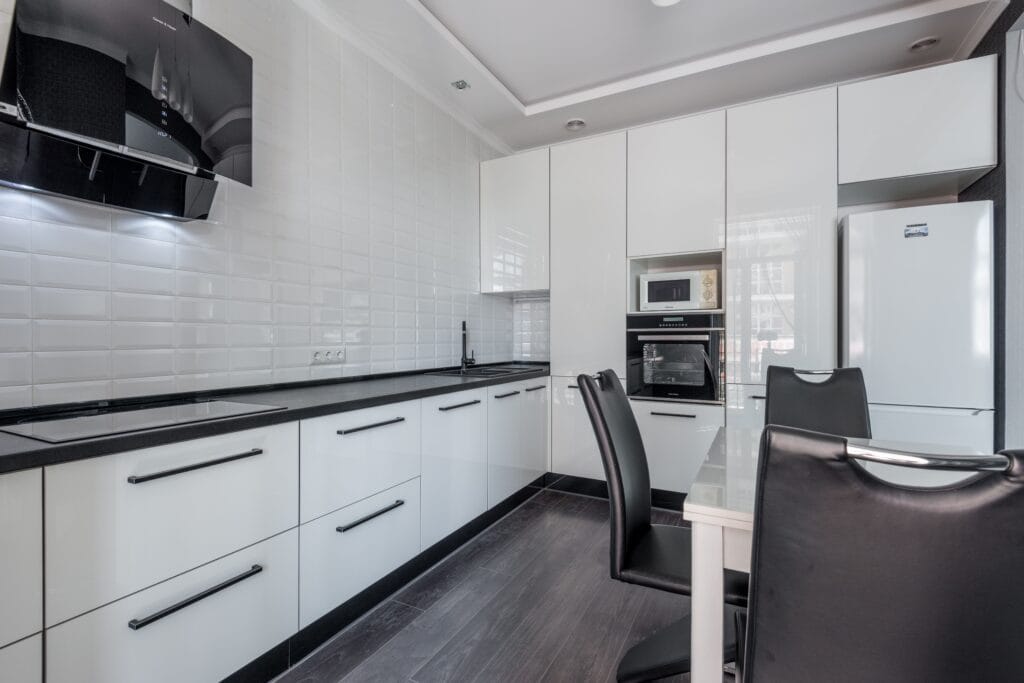
Creating zones based on how you use the kitchen can make a small space much more efficient. Keep cooking utensils, pots, pans, and seasonings close to the stove, while food preparation tools should stay near your main workspace. Store coffee or tea supplies together and keep everyday dishes near the area where they are most often used. Organizing by activity reduces unnecessary movement and makes it easier to put things away after cooking.
Pro Tip
Think about what you reach for together rather than storing items only by category. Keeping related items close can make a small kitchen feel much more efficient.
Use Vertical Space
Walls, cabinet doors, and the space above shelves can provide additional storage without taking up valuable floor or countertop space. Wall mounted racks, hooks, magnetic strips, shelf risers, and narrow shelves can hold frequently used items while keeping work surfaces clear. Vertical storage is especially useful for small kitchens because it takes advantage of space that often goes unused. Keep the most frequently used items within easy reach and reserve higher areas for things you only use occasionally.
Keep Countertops as Clear as Possible
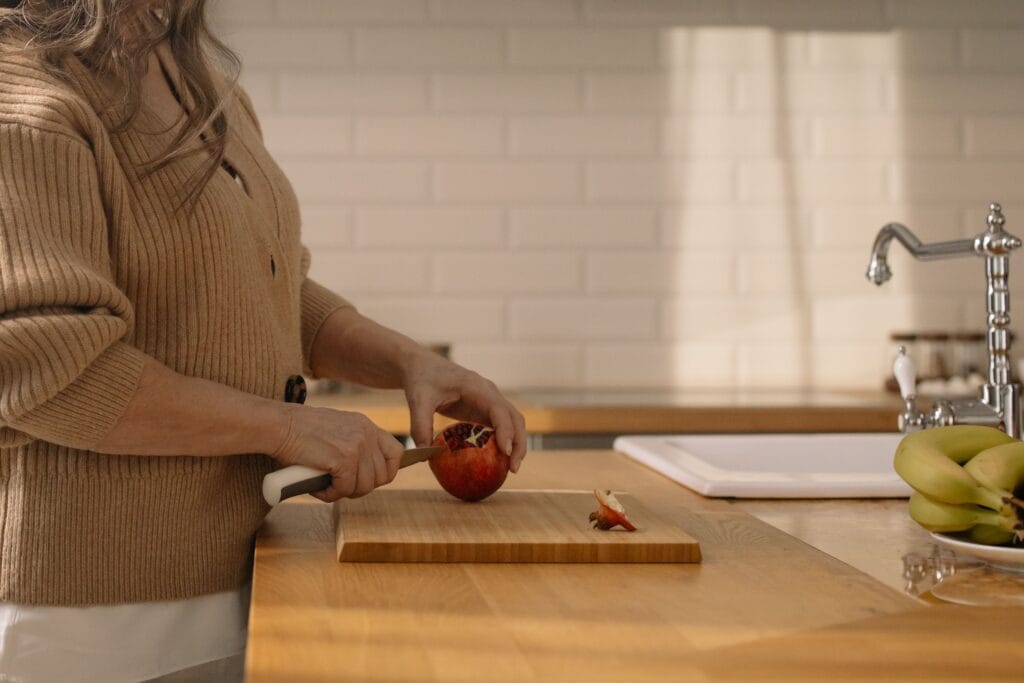
Countertops are valuable work surfaces, so using them as permanent storage can make a small kitchen feel much more crowded. Keep only appliances and objects that you use regularly, and find storage homes for everything else. Moving decorative items, spare containers, paperwork, and rarely used appliances off the counters can immediately make the kitchen feel larger. Clear workspace also makes cooking and cleaning much easier.
Quick Fix
Choose three items currently sitting on the countertop and find permanent homes for them today. Small changes like this can quickly restore useful workspace.
Make the Most of Cabinet Doors
The inside of cabinet doors can provide useful hidden storage for small kitchen essentials. Narrow racks can hold spices, cleaning supplies, measuring tools, or wraps without taking up shelf space. Hooks can also provide a place for lightweight utensils or towels. Before installing anything, check that the door still closes properly and that the added storage does not interfere with shelves or cabinet contents.
Improve Drawer Organization
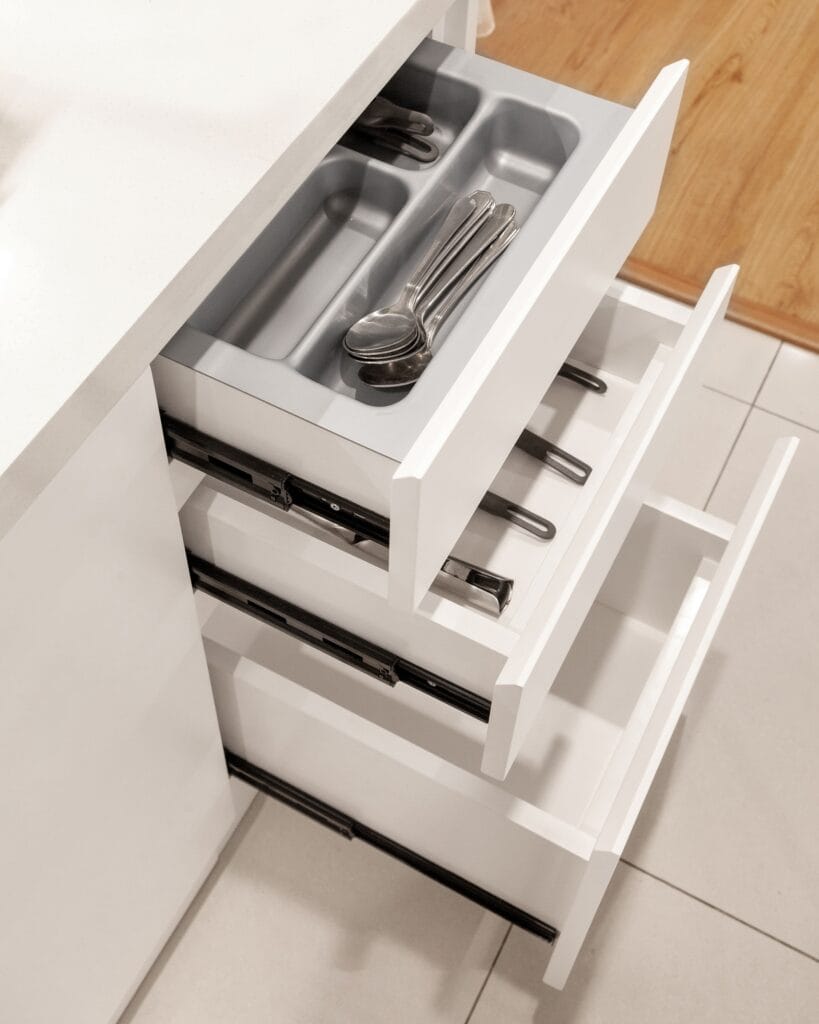
Kitchen drawers can become cluttered when unrelated items are mixed together. Use simple dividers to create sections for utensils, measuring tools, cooking accessories, and other frequently used objects. Store similar items together and keep the things you use most often toward the front. Avoid filling drawers completely because overpacked spaces make it harder to find what you need and encourage clutter to build up again.
Make Deep Cabinets Easier to Use
Deep cabinets can provide plenty of storage but often become difficult to access when items disappear toward the back. Pull out containers, baskets, shelf risers, and clear bins can make these spaces easier to see and reach. Keep frequently used items toward the front and less frequently used items farther back or higher up. Better visibility can also prevent duplicate purchases because you can immediately see what you already own.
Storage Tip
Use matching or clearly labeled containers in deep storage areas so you can identify what is inside without moving several items first.
Store Rarely Used Items Elsewhere
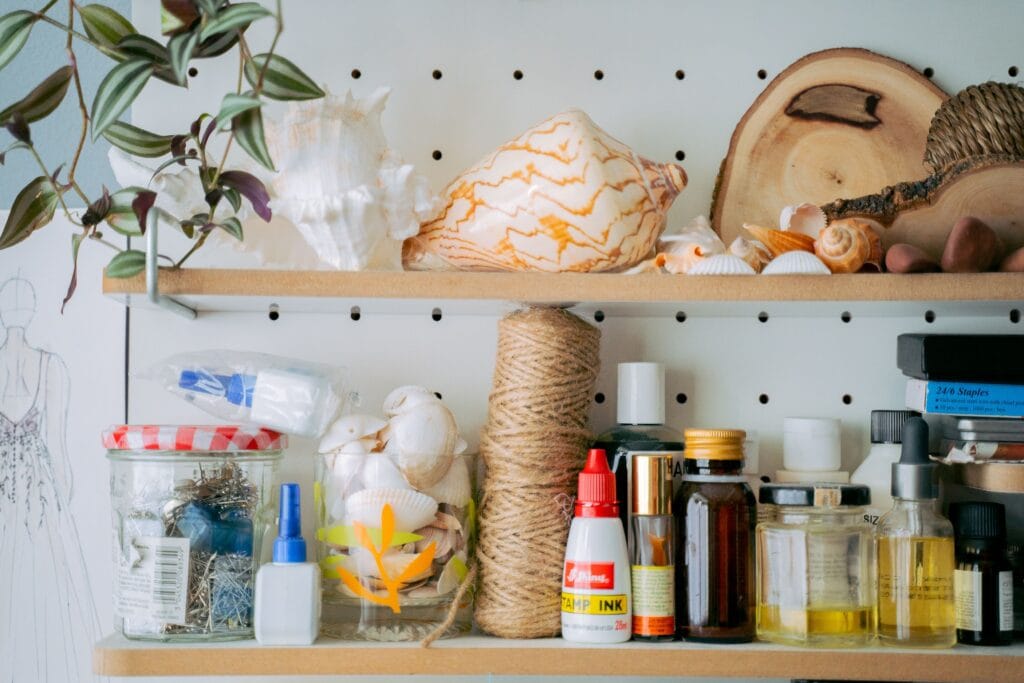
Prime kitchen storage should be reserved for things you use regularly. Holiday serving pieces, specialty appliances, large entertaining dishes, and seasonal items can often be stored in higher cabinets or another suitable storage area. Moving these occasional items away from your most convenient storage locations gives everyday essentials more room and makes the kitchen easier to use.
Create a Simple Daily Reset
Keeping a small kitchen organized is much easier when you spend a few minutes resetting it every day. Put ingredients away after cooking, return utensils to their designated locations, clear the countertops, and make sure dishes are not left sitting in unnecessary places. A short daily reset prevents small amounts of clutter from becoming an overwhelming task later. Consistent habits are often more effective than reorganizing the entire kitchen repeatedly.
Time Saver
Spend five minutes resetting the kitchen before going to bed. Starting the next morning with clear counters and organized essentials makes the space much easier to use.
Frequently Asked Questions
How do I organize a small kitchen with little storage?
Start by removing unused items, then organize the remaining essentials into activity zones. Use vertical storage, cabinet door organizers, shelf risers, and drawer dividers to make better use of the available space.
How do I keep my small kitchen countertops clear?
Store appliances and objects that are not used regularly inside cabinets or other designated storage areas. Keeping countertops reserved for everyday essentials and food preparation gives you more usable workspace.
Where should I store items I rarely use?
Place occasional items in higher cabinets, less convenient storage areas, or another suitable part of the home. Keep your easiest to reach storage for things you use daily or weekly.
How often should I declutter a small kitchen?
A quick review every few months can help prevent cabinets and drawers from becoming overcrowded. You can also remove individual items whenever you notice something is no longer useful.
What is the best way to organize kitchen drawers?
Group similar items together, use dividers to create sections, and place frequently used tools toward the front. Avoid packing drawers so tightly that you cannot easily see or reach what is inside.
Bottom Line
Knowing how to organize a small kitchen is mostly about using the space intentionally rather than trying to fit more things into it. Remove unused items, create practical zones, use vertical and hidden storage, keep countertops clear, and make everyday essentials easy to reach.
A small kitchen can remain functional and clutter free when every item has a clear place and the storage system supports the way you actually cook. A few simple habits can make the space feel more open, easier to clean, and much more comfortable to use every day.