
The easiest way to keep a small living room functional is to choose furniture that fits the space, use vertical storage, keep walkways clear, and avoid filling every corner with décor. When thinking about how to decorate a small living room, focus first on how you need the room to work, then choose pieces that provide comfort and storage without taking over the available floor space. A simple layout, lighter visual elements, and furniture that serves more than one purpose can make a compact room feel much easier to live in.
Small living rooms often need to serve several purposes at once. The space may need to accommodate seating, entertainment, storage, and sometimes a workspace or dining area. The best approach is to create clear zones while keeping the overall layout open enough for comfortable movement.
Choose Furniture That Fits the Room
The size of your furniture matters more than the number of pieces you own. Choose a sofa that leaves enough space for walking, then add a compact chair or ottoman only if the layout allows it. Furniture with slim arms, raised legs, or a lighter visual profile can help the room feel more open. Measure the available space before buying anything and consider door openings, windows, and walking paths so the furniture does not make movement difficult.
Use Multifunctional Furniture
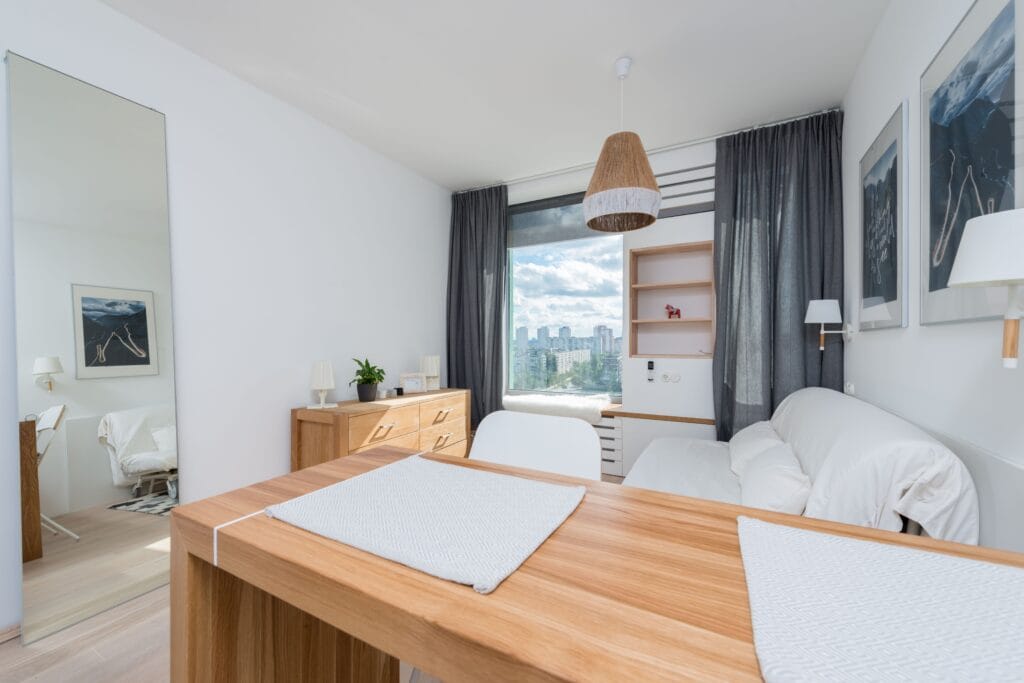
Multifunctional furniture can make a major difference in a compact living room because one piece can serve several purposes. An ottoman can provide seating, act as a coffee table, and offer hidden storage, while a storage bench can work as both seating and organization. Nesting tables can also be separated when needed and tucked together when you need more floor space. Choosing flexible furniture helps the room adapt to different activities without requiring additional pieces.
Pro Tip
Before buying a multifunctional piece, decide which functions you will actually use. A compact item that solves a real problem is more useful than a larger piece with features you rarely need.
Keep the Center of the Room Open
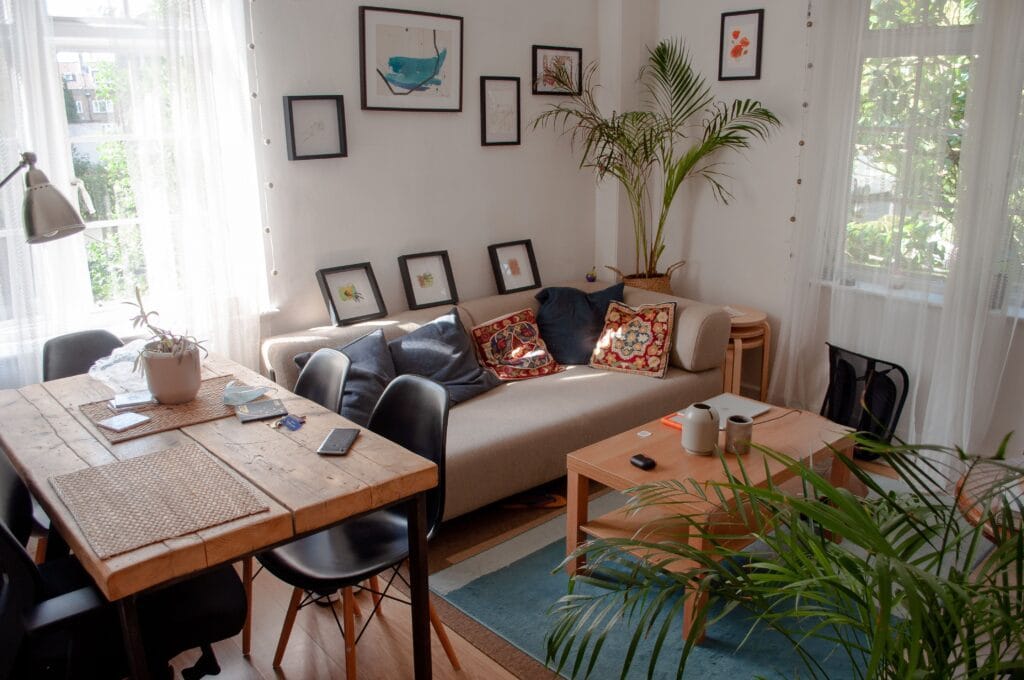
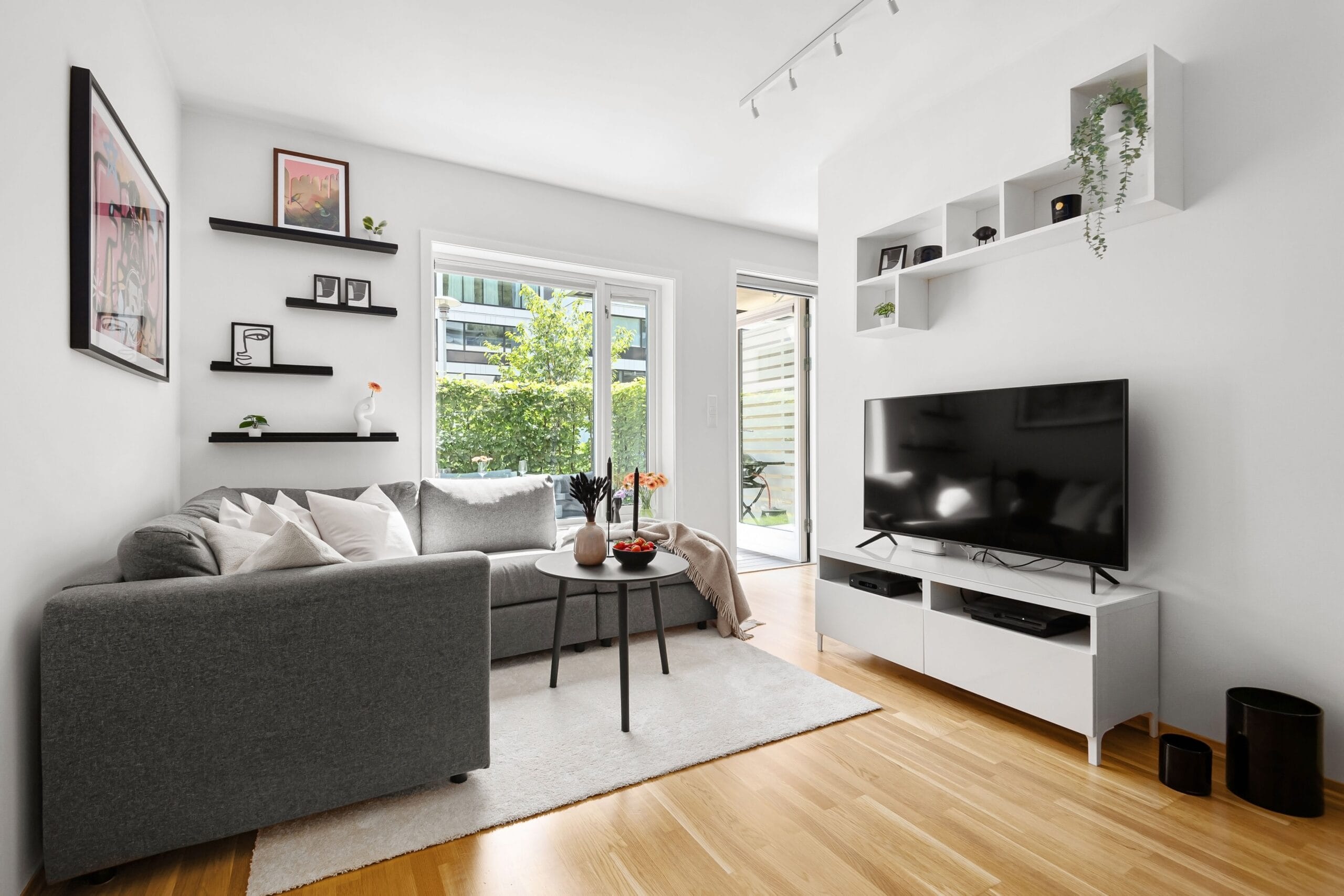
Open floor space is one of the most valuable features in a small living room. Avoid placing unnecessary tables, stools, or decorative objects in the main walking area because they can make the room feel cramped. Position the main seating along the edges when appropriate, then create a clear path through the room. Even a modest amount of visible floor can make a compact space feel noticeably more spacious and easier to navigate.
Use Vertical Storage
When floor space is limited, look upward. Wall mounted shelves, tall bookcases, floating cabinets, and vertical storage units can provide useful space without taking up much floor area. Use closed storage for items that create visual clutter and open shelves for a small selection of books, artwork, or decorative objects. Keeping storage organized and using the walls efficiently allows the floor to remain open while giving everything a designated place.
Choose a Light Visual Palette
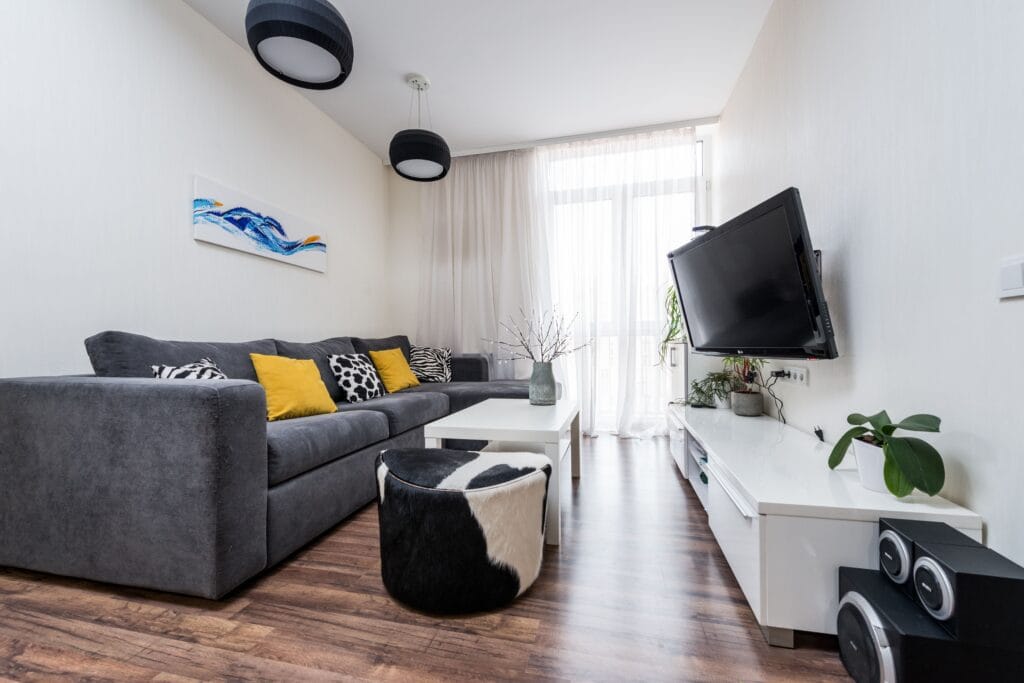
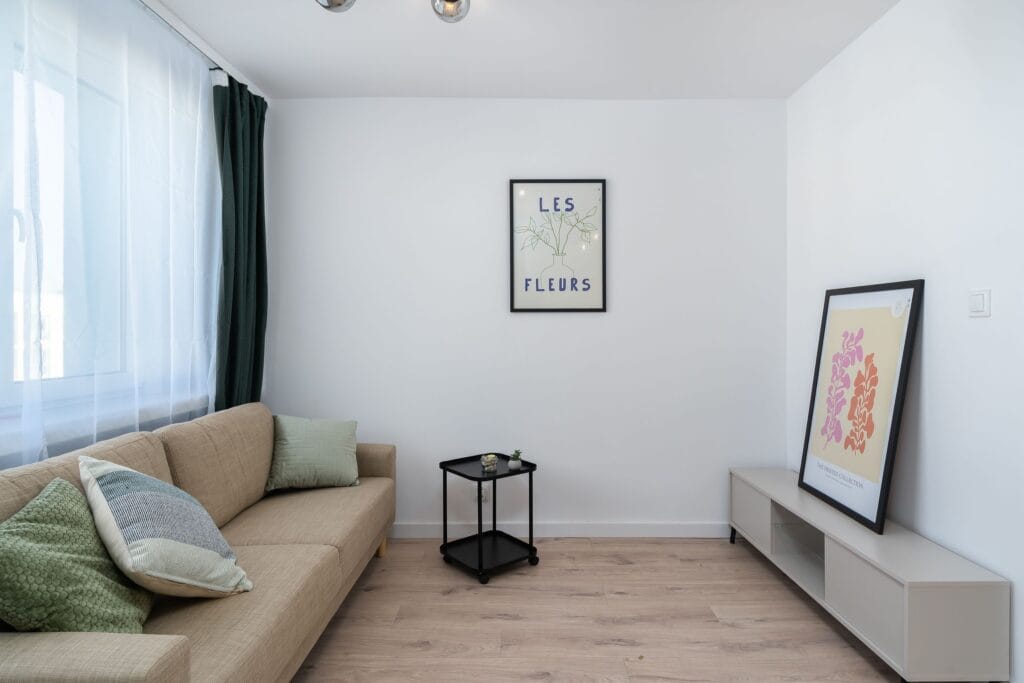
Lighter colors can help a small living room feel more open, especially when used across walls, curtains, rugs, and larger furniture pieces. Warm white, cream, beige, soft gray, and muted natural shades can reflect available light while creating a calm foundation. You can still introduce darker colors through artwork, cushions, lighting, or smaller furniture pieces. Keeping the largest surfaces relatively light helps prevent the room from feeling visually crowded.
Quick Fix
Remove one piece of furniture that is rarely used and see how the room feels for a few days. Creating extra floor space can make a bigger difference than adding another storage solution.
Use a Properly Sized Rug
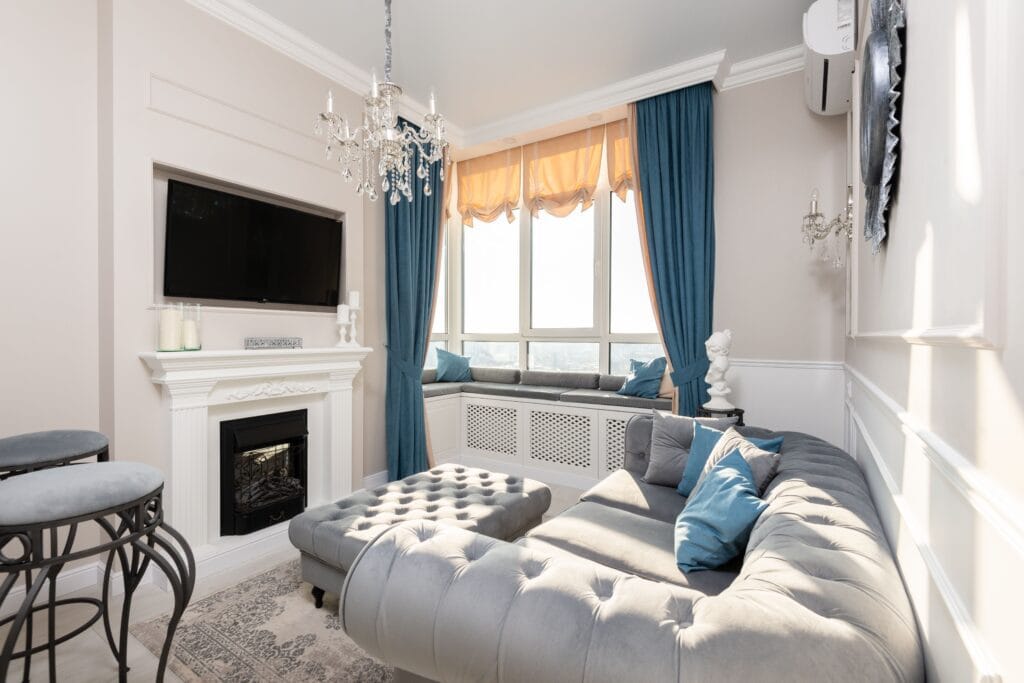
A rug can help define the seating area while making the room feel more cohesive. Choose a size that is large enough to connect the sofa and nearby seating instead of using a very small rug that only sits beneath the coffee table. Placing at least the front legs of the main seating on the rug can visually unite the furniture. A subtle pattern or textured neutral rug can add interest without overwhelming the room.
Add Mirrors Strategically
A well placed mirror can help reflect light and create a stronger sense of depth. Position one opposite a window when possible so it can reflect natural light into the room, or use it across from a lighter wall to make the space feel more open. A large simple mirror can often have more impact than several small decorative pieces. Choose a frame that complements the existing furniture so the mirror feels like part of the room rather than an isolated feature.
Time Saver
Use painter’s tape to mark the intended size of a mirror or large piece of furniture on the wall and floor before installing or buying it. This makes scale much easier to judge.
Keep Décor Selective
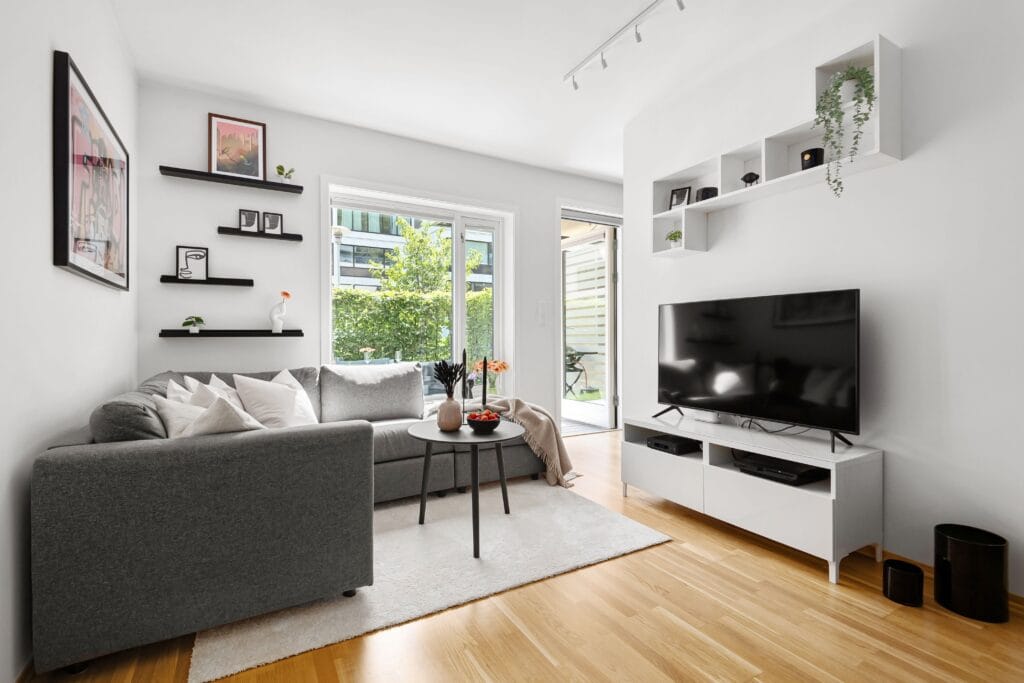
Small rooms can become visually crowded quickly when too many accessories are placed on shelves, tables, and walls. Choose a few pieces that add personality or function and leave some empty space around them. A plant, framed artwork, books, and one decorative object may be enough to make the room feel personal. Keeping surfaces relatively clear also makes regular cleaning and organization much easier.
Frequently Asked Questions
How do I make a small living room look bigger?
Use appropriately scaled furniture, keep walking paths open, choose lighter larger surfaces, add a properly sized rug, and use mirrors to reflect light and create more visual depth.
What furniture works best in a small living room?
Slim sofas, compact accent chairs, storage ottomans, nesting tables, wall mounted storage, and multifunctional furniture can all work well because they provide useful functions without overwhelming the room.
Should furniture be against the walls in a small living room?
Not always. Some furniture can sit slightly away from the walls if the layout allows it, but the main priority should be maintaining comfortable walking paths and making effective use of the available space.
How do I add storage without making a small living room feel crowded?
Use vertical storage, closed cabinets, floating shelves, storage ottomans, and furniture with built in compartments. Keeping items contained helps the room maintain a cleaner appearance.
How many decorative items should I use?
There is no fixed number, but fewer well chosen pieces usually work better than filling every surface. Leave some empty space so the room can breathe visually.
Bottom Line
Knowing how to decorate a small living room is mainly about making every piece earn its place. Choose furniture that fits the room, use multifunctional pieces, keep the center open, take advantage of vertical storage, and use lighter colors and selective décor to maintain a sense of space.
A functional small living room does not need to feel empty. When the layout is planned around daily life and every piece has a clear purpose, even a compact space can feel comfortable, organized, and easy to enjoy.