

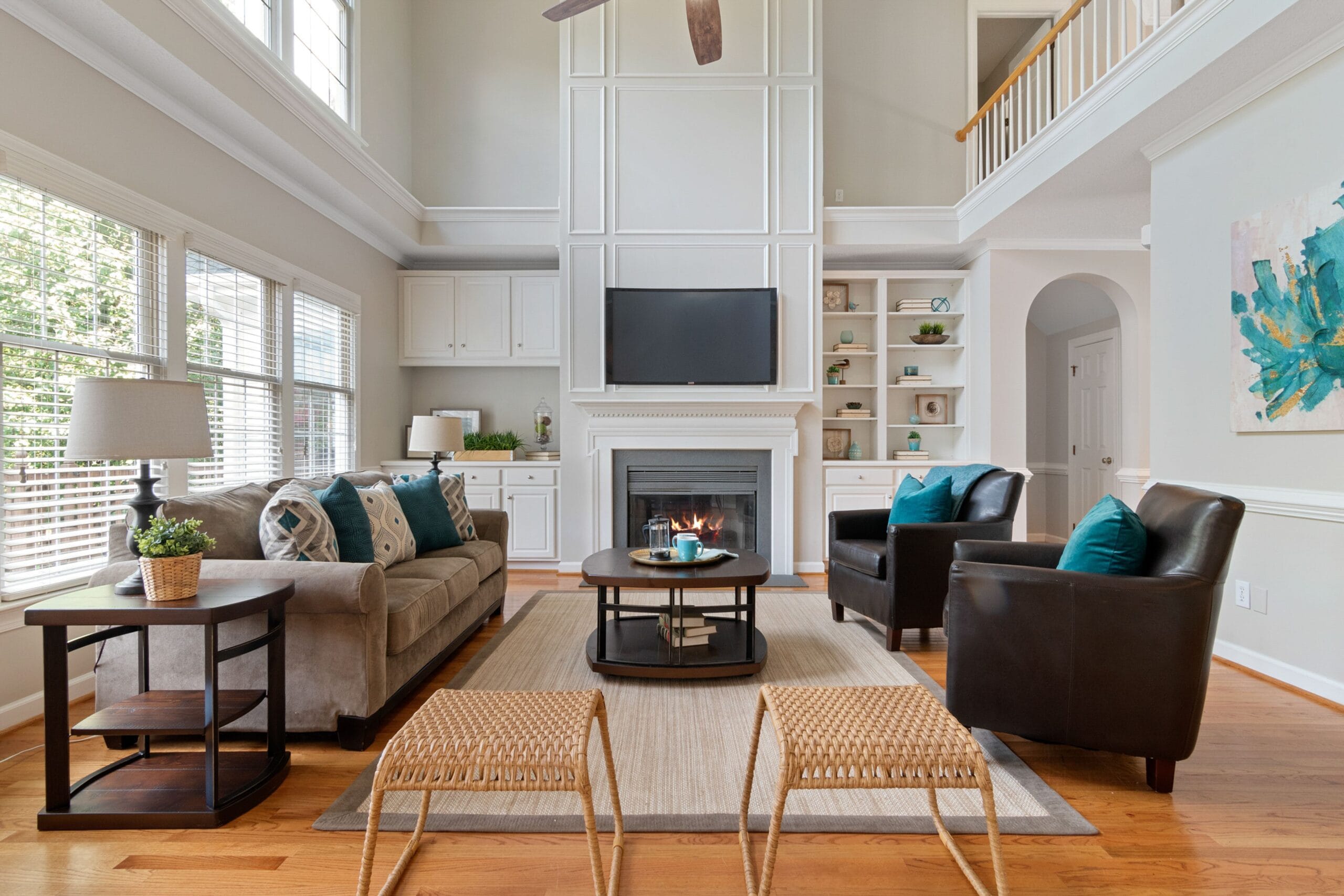
The easiest way to make a large living room feel cozy is to divide it into comfortable zones, use furniture that fills the space appropriately, and add warmth through rugs, lighting, textures, and natural materials. When learning how to decorate a large living room, avoid pushing every piece against the walls or leaving huge empty areas between furniture. Instead, create smaller connected areas that give the room purpose while keeping enough open space for movement.
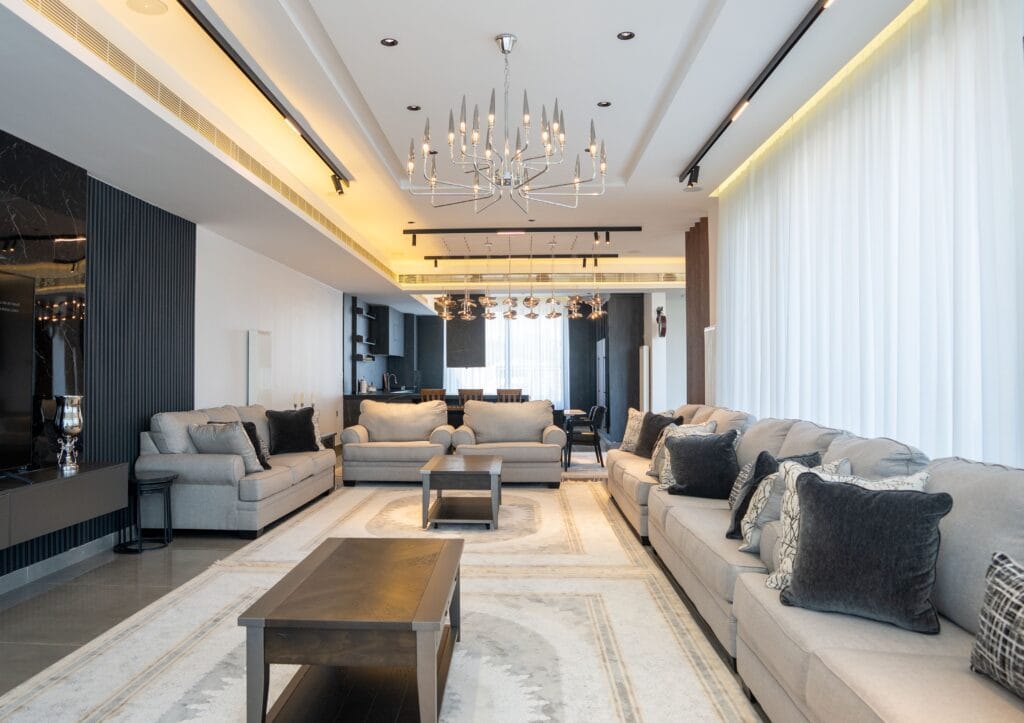
Large rooms can be difficult to furnish because adding too little furniture makes the space feel empty, while adding too much can make it feel crowded. The key is creating visual balance and giving each section of the room a clear function. A comfortable main seating area, reading corner, storage zone, or entertainment area can make a large room feel much more intimate.
Create Multiple Seating Zones
Breaking a large living room into separate seating areas is one of the most effective ways to make it feel cozy. Instead of creating one enormous seating arrangement, use the space to create a main conversation area around the sofa and coffee table, then add a smaller area with two chairs, a bench, or a compact table. Each zone should feel connected through similar colors, materials, or rugs while still having its own purpose. This approach makes the room feel more inviting because people can gather in smaller groups instead of sitting far apart.
Choose Furniture With Enough Visual Weight
Large rooms need furniture that is proportional to the available space. A tiny sofa surrounded by oversized empty areas can make the room feel unfinished, while a substantial sectional or generously sized sofa can provide a stronger foundation. Add substantial accent chairs, larger side tables, and appropriately sized storage pieces so the furniture feels connected to the scale of the room. When considering how to decorate a large living room, always think about the visual weight of each piece rather than focusing only on its physical dimensions.
Pro Tip
Before buying new furniture, use painter’s tape to outline the planned furniture dimensions on the floor. This makes it much easier to see whether the pieces will feel substantial enough for the room.
Use Large Area Rugs
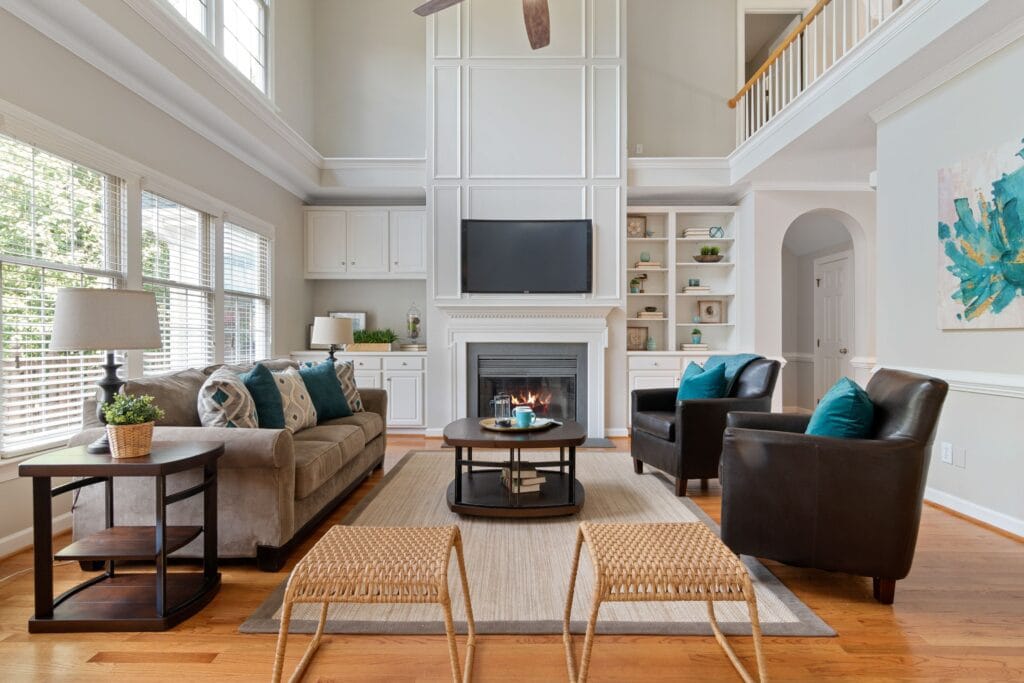
Large rooms often need large rugs to visually connect the furniture and reduce the feeling of empty floor space. Choose rugs that are large enough to anchor the main seating area, with at least the front legs of the major furniture pieces resting on them. If the room has several zones, use separate rugs to define each area while keeping their colors and textures related. A properly sized rug can make furniture feel more connected and immediately add softness beneath the seating.
Layer Multiple Light Sources
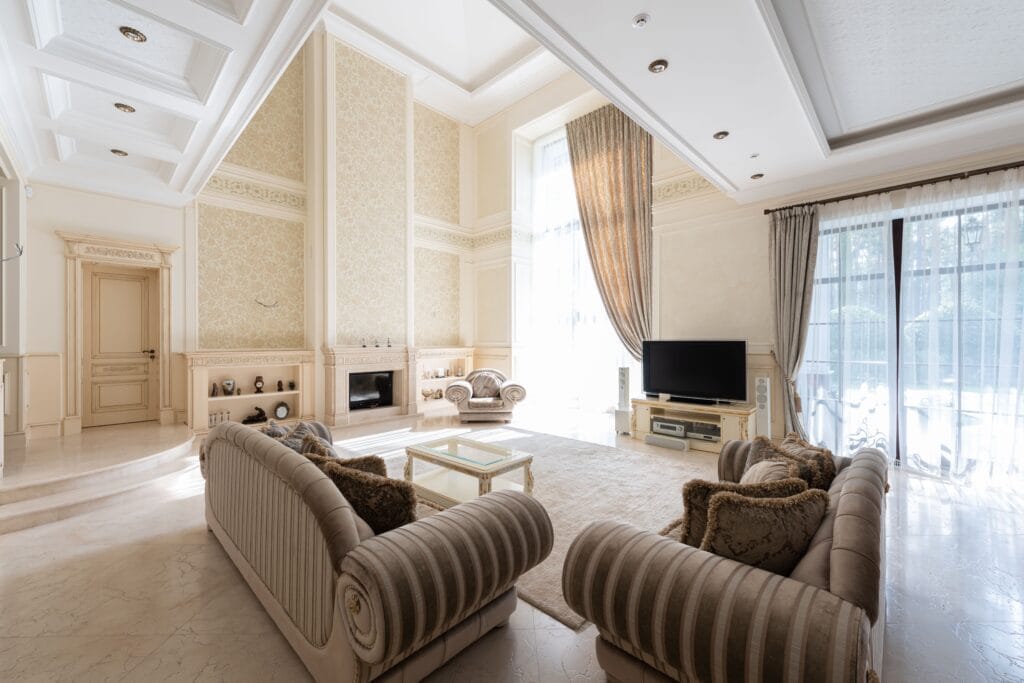
One ceiling fixture is rarely enough to make a large living room feel warm in the evening. Combine floor lamps, table lamps, wall lights, pendant fixtures, and accent lighting to create pools of light throughout different areas of the room. Position lights near seating, reading areas, shelving, and corners that tend to become dark. Using several warm light sources makes the room feel more intimate while also giving each zone its own atmosphere.
Add Warm Natural Materials
Natural materials help soften the scale of a large living room and prevent it from feeling too formal. Wood coffee tables, woven baskets, linen curtains, wool rugs, rattan accents, stone surfaces, and ceramic accessories can all introduce warmth and texture. You do not need to use every material at once. Choose a few that complement the existing furniture and repeat them in different areas so the room feels connected rather than filled with unrelated finishes.
Use Curtains to Add Softness
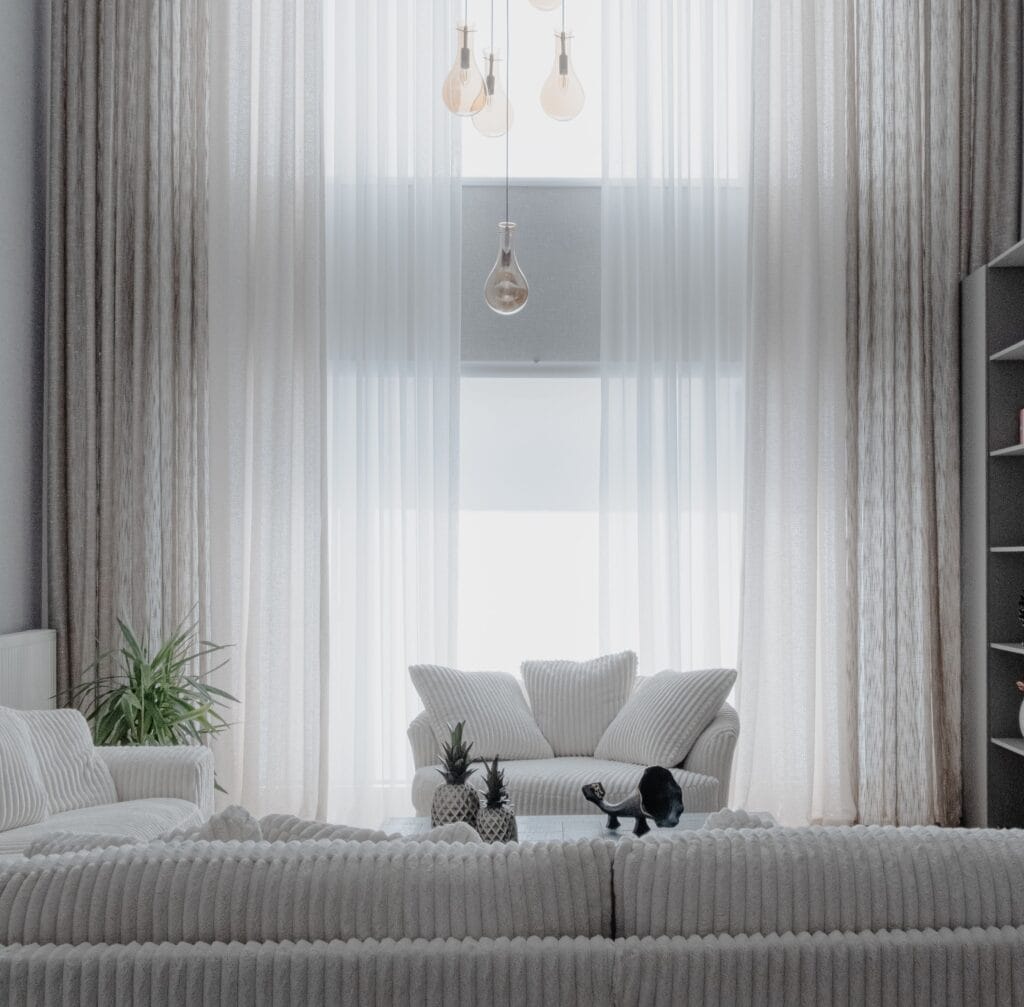
Large windows can make a living room feel impressive but may also leave the space feeling visually bare. Floor length curtains can soften those expansive surfaces while adding height and texture. Choose linen, cotton, or another fabric that complements the furniture and color palette, then hang the curtains high enough to emphasize the room’s proportions. Warm neutral curtains can make a large space feel softer without reducing the amount of natural light.
Quick Fix
If the room feels cold or unfinished, add floor length curtains before buying more furniture. The fabric can immediately soften large walls and windows.
Give Empty Corners a Purpose
Large living rooms often have corners that remain unused because the main seating area takes up most of the attention. Give these areas a clear purpose with a reading chair and floor lamp, a small writing desk, a tall plant, a narrow cabinet, or a compact display area. Avoid filling every corner simply because it is empty. Instead, choose pieces that support how you actually use the room and help create a more balanced overall composition.
Add Layers to the Coffee Table and Shelves
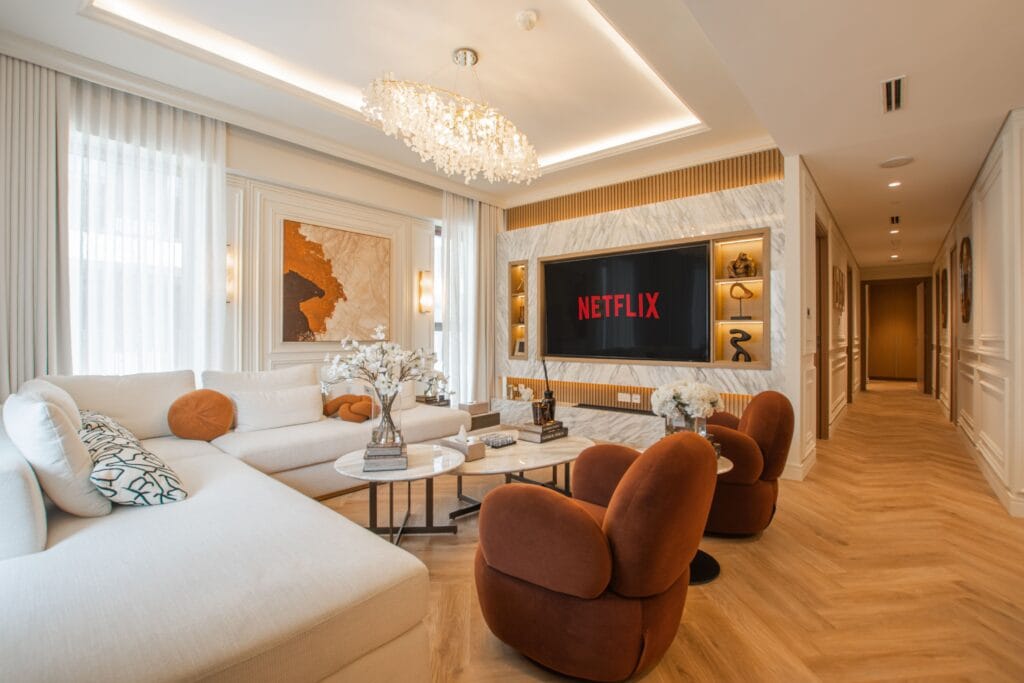
Large rooms can handle larger decorative displays, but the goal should still be restraint. Use coffee table books, ceramic objects, candles, trays, plants, and artwork to create a few carefully arranged focal points. Shelves can hold books and decorative pieces while leaving enough empty space between groups. Layering objects creates depth and personality while preventing large surfaces from looking unfinished.
Time Saver
Take a photograph of the room from several angles after arranging the furniture. A photo can reveal empty zones or crowded areas that are difficult to notice while standing inside the space.
Create a Warm Focal Point
A large living room benefits from a strong focal point that brings the furniture together. A fireplace, large artwork, statement media wall, substantial bookcase, or architectural feature can provide that visual anchor. Arrange the main seating toward this feature so the furniture has a natural relationship with the room. If the room lacks an architectural focal point, a large piece of artwork or a carefully styled media area can create one without requiring structural changes.
Frequently Asked Questions
How do I make a large living room feel cozy?
Create smaller seating zones, use appropriately sized furniture, add large rugs, layer warm lighting, and introduce natural textures. The key is reducing the feeling of empty space without overcrowding the room.
Should furniture be against the walls in a large living room?
Not necessarily. Pulling furniture away from the walls can create more intimate seating areas and improve conversation. Large rooms usually have enough space to allow furniture to float within the layout.
How many rugs should I use in a large living room?
One large rug can work for a single seating area, while multiple rugs can help define separate zones. Keep their colors or textures connected so the overall room still feels cohesive.
What furniture works best in a large living room?
Generously sized sofas, sectionals, substantial accent chairs, large coffee tables, storage pieces, and benches can all work well. Choose furniture according to the scale of the room rather than relying on small pieces to fill the space.
How do I fill a large living room without cluttering it?
Create functional zones instead of simply adding more furniture. Use a combination of seating, rugs, lighting, plants, storage, and artwork to give different areas a clear purpose while maintaining comfortable open space.
Bottom Line
Knowing how to decorate a large living room is mainly about creating balance and intimacy within the available space. Use substantial furniture, define seating zones, anchor each area with rugs, layer lighting, and introduce natural textures to make the room feel warmer and more comfortable.
A large living room does not need to feel empty simply because it has more floor space. When each section has a clear purpose and the furniture is arranged around how you actually use the room, the space can feel spacious while still being cozy and inviting.