

Creating a cozy bedroom around a king bed starts with balancing its larger size through soft bedding, appropriately scaled furniture, warm lighting, layered textures, and enough open space to keep the room comfortable. When considering how to decorate a bedroom with a king bed, avoid filling the extra space with unnecessary furniture and instead make the bed the main focal point. A large rug, matching nightstands, comfortable bedding, and warm lighting can make the room feel inviting without making it look crowded.
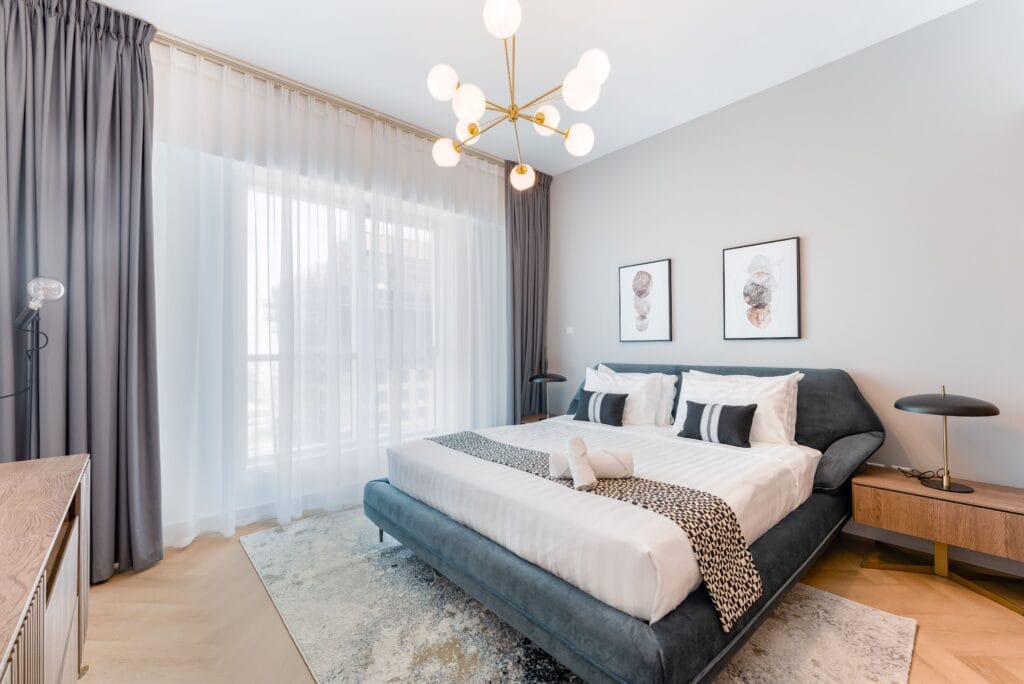
A king bed naturally takes up more visual space than a smaller bed, which can make the surrounding room feel unbalanced when the furniture is too small or the décor is too sparse. The solution is to work with the scale of the bed rather than trying to hide it. Choosing furniture and accessories with enough presence can create a bedroom that feels cohesive and comfortable.
Layer the Bedding
The bed should be the main source of softness in the room, so build several layers across the mattress. Start with comfortable sheets, add a duvet or quilt, then place a folded blanket across the lower part of the bed. A few pillows in different textures can add depth without making the bed difficult to use. Since a king bed provides a large surface, avoid leaving it completely flat and bare because the space can feel visually empty. Cream, beige, warm white, muted green, dusty blue, and soft gray can all create a relaxed foundation.
Pro Tip
Use one larger textured blanket across the foot of the bed instead of adding many decorative pillows. It adds warmth and fills the generous surface without making the bed difficult to use.
Choose Substantial Nightstands
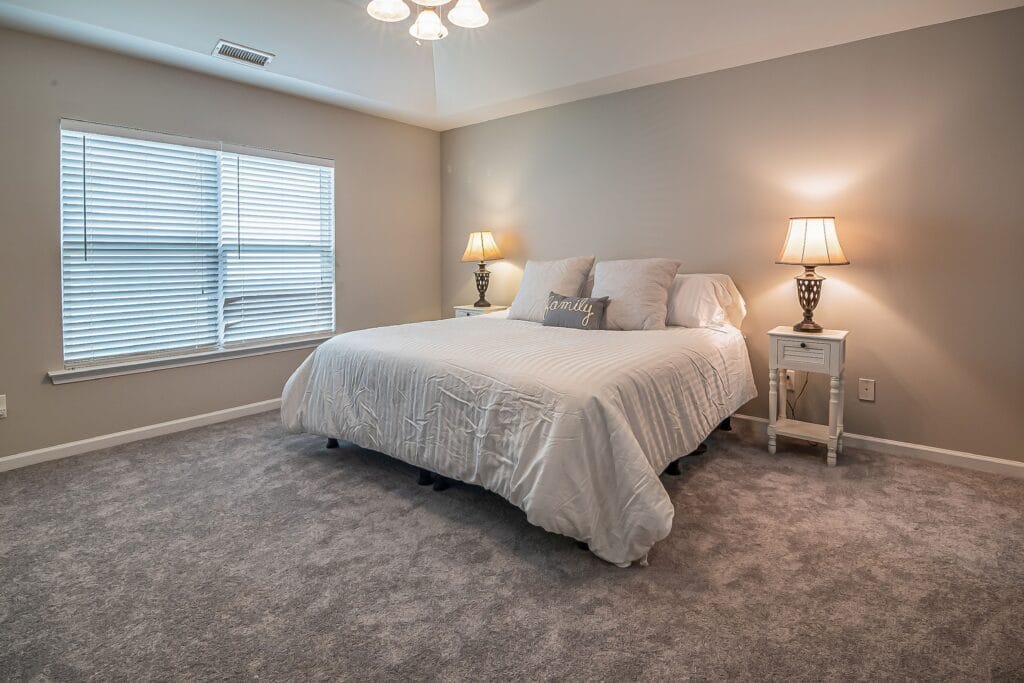
A king bed needs nightstands that can visually balance its width and height. Very small tables can disappear beside the bed and make the arrangement feel disproportionate, so choose pieces with enough width to hold a lamp and everyday essentials comfortably. Matching nightstands create symmetry and can make the sleeping area feel more organized, while slightly different tables can work when they share similar proportions or materials. Keep the styling simple so the nightstands support the bed rather than competing with it.
Use a Large Area Rug
A large rug can anchor a king bed and connect it with the surrounding furniture. Choose a rug that extends beyond both sides and the foot of the bed so there is enough visible softness around the main furniture. A rug that is too small can make the bed appear disconnected from the rest of the room, while a properly sized rug creates a stronger foundation. Neutral textures work especially well when the bedding already contains pattern or color.
Add Warm Layered Lighting
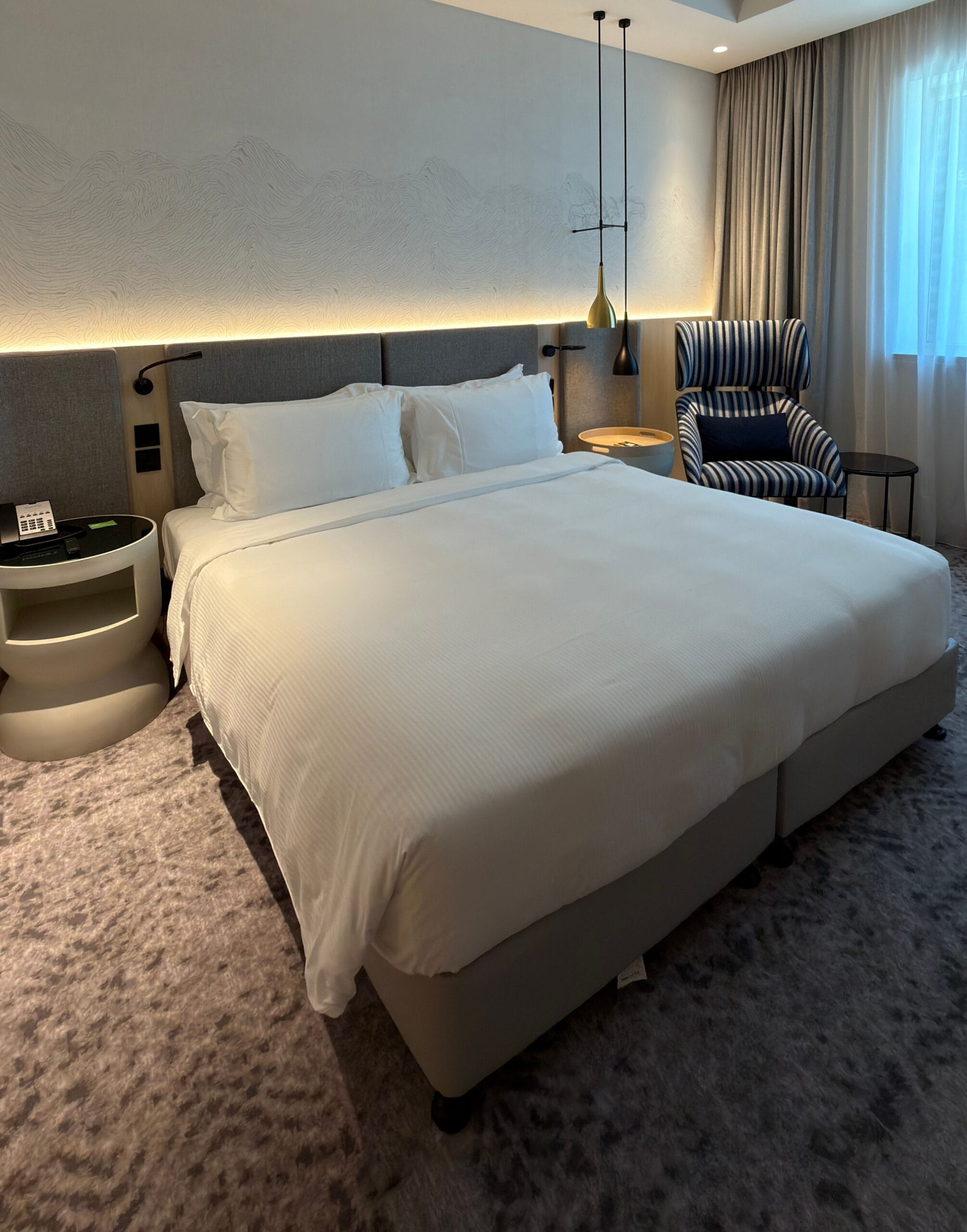
Warm lighting can soften the scale of a king bedroom and make the space feel more intimate after dark. Use matching bedside lamps, wall sconces, a floor lamp, or a softly glowing ceiling fixture to create several levels of illumination. Avoid relying on one bright overhead light because it can make a large bedroom feel more exposed and less relaxing. Warm bulbs can also bring out the texture of bedding, rugs, curtains, and wood furniture.
Quick Fix
Replace a cool bright bulb near the bed with a warmer bulb and add a smaller bedside light. The change can immediately make the bedroom feel softer.
Give the Wall Behind the Bed Some Weight
A king bed is wide enough that a very small piece of artwork can look lost above it. Consider one large artwork piece, a wide mirror, simple wall paneling, textured wallpaper, or a balanced pair of larger framed prints to create a backdrop with enough visual weight. Keep the colors connected to the bedding and furniture so the wall feels like part of the overall arrangement. The goal is to complement the width of the bed without covering every inch of the wall.
Add a Bench or Ottoman
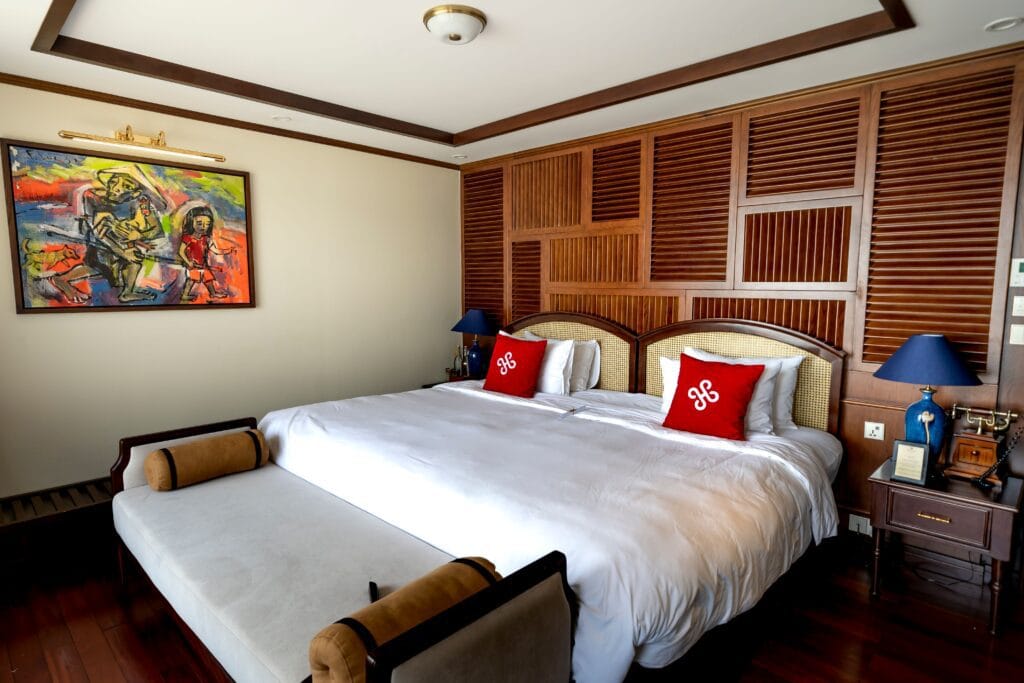
The extra width of a king bed often leaves enough room for a bench or upholstered ottoman at the foot. This can help balance the bed visually while providing a useful place to sit, fold blankets, or organize clothing. Choose a piece that is slightly narrower than the bed so it does not extend too far into the surrounding space. Upholstered materials can soften a room with heavier furniture, while wood can reinforce a more natural design.
Keep the Color Palette Calm
A king bedroom can feel especially comfortable when the colors are restrained and connected. Choose a main neutral for the walls and larger furniture, then introduce one or two accent colors through bedding, curtains, artwork, and smaller accessories. Warm white, cream, beige, taupe, soft gray, muted green, and dusty blue can all work well. Keeping the palette controlled allows the size of the bed to feel intentional without making the room visually overwhelming.
Time Saver
Take a photograph of the bedroom from the doorway after arranging the furniture. The image can make it much easier to notice whether the room needs more visual weight or simply more open space.
Use Natural Textures

Natural materials can make a large bedroom feel warmer and more comfortable. Wood furniture, linen curtains, woven baskets, cotton bedding, wool rugs, and ceramic accessories can all add texture without requiring strong colors. Repeat a few materials throughout the room instead of introducing something different in every corner. This creates a cohesive environment around the king bed while keeping the décor relaxed.
Leave Enough Open Space
A common mistake when decorating around a king bed is assuming the larger room needs more furniture. In reality, open space is important because the bed already occupies a significant portion of the room. Keep clear paths around the bed, avoid placing oversized pieces in every corner, and leave enough room for doors and drawers to open comfortably. A room with fewer properly scaled pieces can feel much more comfortable than one filled with furniture simply because space is available.
Frequently Asked Questions
How do I decorate a bedroom with a king bed without making it feel crowded?
Start with the bed as the focal point and choose substantial but appropriately scaled nightstands, a large rug, comfortable bedding, and warm lighting. Avoid adding furniture simply to fill empty areas.
What size rug works best under a king bed?
Choose a rug that extends well beyond the sides and foot of the bed. The exact size depends on the room and furniture arrangement, but the rug should feel large enough to visually anchor the entire sleeping area.
Should king bed nightstands match?
Matching nightstands are an easy way to create symmetry, but they do not have to match exactly. Similar proportions, materials, or colors can create enough visual connection.
What should I put on the wall above a king bed?
A large artwork piece, wide mirror, simple pair of framed prints, textured wall treatment, or another feature with enough visual width can work well. Avoid using pieces that are too small for the bed.
Does a king bed need a bench at the foot?
No. A bench can help balance the room and provide useful seating, but it should only be added when there is enough space to walk comfortably around it.
Bottom Line
Knowing how to decorate a bedroom with a king bed is mainly about balancing the scale of the bed with comfortable furniture, soft textures, warm lighting, and enough open space. Layer the bedding, choose substantial nightstands, anchor the room with a large rug, and give the wall behind the bed enough visual weight to complement its width.
You do not need to fill a large bedroom with furniture to make it cozy. When the king bed remains the focal point and the surrounding pieces are carefully scaled, the room can feel warm, comfortable, balanced, and easy to enjoy.