

The easiest way to choose wall art that works with your living room furniture is to look at the colors, proportions, materials, and overall style already present in the room. When learning how to choose living room wall art, start with the sofa and other large furniture pieces, then choose artwork that complements at least one or two existing colors or materials without matching everything exactly. The right size and placement are just as important as the artwork itself because a beautiful piece can still feel wrong when it is too small, too high, or out of proportion with the furniture.
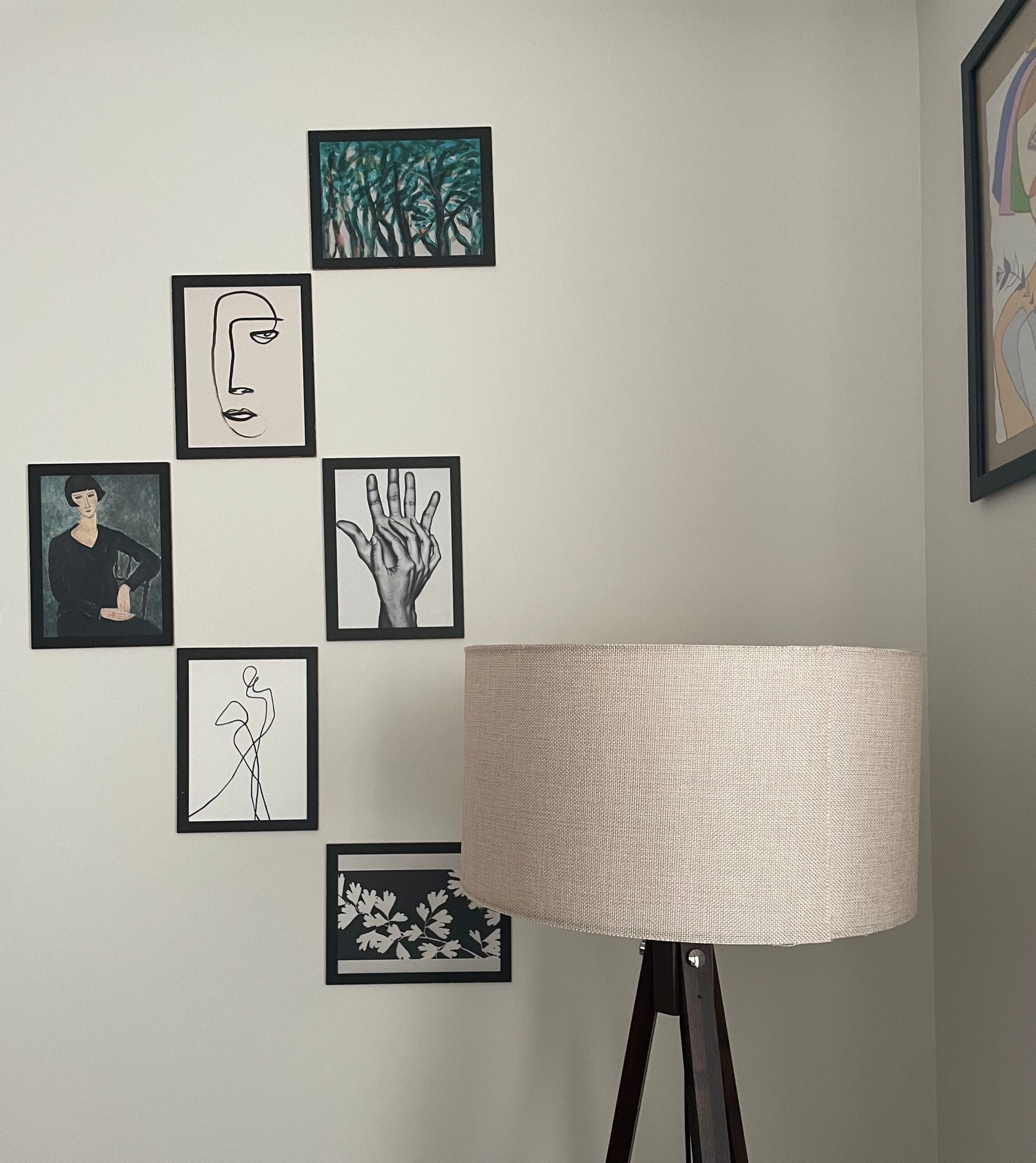
Wall art should connect the room rather than exist as a completely separate decoration. A painting, photograph, print, or collection of frames can reinforce the colors and mood already created by the furniture, rug, curtains, and lighting. Thinking about the room as a whole makes it easier to choose artwork that feels intentional.
Start With Your Sofa
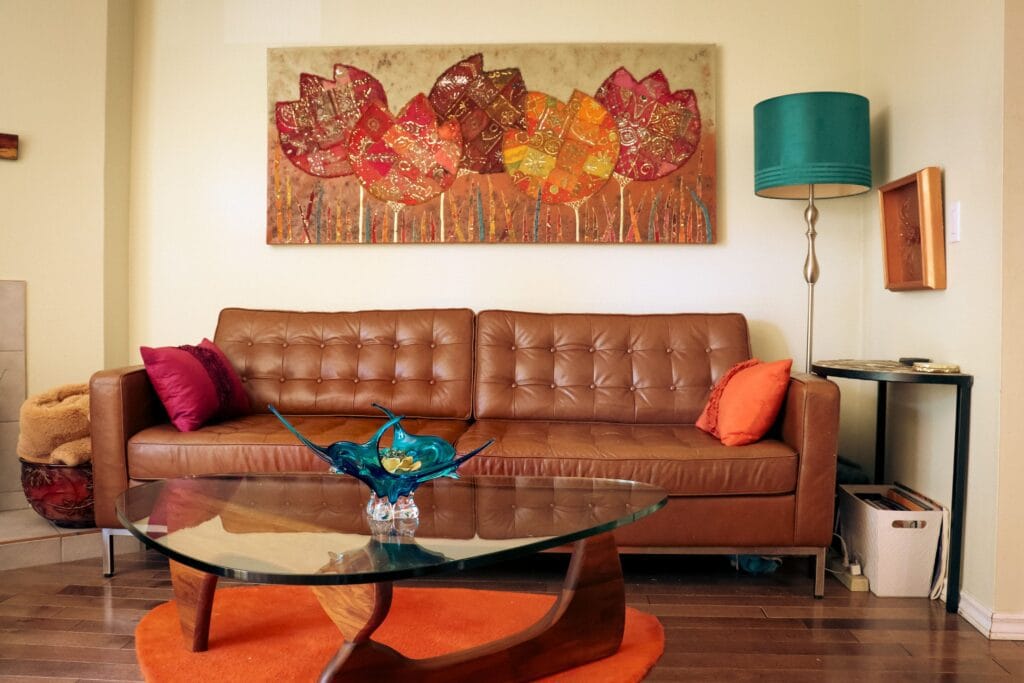
The sofa is usually the largest furniture piece in a living room, so it is a useful starting point when choosing artwork. Look at its upholstery color, shape, and overall style before selecting anything for the wall above it. A neutral sofa can support more colorful artwork, while a strongly colored sofa may work better with quieter artwork that includes one or two related shades. The artwork should feel proportional to the sofa rather than appearing tiny above it or so large that it overwhelms the entire seating area.
Pro Tip
Take a photo of your sofa and hold up different artwork options against the image. Seeing the furniture and artwork together can make color and size decisions much easier.
Match One or Two Colors
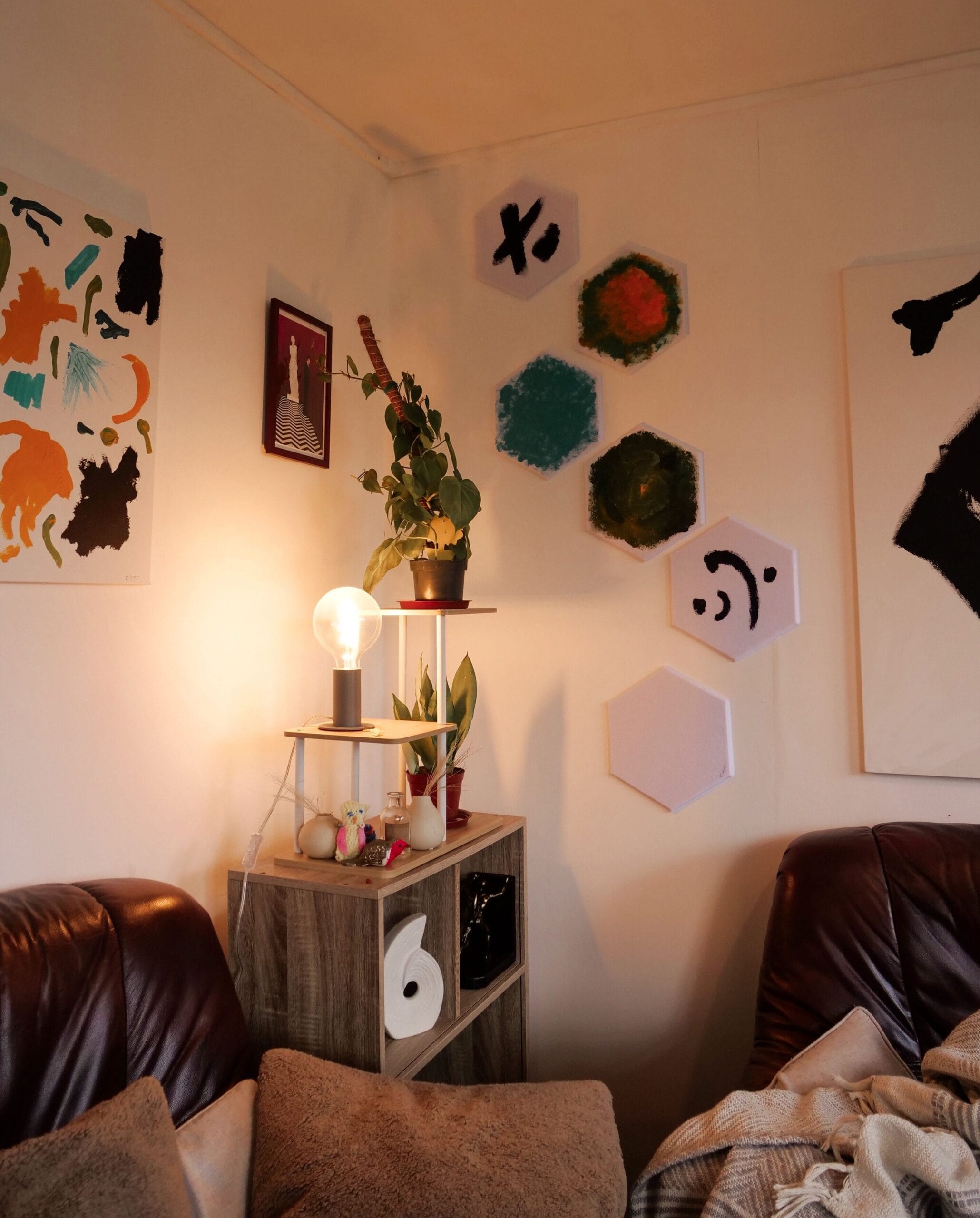
Your artwork does not need to match the furniture exactly, but repeating one or two colors can create a strong visual connection. Look at the sofa, cushions, rug, curtains, and accent furniture and identify shades that appear more than once. Artwork that includes those colors can tie the room together while still introducing something new. A neutral room can handle stronger artwork, while a room already filled with several colors may benefit from a more restrained palette.
Choose the Right Size
Size can make or break the relationship between artwork and furniture. A small picture can disappear above a large sofa, while an oversized piece can dominate a compact seating area. For artwork above a sofa or console, aim for a size that feels substantial in relation to the furniture underneath it. You can also use several smaller pieces as one larger visual arrangement if you want a gallery wall rather than one large artwork piece.
Consider the Furniture Style
The artwork should complement the character of the furniture without necessarily copying it. Clean modern furniture can work with abstract artwork, photography, or simple line drawings, while traditional furniture can support landscapes, portraits, botanical artwork, or vintage inspired prints. Mixing styles can also work well when the colors and proportions create a connection. The goal is to create contrast that feels intentional rather than choosing artwork that looks unrelated to everything else in the room.
Use the Rug as a Color Guide
The rug can be a useful reference when choosing living room wall art because it often contains several colors already used throughout the space. Pick one or two shades from the rug and look for artwork that includes them without reproducing the entire pattern. This creates a connection between the floor and walls while allowing each element to remain visually distinct. If the rug has a strong pattern, simpler artwork can provide balance, while a plain rug can give you more freedom to choose expressive wall art.
Quick Fix
If you cannot decide between several artwork options, choose the piece that repeats a color already visible in the rug, cushions, or curtains. That small connection can make the decision much easier.
Think About Visual Weight
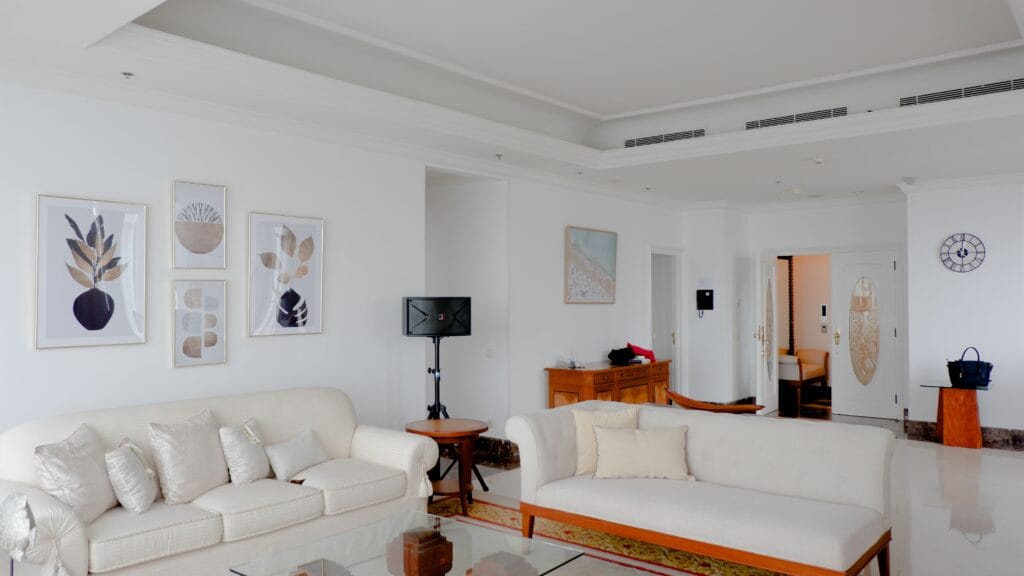
Artwork has visual weight based on its color, size, frame, and amount of detail. Dark artwork can feel heavier than a light neutral piece, while an intricate gallery wall can draw more attention than one simple print. Consider the visual weight of the furniture beneath it and aim for balance. A substantial dark sofa may need a larger or stronger artwork arrangement, while delicate furniture can work better with lighter artwork and more open space around it.
Pay Attention to Placement
Correct placement helps artwork feel connected to the furniture instead of floating above it. Artwork above a sofa should generally sit close enough to the furniture that the two elements feel like one arrangement, while artwork above a console or cabinet should relate clearly to the surface below it. Avoid hanging artwork so high that a large empty gap appears between it and the furniture. The surrounding wall space should also feel balanced so the artwork does not appear randomly positioned.
Mix Frames and Materials Carefully
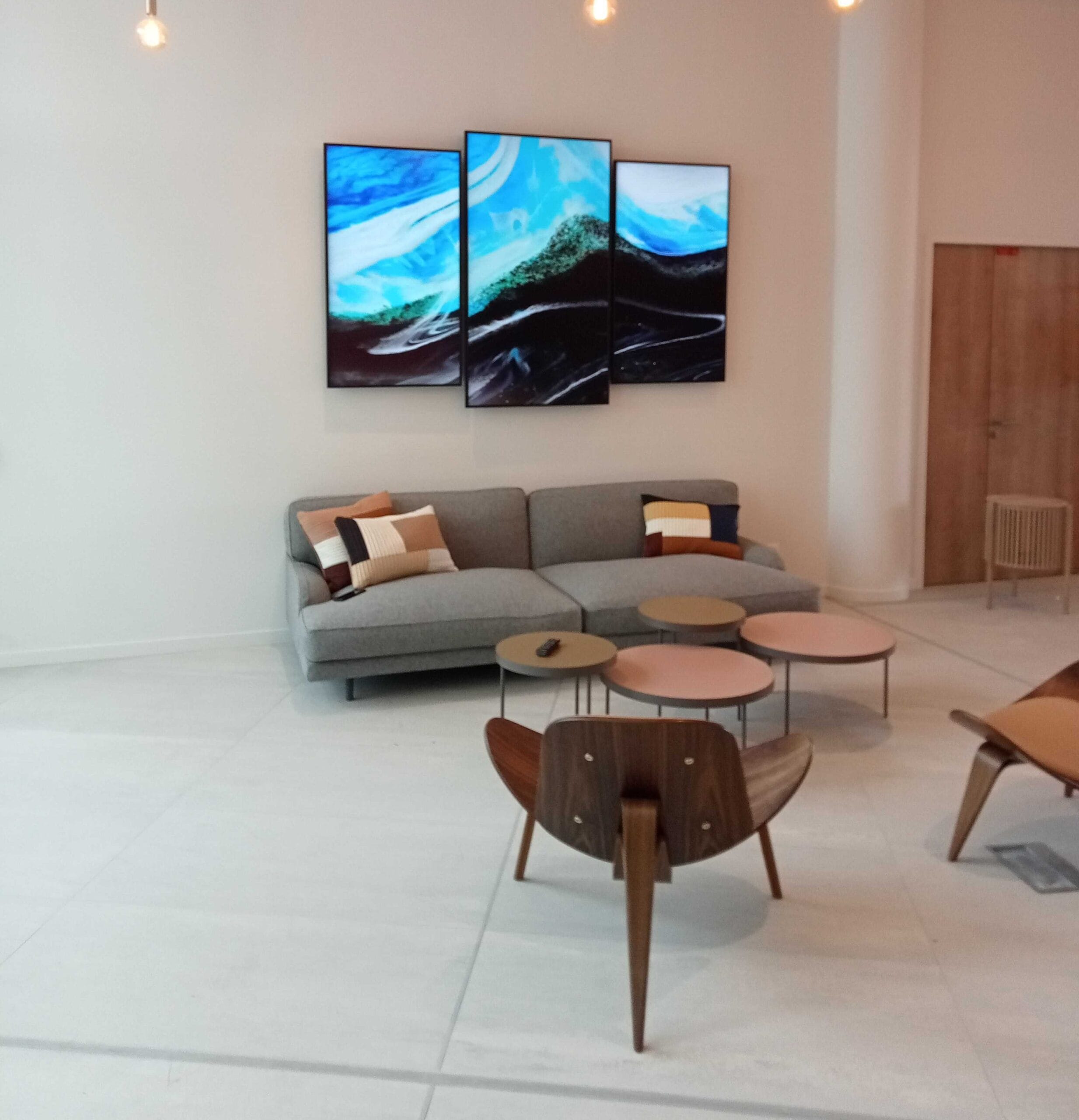
Frames can help connect artwork with the furniture and other materials in the room. Wood frames can reinforce wooden tables or shelving, black frames can connect with dark metal accents, and warm metal finishes can complement lamps or hardware. You do not need every frame to match, but repeating a finish can create continuity. If you are creating a gallery wall, vary the artwork slightly while keeping the frame palette controlled enough to make the collection feel intentional.
Time Saver
Lay the artwork and frames on the floor before hanging them and take a photo from the same angle as the wall. This lets you test spacing and visual balance without repeatedly moving pieces
Frequently Asked Questions
How do I choose living room wall art?
Start with the sofa, rug, and larger furniture pieces, then choose artwork that complements their colors, proportions, and style. Focus on creating a visual relationship instead of finding an exact match.
Should wall art match the sofa?
It does not need to match exactly. Repeating one or two colors from the sofa, cushions, rug, or nearby furniture is usually enough to make the artwork feel connected.
How large should wall art be above a sofa?
The artwork should have enough visual presence to relate to the width of the sofa without overwhelming it. One large piece or a collection of smaller pieces can both work when the overall arrangement is properly scaled.
Should living room artwork match the rug?
Not exactly. The rug can simply provide colors that you repeat in the artwork. This creates harmony while allowing the artwork and rug to remain distinct.
Can modern and traditional wall art work with the same furniture?
Yes. Mixing styles can add character when the colors, proportions, and surrounding materials create enough connection. A contrasting artwork style can actually make the room feel more personal.
Bottom Line
Knowing how to choose living room wall art is mainly about creating a relationship between the artwork and the furniture through color, size, style, materials, and placement. Start with the sofa and rug, look for colors worth repeating, choose artwork with the right visual weight, and make sure the placement feels connected to the furniture below it.
The artwork does not have to match everything in the room. When it complements the furniture while adding something new, the living room feels more cohesive, personal, and thoughtfully decorated.