

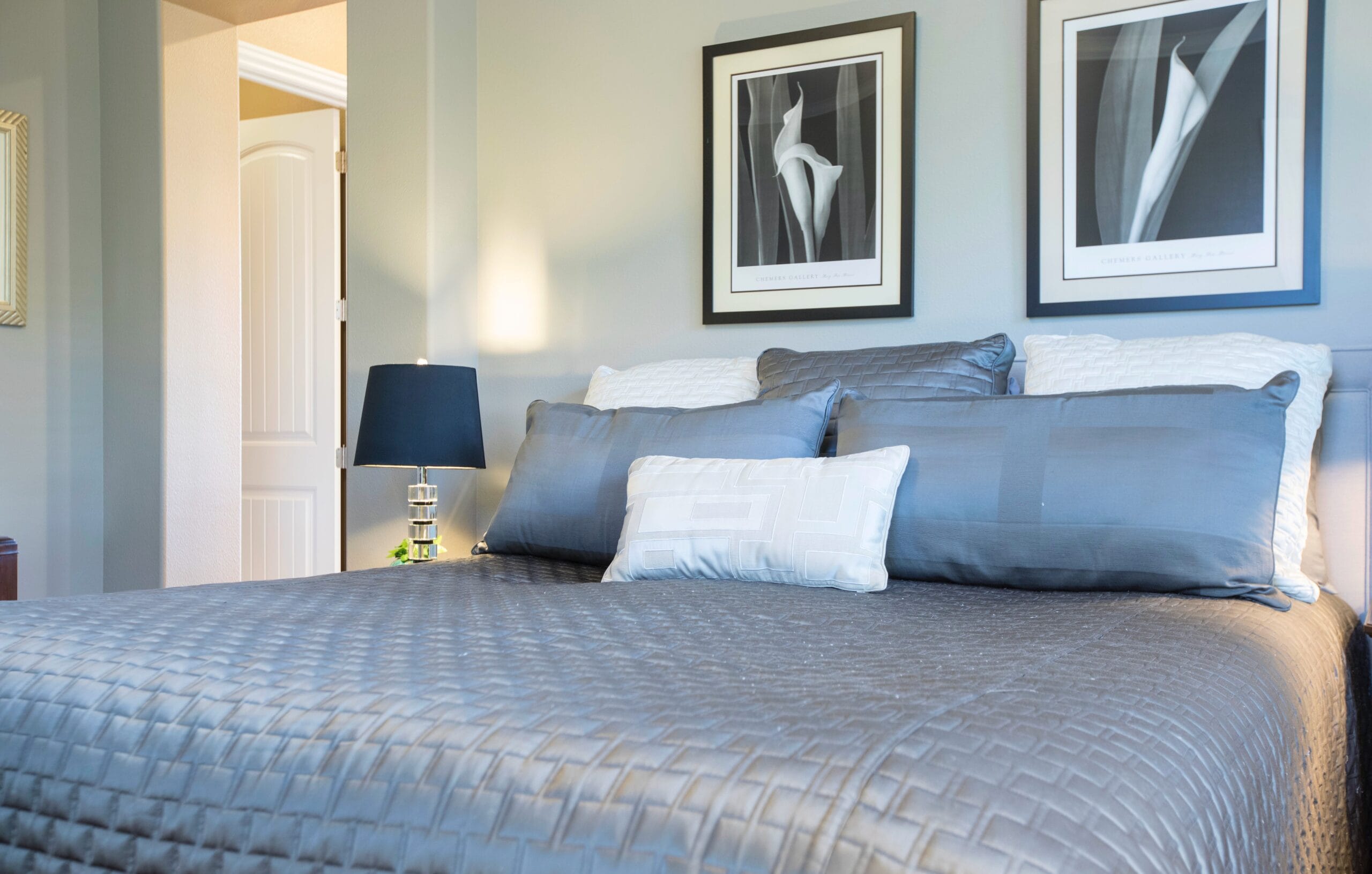
The best bedroom wall art is large enough to feel connected to the furniture, uses colors that complement the room, and has a clear relationship with the bed or another main feature. When learning how to choose bedroom wall art, start with the wall you want to highlight, consider the size of the furniture beneath it, and then choose artwork that adds something interesting without making the bedroom feel crowded. A strong piece can completely change the atmosphere of the room without requiring a full decorating makeover.

Bedroom artwork should feel like part of the overall room rather than something added at the end. The right piece can bring together the bedding, furniture, rug, curtains, and accent colors while giving the eye somewhere to settle. You do not need a large collection of artwork to create impact. One well chosen piece can often do more than several unrelated decorations.
Start With the Wall Behind the Bed
The wall behind the bed is usually the easiest place to create a focal point because the bed naturally draws attention. Choose one large artwork piece, a pair of coordinated prints, or a carefully arranged gallery display that feels proportional to the width of the bed. The artwork should complement the headboard rather than compete with it, especially when the headboard already has a strong shape or color. Leaving some open wall around the artwork can also help the focal point stand out more clearly.
Choose Artwork That Complements Your Colors

Look at the bedding, curtains, rug, furniture, and existing accessories before choosing artwork. Pick a piece that repeats one or two colors already present in the bedroom instead of introducing a completely unrelated palette. The artwork does not need to match the room exactly, because a small amount of contrast can make it more interesting. A cream bedroom can handle muted green or dusty blue artwork, while a darker room might benefit from lighter artwork that creates contrast.
Pro Tip
Take a photograph of your bedroom and compare potential artwork against the image. This makes it much easier to judge whether the colors actually work together.
Get the Scale Right
One of the most common artwork mistakes is choosing something that is too small for the wall or furniture beneath it. A small print can disappear above a wide bed, while an oversized piece can overwhelm a narrow wall. Consider the width of the bed, dresser, or console underneath the artwork and choose a size that feels substantial in relation to it. If one piece is not large enough, combine several smaller pieces into one cohesive arrangement instead of spacing them too far apart.
Match the Mood of the Bedroom
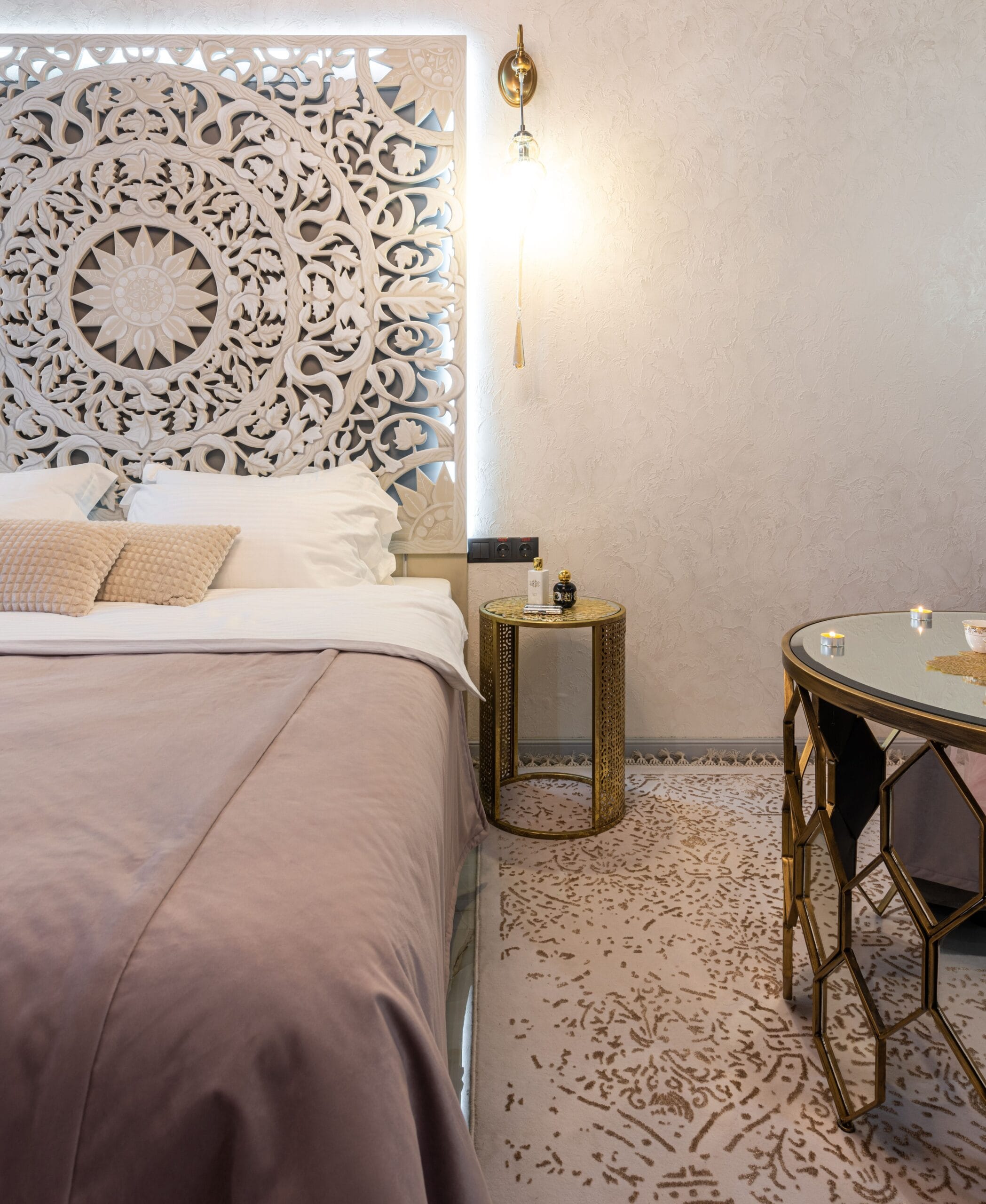
Artwork can influence the entire feeling of a bedroom, so choose imagery that supports the atmosphere you want. Abstract artwork can create a modern and understated look, landscapes can introduce a calm natural feeling, botanical prints can add softness, while photography can give the room a more personal character. Consider how the colors and subject matter make you feel rather than choosing a piece only because it looks good on its own.
Consider the Furniture Style
The artwork should have some relationship with the furniture without needing to copy its style exactly. Simple artwork can balance ornate furniture, while more expressive pieces can give plain contemporary furniture additional character. Look at the shapes, materials, and finishes already present in the bedroom and choose artwork that complements at least one of those elements. A wooden frame can connect with wood furniture, while a black frame can repeat dark hardware or lighting.
Quick Fix
If your artwork looks disconnected from the room, add one small accessory that repeats its main color near the bed or dresser. A cushion, throw, or vase can create an immediate visual connection.
Choose Between One Piece and a Gallery Wall
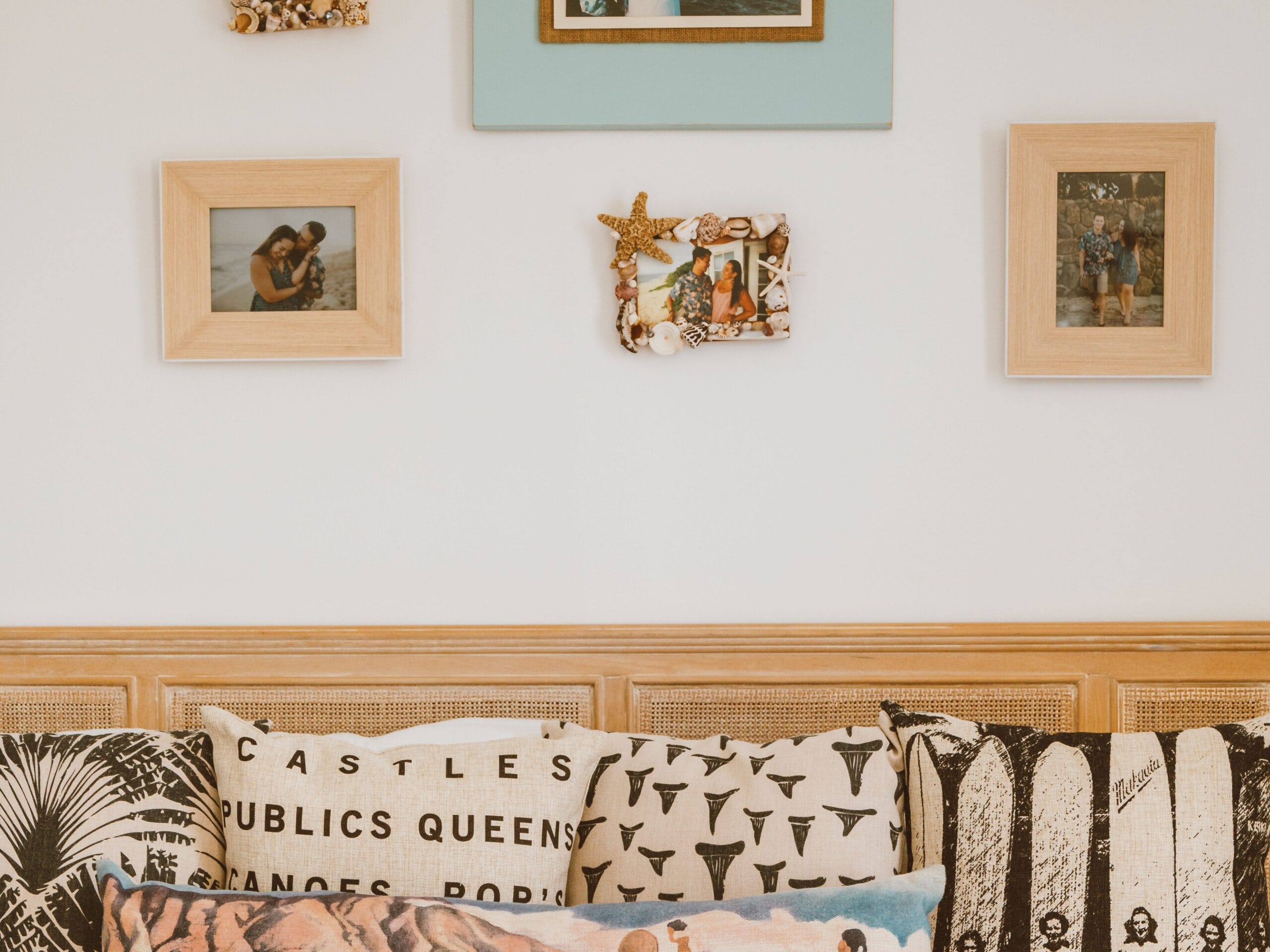
A single large piece creates a clear focal point and can make a bedroom feel calm and uncluttered. A gallery wall gives you more flexibility to combine photographs, prints, artwork, and personal pieces, but it requires careful spacing and consistent visual relationships. If the bedroom already has patterned bedding or several decorative elements, one large piece may create better balance. If the rest of the room is relatively simple, a gallery wall can introduce more personality.
Think About Placement
Artwork should be positioned so it feels connected to the furniture rather than floating high on the wall. Above the bed, dresser, or another large piece, keep the artwork close enough to create one visual arrangement. Avoid hanging artwork so high that there is a large empty gap underneath it. The exact placement depends on the furniture and wall dimensions, but the artwork should feel intentionally connected to the feature beneath it.
Use Frames to Create Continuity

The frame can be just as important as the artwork when creating a cohesive bedroom. Wood frames can complement wooden furniture, black frames can connect with dark lighting or hardware, and warm metal frames can work with brass or bronze details. A gallery wall can use different frame styles, but keeping the finishes within a controlled range helps the overall display feel intentional. The frame should support the artwork without becoming more noticeable than the image itself.
Time Saver
Lay your artwork and frames on the floor before hanging them. Take a photograph of the arrangement from the same direction as the wall to check the spacing and overall balance.
Leave Enough Empty Space
A beautiful focal point needs room around it to stand out. Avoid filling every surrounding wall with additional artwork, shelves, and decorative objects. Empty space gives the eye a place to rest and makes the main artwork feel more important. This is particularly useful in bedrooms because the space should remain calm and comfortable rather than visually overwhelming.
Frequently Asked Questions
How do I choose bedroom wall art?
Start with the wall you want to highlight, then consider the furniture size, existing colors, decorating style, and mood of the room. Choose artwork that complements these elements without needing to match them exactly.
What size artwork should go above a bed?
The artwork should have enough visual width and weight to relate to the bed. One substantial piece or a group of smaller pieces can work as long as the arrangement feels proportional.
Should bedroom artwork match the bedding?
It does not need to match exactly. Repeating one or two colors from the bedding in the artwork can create enough visual connection while allowing the artwork to remain distinctive.
Is one large piece of artwork better than a gallery wall?
Neither is automatically better. One large piece creates a calmer focal point, while a gallery wall can provide more personality and flexibility. Choose based on the amount of visual detail already present in the bedroom.
How high should bedroom wall art be hung?
Artwork should feel visually connected to the furniture beneath it rather than being placed extremely high on the wall. The ideal position depends on the height of the bed, dresser, or other furniture and the size of the artwork.
Bottom Line
Knowing how to choose bedroom wall art is mainly about finding the right relationship between the artwork, furniture, colors, and available wall space. Choose a piece with enough scale to create a focal point, repeat a few existing colors, and select a style that supports the mood you want.
You do not need to cover your walls with artwork to make the bedroom feel finished. One substantial piece or a carefully planned collection, surrounded by enough open space, can give the room character while keeping the overall atmosphere calm and inviting.