

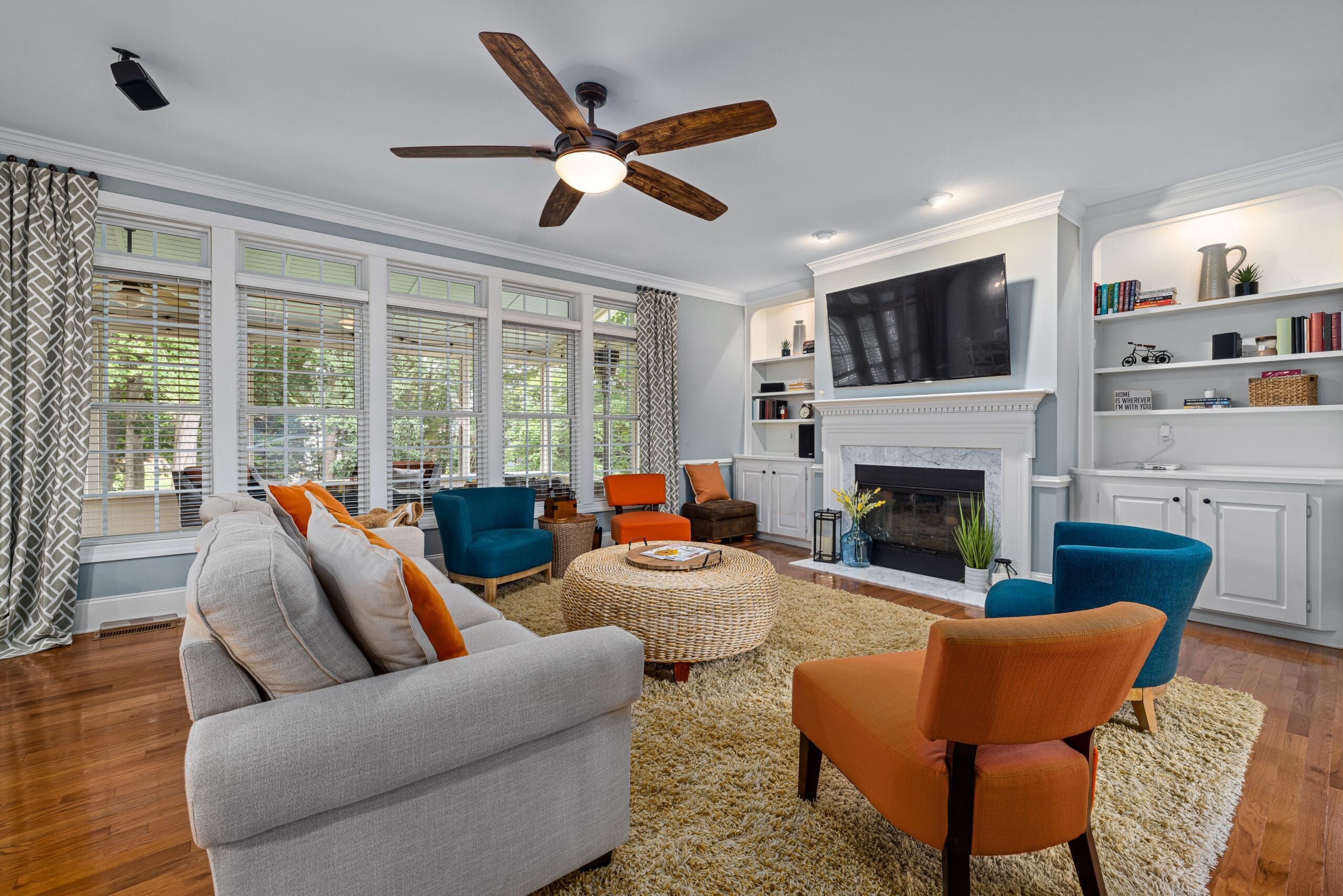
he easiest way to arrange living room chairs naturally is to position them in relation to the sofa, focal point, and main walking paths rather than placing them wherever there is empty space. When considering how to arrange living room chairs, angle chairs slightly toward the main seating, keep enough room between furniture for comfortable movement, and make sure every chair has a clear purpose within the layout. The result should feel connected without making the room look overly structured.
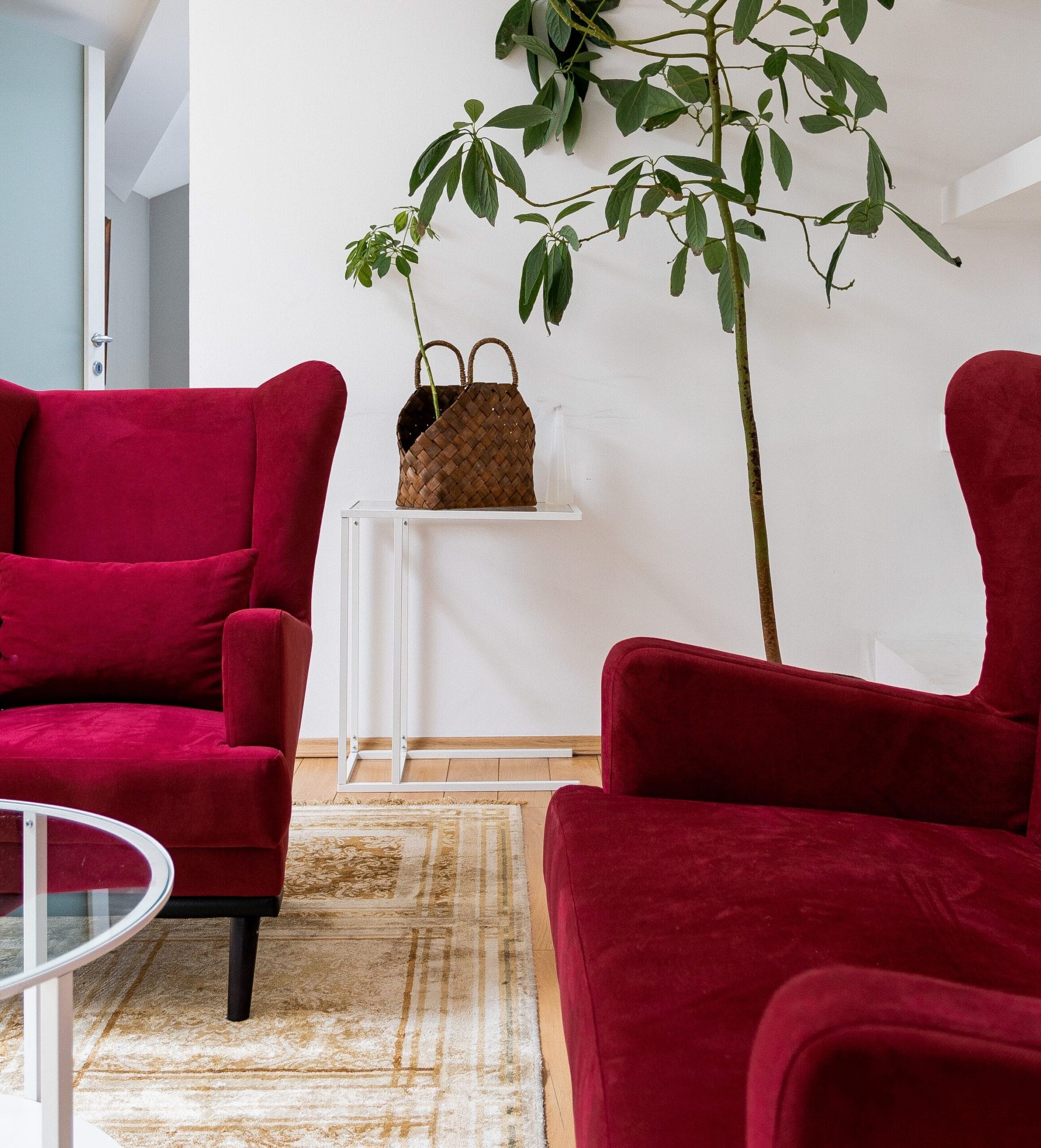
Chairs can completely change how a living room functions because they help shape conversation areas and distribute furniture around the room. The right arrangement can make a large room feel more balanced and give a smaller room additional seating without creating a crowded appearance.
Angle Chairs Toward the Sofa
Placing chairs at a slight angle toward the sofa creates a more natural conversation area than positioning them completely straight or facing away from the main seating. The angle allows people to see one another comfortably while keeping the room’s focal point visible. This arrangement works especially well when the sofa is positioned toward a fireplace or television because the chairs can remain connected to both the seating area and the main feature of the room.
Pro Tip
Turn each chair slightly inward rather than pointing it directly at the sofa. A gentle angle usually creates a more relaxed arrangement and makes conversation easier.
Create a Conversation Zone
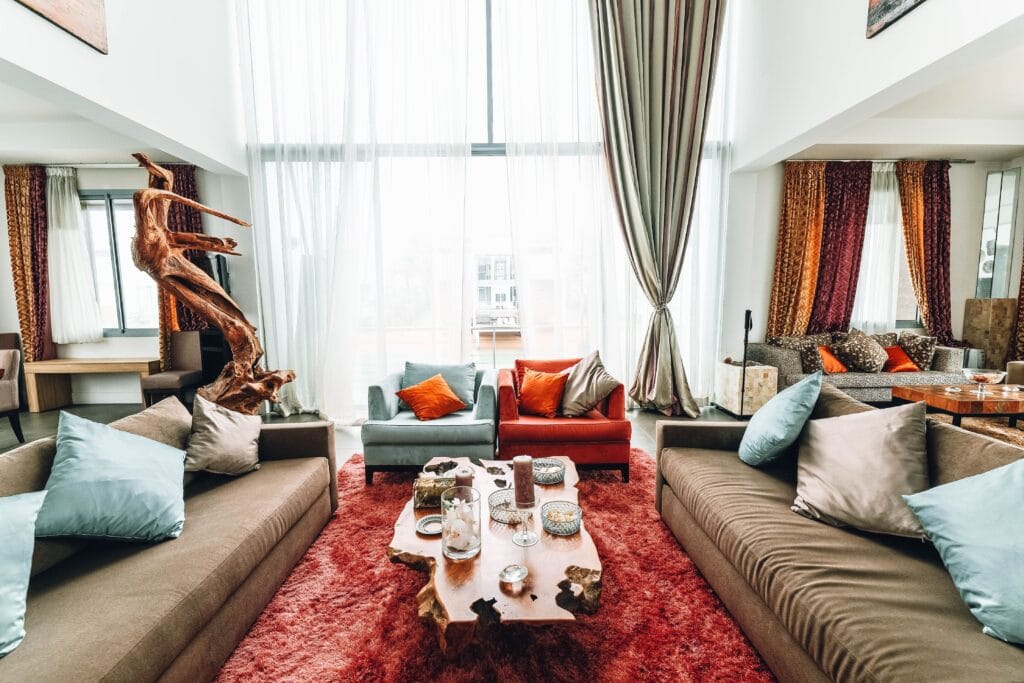
Think about the seating as one connected group instead of separate pieces scattered throughout the room. Place chairs close enough to the sofa and coffee table that people can comfortably interact without having to speak across a large empty area. In larger rooms, two chairs can create a smaller conversation area beside the main sofa, while a single chair can complete a smaller seating arrangement. The goal is to make the chairs feel like part of the main activity in the room.
Keep Walking Paths Clear
A natural layout needs enough open space for people to move through the room without constantly navigating around furniture. Keep the main routes between doors, windows, hallways, and other parts of the home clear. Avoid placing chairs directly in a walking path even when that area appears visually empty. A chair that looks good from one angle can quickly become an obstacle when it interrupts how people actually move through the living room.
Balance the Furniture
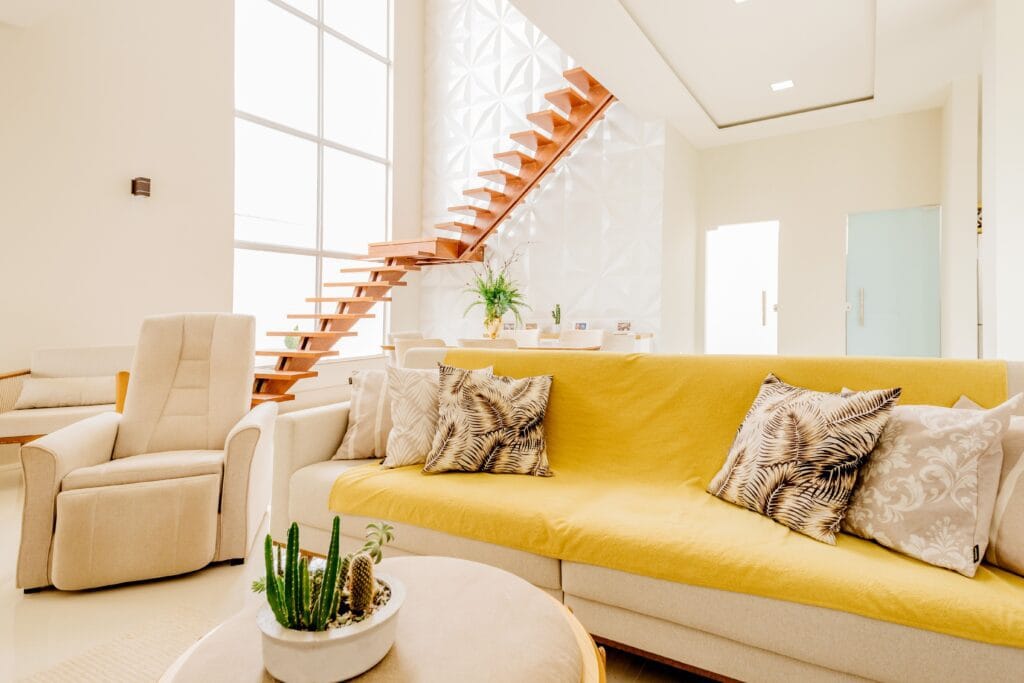
Chairs are useful for balancing the visual weight of a larger sofa or sectional. If the sofa creates most of the visual weight on one side of the room, placing one or two chairs opposite it can create a more even composition. The chairs do not have to match the sofa, but their size and visual presence should make sense together. A pair of substantial chairs may balance a large sectional, while slimmer chairs can work better with a smaller sofa.
Use the Coffee Table as a Guide
The coffee table can help determine where chairs should sit within the seating arrangement. Position the chairs so they have a comfortable relationship with the table while leaving enough room to move around it. A round coffee table can make a room with several chairs easier to navigate, while a rectangular table can create a more structured conversation area. The table should connect the seating rather than sit so far away that the chairs feel disconnected.
Quick Fix
If the chairs feel too far apart, move them a little closer to the coffee table and angle them toward the center of the seating area. Small adjustments can make the arrangement feel much more connected.
Consider the Room’s Focal Point
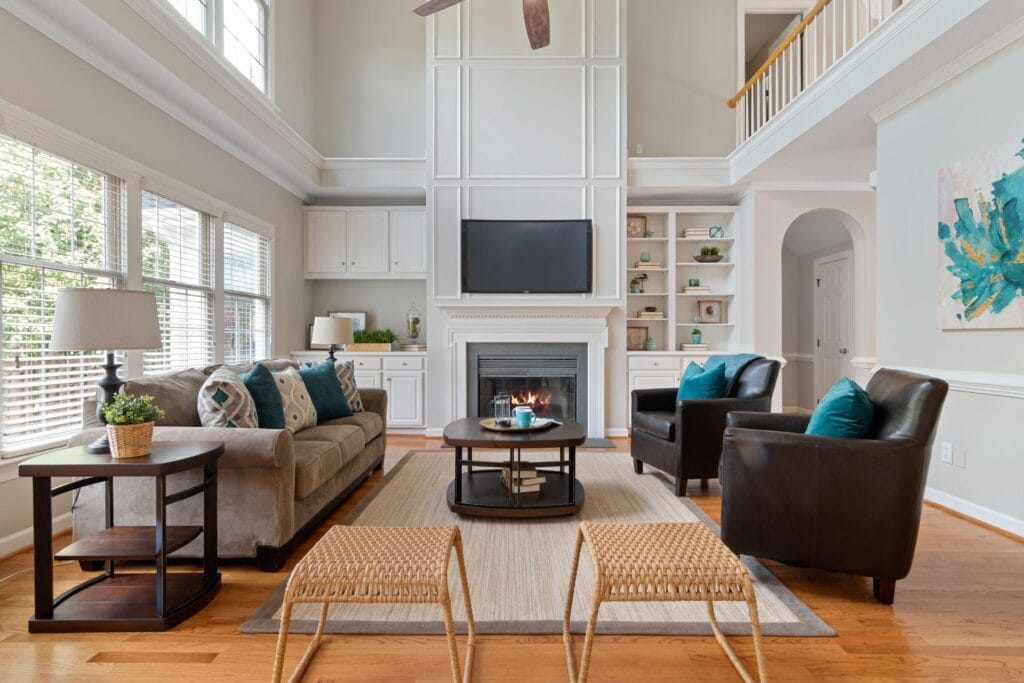
The fireplace, television, large window, artwork, or another architectural feature can influence where chairs should face. Chairs do not always need to face the same direction as the sofa, but they should have a natural relationship with the main focal point. In a room with a fireplace, for example, chairs can angle toward the fire while still facing the sofa enough for conversation. This creates a flexible arrangement instead of forcing every seat into the same position.
Match Chair Size to the Room
The size of the chairs should reflect the scale of both the room and the existing furniture. Oversized chairs can make a smaller living room feel crowded, while very small chairs can disappear in a large space. Measure the chair width and depth and consider how much space it leaves around the seating area. Chairs with slimmer arms or raised legs can also create a lighter visual effect when the room needs more open floor space.
Mix Chair Styles Carefully
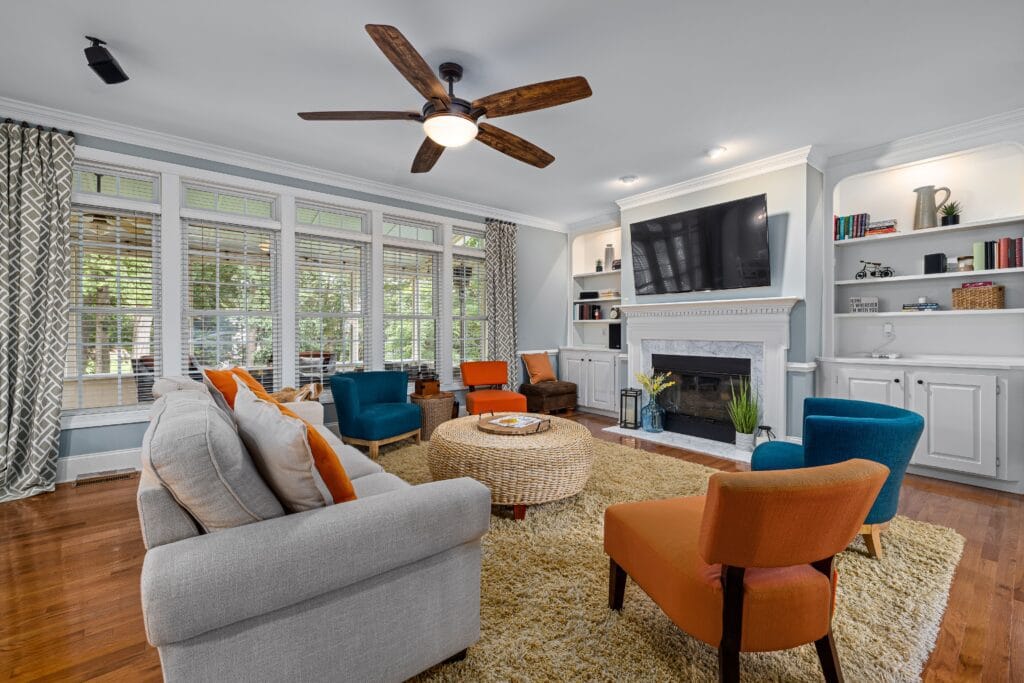
Living room chairs do not have to match each other or the sofa exactly. Different chairs can add personality when they share a color, material, shape, or overall visual weight. A pair of upholstered chairs can work with a different sofa when the fabrics or colors connect them, while wood framed chairs can add contrast to a soft sectional. Repeating one detail elsewhere in the room can make different pieces feel intentional rather than mismatched.
Time Saver
Take a photo from the entrance after arranging the chairs. The image can reveal whether one chair feels disconnected, blocks a path, or creates too much visual weight on one side.
Frequently Asked Questions
How should I arrange chairs around a sofa?
Angle the chairs slightly toward the sofa and place them close enough to create a comfortable conversation area. Keep clear paths around the furniture and make sure the chairs also relate to the room’s focal point.
Should living room chairs face the sofa?
They can, but they do not have to be directly opposite it. Slightly angled chairs often create a more relaxed arrangement while keeping the seating visually connected.
How many chairs should a living room have?
The number depends on the size of the room and the amount of seating already provided by the sofa. One or two chairs are often enough to complete the arrangement without overcrowding the space.
Should chairs match the sofa?
No. Chairs can have different designs as long as they share a visual connection through color, material, proportions, or shape.
How do I arrange chairs in a small living room?
Choose compact chairs, keep them close to the main seating area, and maintain clear walking paths. Lightweight designs and chairs with raised legs can help preserve a sense of open floor space.
Bottom Line
Knowing how to arrange living room chairs is mainly about creating relationships between the chairs, sofa, focal point, and walking paths. Angle chairs toward the conversation area, balance the visual weight of the room, use the coffee table as a guide, and choose pieces that fit the scale of the space.
The most natural layouts do not look overly planned. When the chairs feel easy to use, conversation feels comfortable, and people can move through the room without obstacles, the entire living room becomes more functional and inviting.