

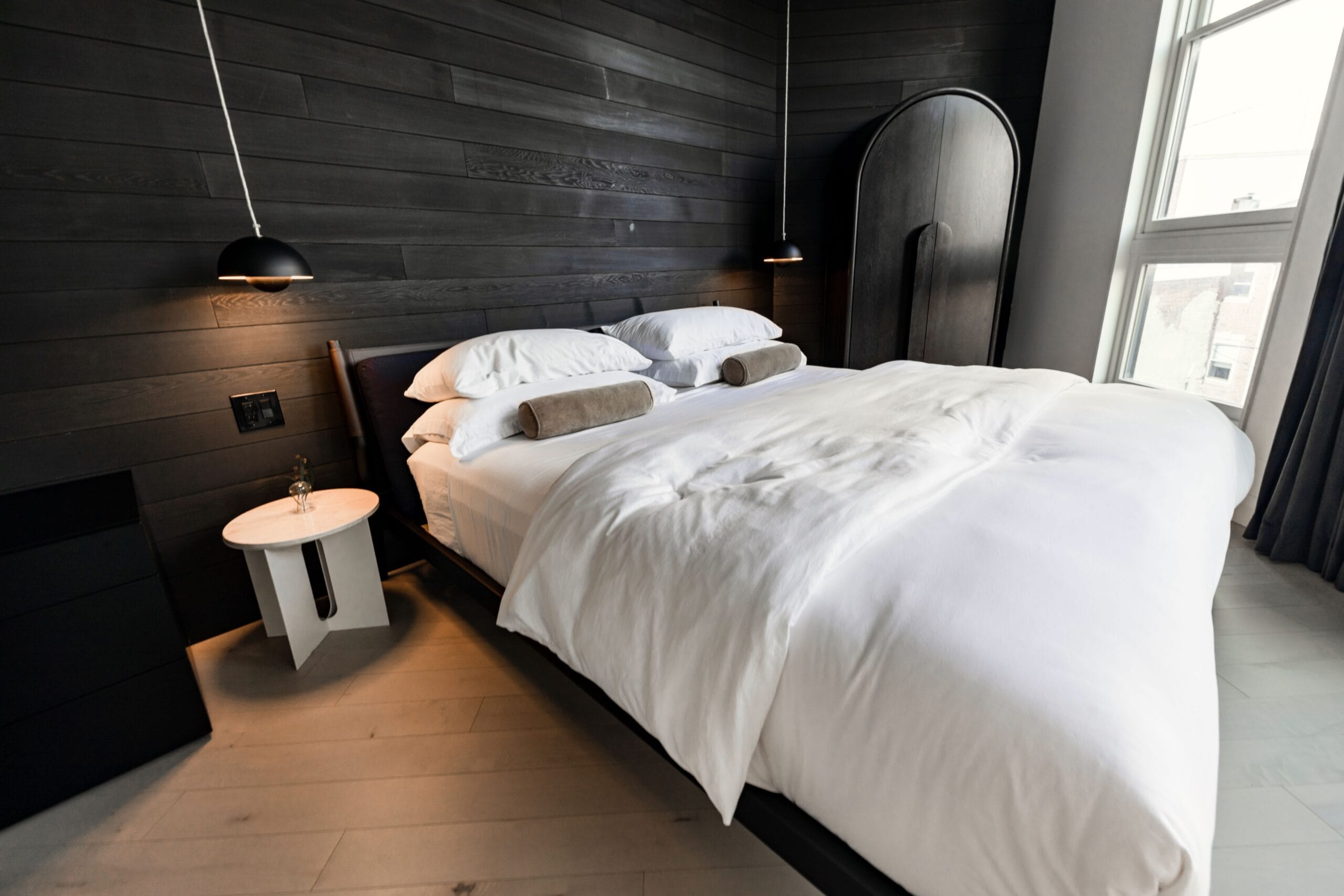
Dark wood bedroom furniture decor ideas can work with almost any color palette when the deeper wood tones are balanced with the right fabrics, wall colors, lighting, and accessories. Dark wood naturally adds visual weight to a bedroom, so the easiest way to make it feel balanced is to pair it with lighter bedding, layered textures, and colors that complement rather than compete with the furniture. Whether your room is filled with cream and beige, muted green, soft blue, warm terracotta, or deeper shades, dark wood can provide a grounding element that makes the entire bedroom feel more connected.
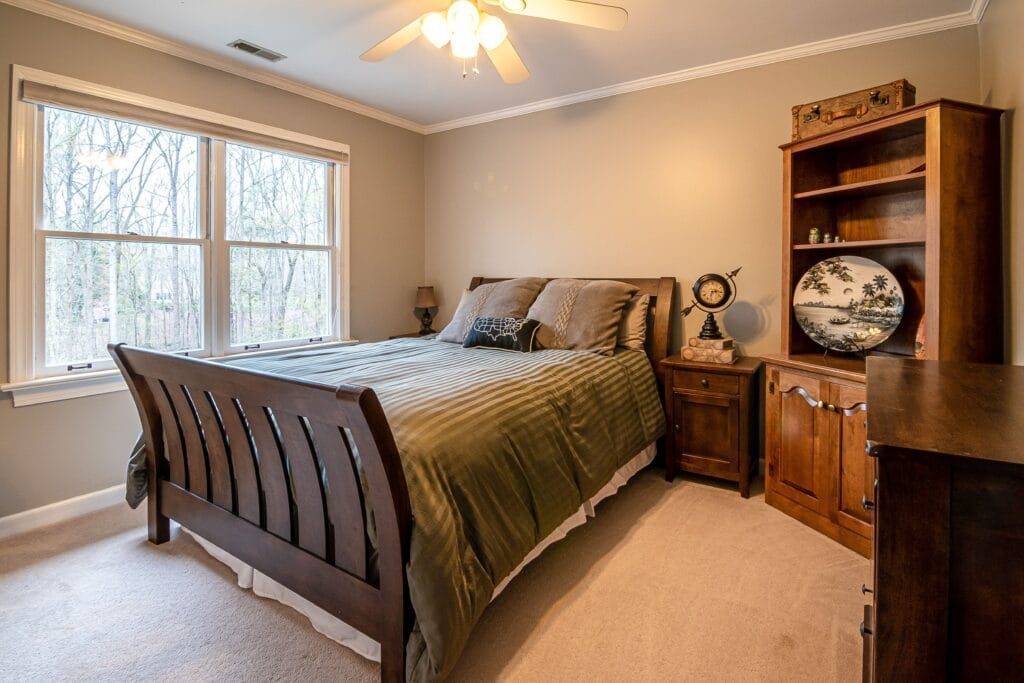
Dark wood furniture also has the advantage of working across several decorating styles. A traditional wooden bed can look completely different when paired with linen bedding and minimal accessories compared with patterned textiles and vintage inspired pieces. Instead of trying to match every piece of furniture, focus on repeating a few colors and materials throughout the room so the dark wood feels intentional.
Pair Dark Wood With Warm White
Warm white is one of the easiest colors to combine with dark wood bedroom furniture because the contrast keeps the room from feeling too heavy. Creamy walls, ivory bedding, and off white curtains can brighten the space while allowing the deeper wood finish to remain noticeable. Avoid overly stark white if the furniture has warm undertones, as a slightly warmer shade will usually create a more connected appearance. Add texture through linen, cotton, wool, or woven accessories to prevent the neutral palette from feeling flat.
Try Beige and Taupe Layers
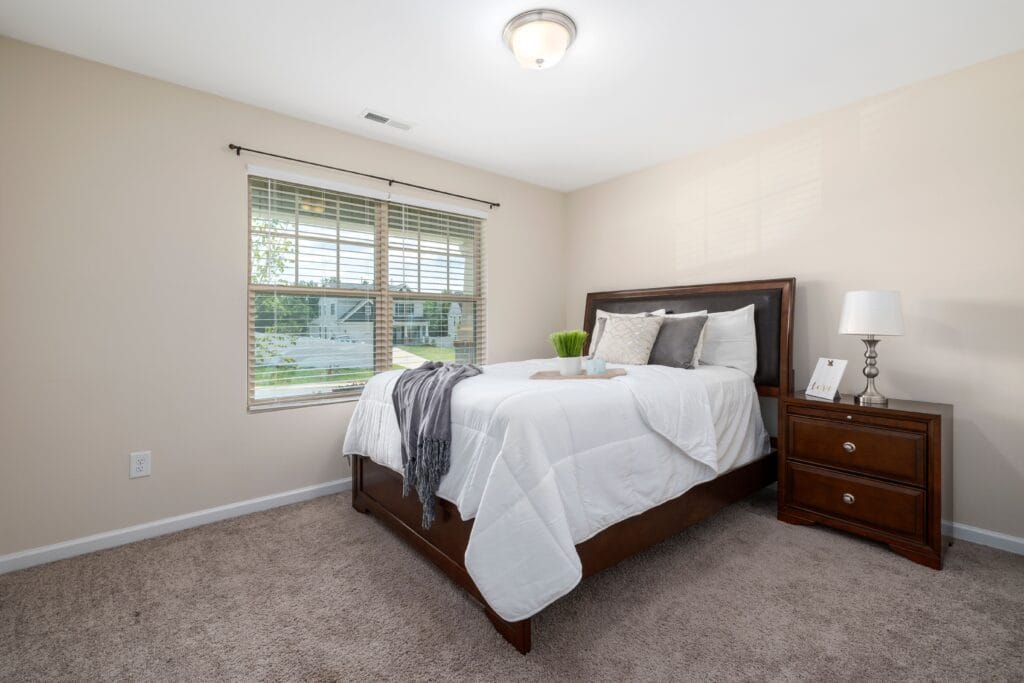
Beige and taupe can soften dark furniture while creating a comfortable, understated bedroom. Use different shades across the bedding, curtains, rug, and upholstery rather than trying to find one exact beige for everything. A taupe rug can connect dark wood flooring with lighter bedding, while beige curtains can soften the contrast between the furniture and walls. These warm neutrals work particularly well when you want the bedroom to feel calm without making the dark furniture disappear.
Pro Tip
If your dark wood furniture feels too heavy, introduce lighter textiles before replacing any furniture. A cream duvet, pale rug, and light curtains can change the balance of the entire room.
Use Muted Green With Dark Wood
Muted green is a natural partner for dark wood because both colors have an earthy quality. Sage, olive, moss, and muted forest green can be introduced through bedding, curtains, artwork, or a painted accent wall. Keep the green slightly subdued if the furniture is very dark so the room does not become visually dense. Natural textures such as linen, woven baskets, plants, and cotton bedding can reinforce the connection between the green palette and the wood.
Add Soft Blue for Contrast
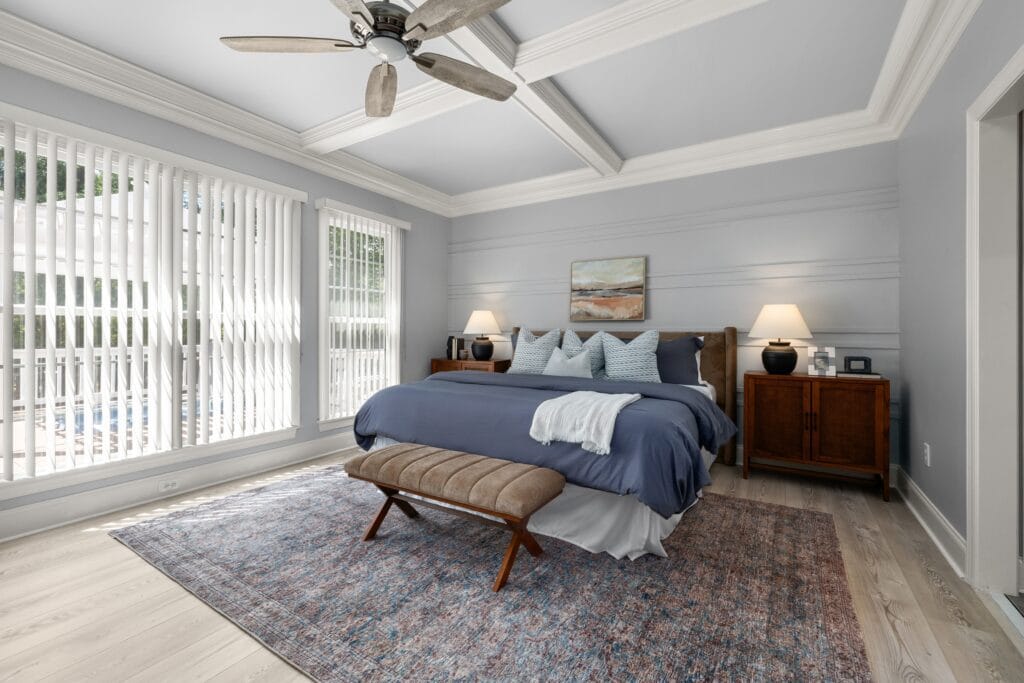
Soft blue can create a cooler contrast against the warmth of dark wood furniture without making the bedroom feel stark. Dusty blue, muted blueish gray, and faded denim shades can work particularly well in bedding, curtains, or an accent chair. Balance the cooler color with cream, beige, or warm white so the room still feels comfortable. A blue and dark wood combination can also work particularly well when you want the bedroom to have a relaxed traditional or coastal influence without relying on bright colors.
Quick Fix
Add a dusty blue throw or pair of pillow covers to neutral bedding if you want to introduce color without changing the entire bedroom palette.
Try Terracotta and Warm Earth Tones
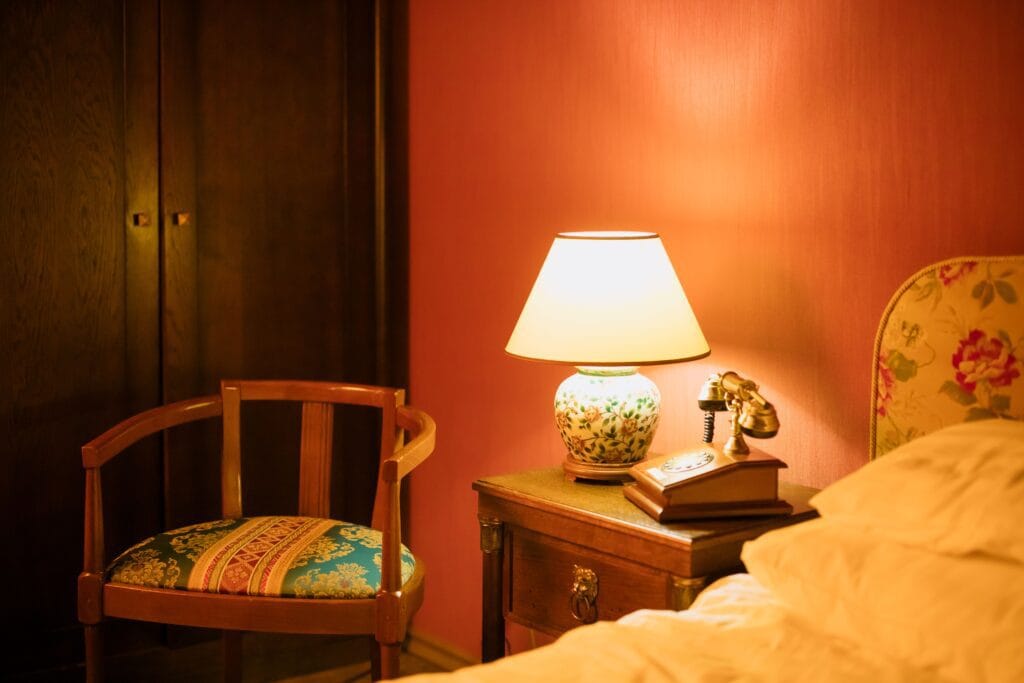
Terracotta, rust, clay, and muted cinnamon can bring warmth into a bedroom with dark wood furniture. These shades work especially well when the furniture has reddish or warm brown undertones because they create a natural relationship between the wood and textiles. Use earth tones selectively through a quilt, artwork, rug, or decorative pillow rather than covering every surface in a strong color. Cream and beige can be used alongside terracotta to keep the room balanced.
Use Dark Colors Carefully
Dark walls and dark wood furniture can work together, but the room needs enough variation in texture and tone to avoid feeling flat. Deep green, charcoal, navy, and chocolate brown can create a moody bedroom when paired with lighter bedding and warm lighting. Instead of using the darkest shade everywhere, choose one main area for it and allow lighter surfaces to break up the composition. Soft textiles, warm lamps, and reflective details can also help maintain depth when the overall palette is darker.
Budget Option
If you want to experiment with a darker palette, change the bedding and add a few darker accessories before repainting the room. This lets you test the combination without committing to a permanent update.
Add a Light Rug
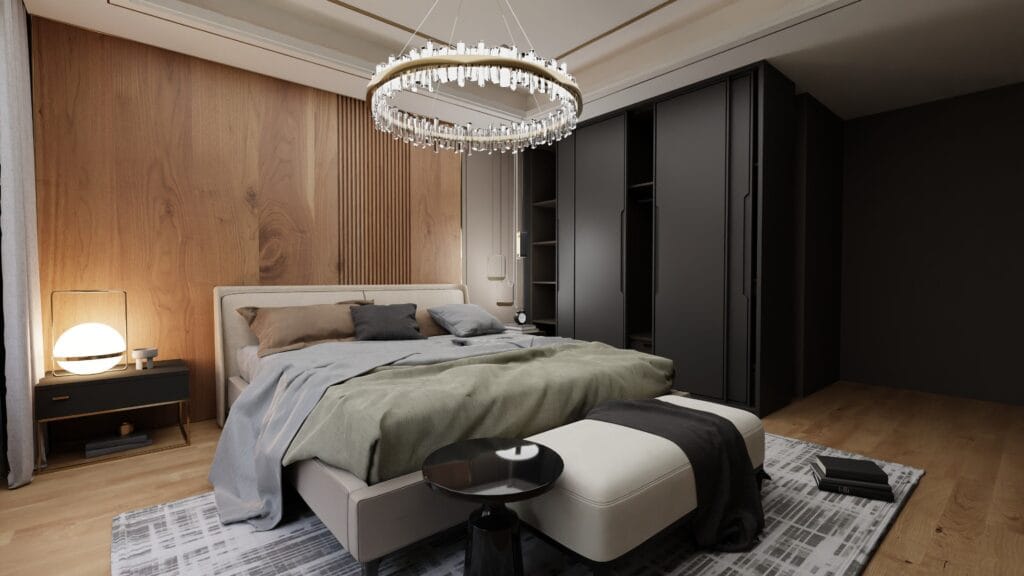
A lighter rug can visually separate dark furniture from a dark floor while making the bedroom feel softer. Cream, beige, oatmeal, light gray, or subtle patterned rugs can all work depending on the existing color palette. Choose a rug large enough to extend beyond the sides of the bed so it feels like part of the furniture arrangement rather than a small decorative accent. A textured rug can be particularly useful because it adds softness without introducing another strong color.
Balance the Furniture With Light Bedding
Dark wood furniture becomes easier to work with when the bed is dressed in lighter textiles. Cream, warm white, beige, and soft gray bedding can create contrast while keeping the bedroom comfortable. Layering different textures helps the bed look more substantial without adding additional colors. A quilt, duvet, folded blanket, and a few pillows can provide enough variation to balance the visual weight of a dark wood bed while still keeping the room practical.
Storage Tip
Use light colored baskets or fabric storage bins inside and around dark wood furniture to introduce contrast while keeping everyday items organized.
Repeat the Wood Throughout the Room
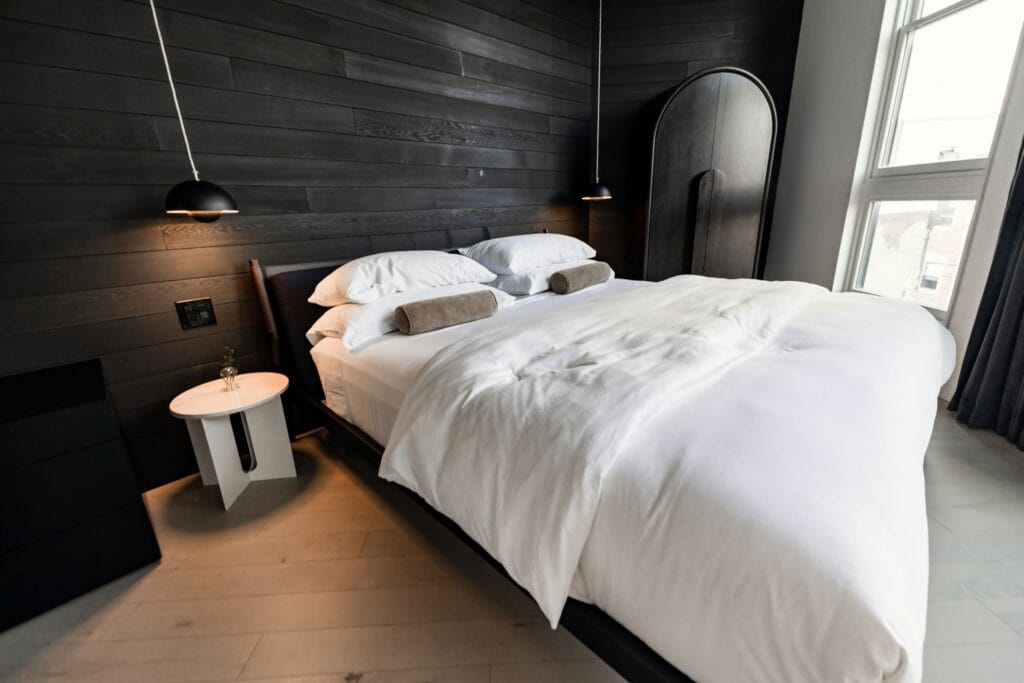
You do not need every piece of furniture to have the same finish, but repeating the dark wood tone in a few smaller areas can make the room feel more cohesive. A dark wood nightstand paired with a similar picture frame, bench, mirror frame, or small stool can connect the furniture without creating a matching bedroom set. If you have several different wood tones, use textiles and rugs to create separation rather than trying to make every finish identical.
Use Warm Lighting
Warm lighting can soften the appearance of dark wood, especially in the evening. Bedside lamps, wall sconces, pendant lights, and accent lighting can highlight the grain and texture of the furniture while creating a more comfortable atmosphere. Choose warm bulbs and position light sources at different heights so the room does not depend entirely on a bright overhead fixture. Brass, aged metal, ceramic, or linen lamp shades can also introduce another layer of texture without competing with the furniture.
Time Saver
Replace cool bulbs with warmer bulbs before making other décor changes. The shift in lighting can immediately change how dark wood and surrounding colors appear.
Mix Modern and Traditional Pieces
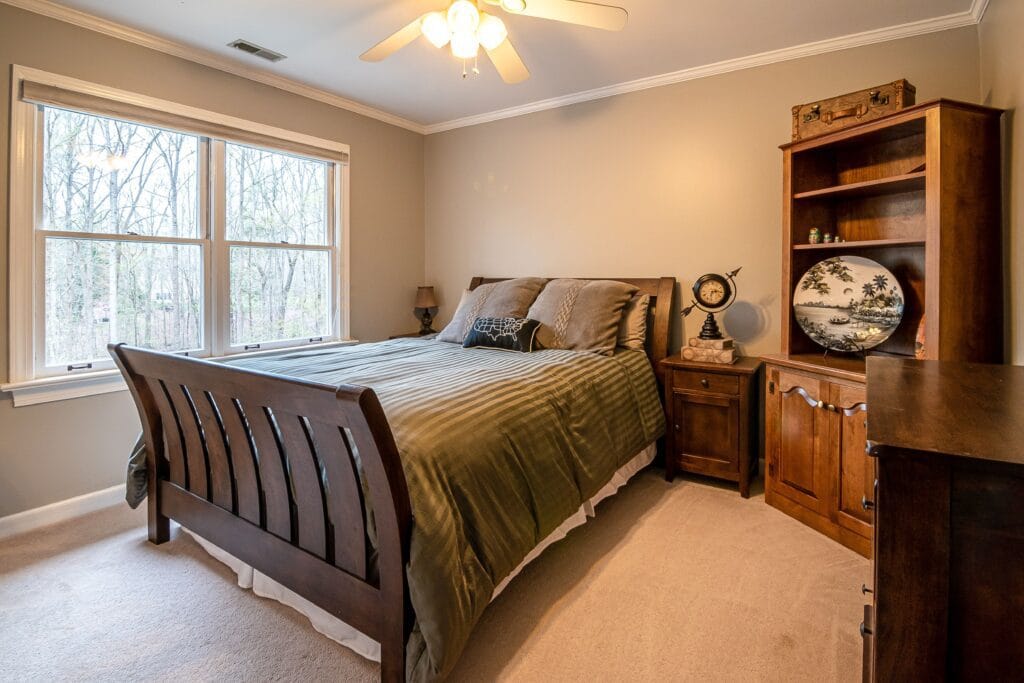
Dark wood furniture does not mean the entire bedroom needs to look traditional. Pairing a substantial wooden bed with simple contemporary bedding, a modern lamp, or a minimal rug can create a more balanced appearance. Likewise, adding vintage artwork, patterned textiles, or classic lighting can give newer dark wood furniture more character. The key is repeating a few colors or materials so the different styles feel connected rather than unrelated.
Frequently Asked Questions
What colors work best with dark wood bedroom furniture?
Dark wood works with many palettes, including warm white, cream, beige, taupe, muted green, dusty blue, terracotta, navy, and deep brown. The best choice depends on whether you want the room to feel lighter, warmer, cooler, or more dramatic.
Does dark wood furniture make a bedroom look smaller?
It can make a room feel visually heavier when combined with many other dark surfaces. Lighter walls, bedding, rugs, and curtains can balance the furniture and help the bedroom maintain an open appearance.
What color bedding looks best with dark wood?
Warm white, cream, beige, soft gray, muted green, and dusty blue all work well. Layering several light or mid tone textures can create contrast without making the room feel disconnected.
Can dark wood furniture work with colorful walls?
Yes. Muted green, dusty blue, terracotta, and other softened colors can complement dark wood particularly well. Keeping the bedding and accessories relatively restrained helps prevent the room from becoming too busy.
Should all bedroom furniture match dark wood?
No. Mixing wood finishes can make the bedroom feel more collected and natural. Repeat the darker finish in a few smaller pieces or accessories to create enough visual connection.
Bottom Line
Dark wood bedroom furniture decor ideas can work with almost any color palette when the furniture is balanced with lighter surfaces, complementary colors, layered textures, and warm lighting. Cream, beige, muted green, dusty blue, terracotta, and even deeper shades can all work with dark wood when used thoughtfully.
Instead of trying to make every element match the furniture exactly, use the dark wood as an anchor and build the rest of the room around it. A few repeated colors, comfortable textiles, and carefully chosen accessories can make dark wood feel natural in almost any bedroom style.