

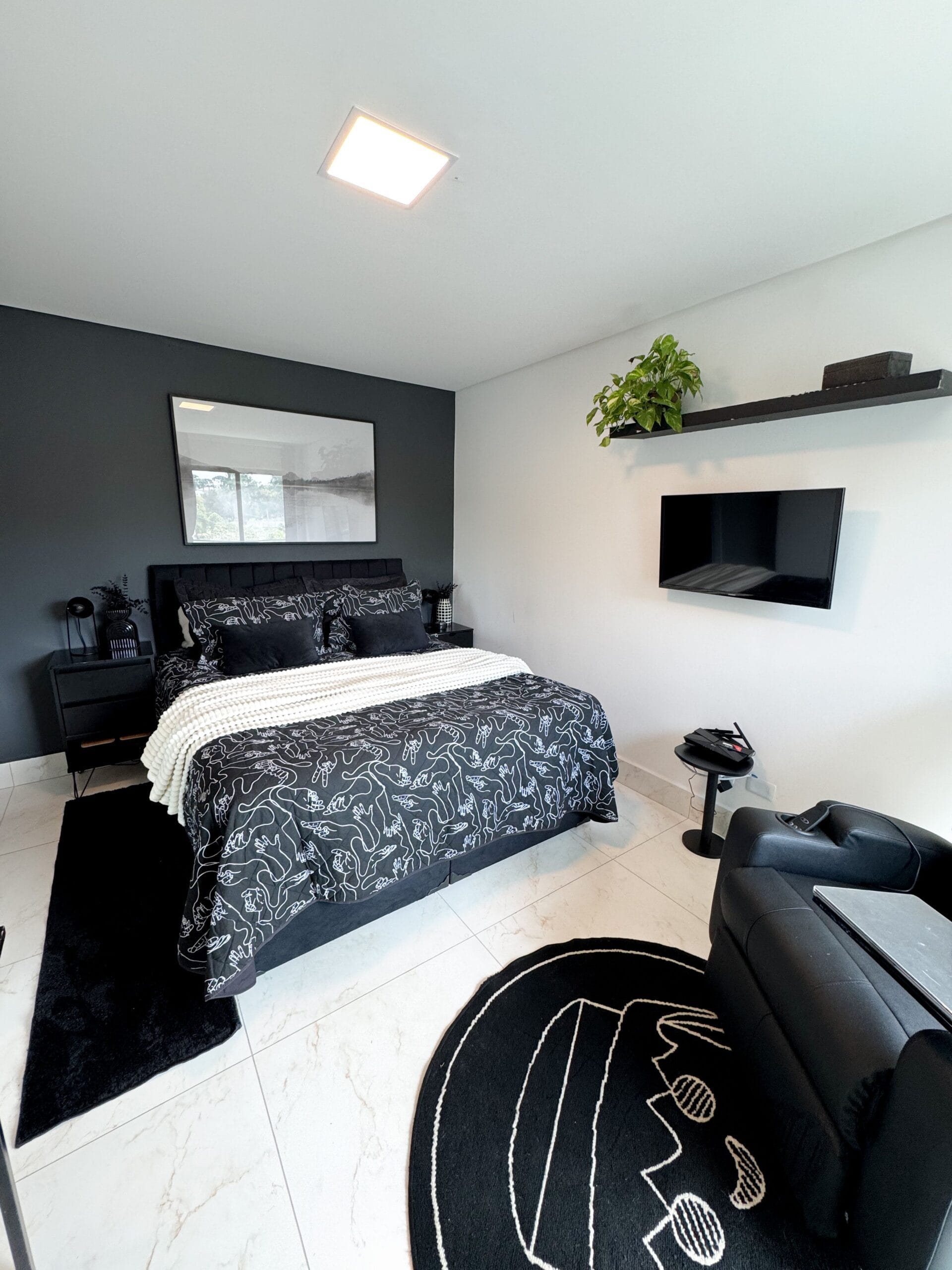
The easiest way to make dark bedroom furniture work is to balance its visual weight with lighter bedding, warm lighting, soft textures, natural materials, and a carefully chosen color palette. When considering how to decorate a bedroom with dark furniture, avoid making every element equally dark and instead use lighter walls, rugs, curtains, or bedding to create contrast. A few repeated colors and materials can then connect the furniture with the rest of the room.
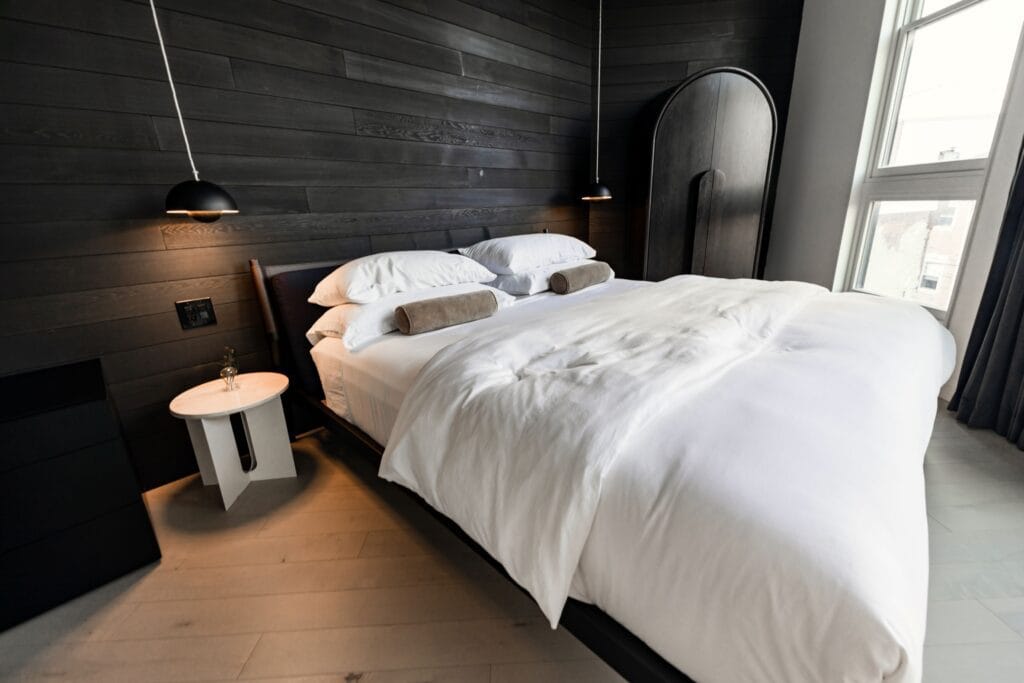
Dark furniture can give a bedroom a rich and grounded appearance, but it can also make the space feel heavy when too many dark surfaces are grouped together. The solution is not to avoid dark furniture but to create enough contrast and variation around it. Light fabrics, warm finishes, and thoughtful placement can make the room feel balanced while allowing the furniture to remain a strong feature.
Pair Dark Furniture With Light Bedding
Light bedding is one of the easiest ways to balance dark bedroom furniture. Cream, warm white, beige, and soft gray can create contrast against a dark bed frame, dresser, or nightstand while keeping the room comfortable. Layer the bedding with a duvet, quilt, textured blanket, and a few pillows to soften the overall appearance. Keeping the larger fabric surfaces light allows the dark furniture to provide definition without making the entire bedroom feel visually heavy.
Choose Warm Wall Colors
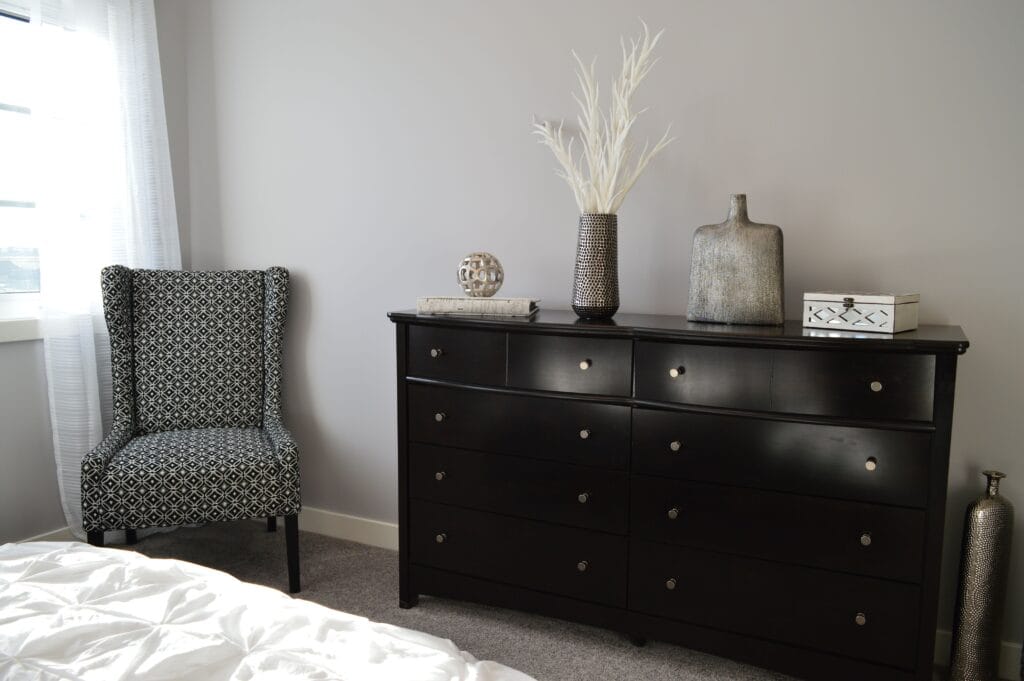
Warm wall colors can help dark furniture feel connected to the rest of the bedroom rather than standing out too sharply. Cream, warm white, beige, taupe, muted green, and soft earthy shades can all complement deep wood, black, or charcoal furniture. If you prefer darker walls, balance them with noticeably lighter bedding and curtains. The wall color should create enough contrast for the furniture to remain visible while still making the room feel cohesive.
Pro Tip
If dark furniture feels too heavy, start by changing the bedding and wall color before replacing the furniture. Lighter surrounding surfaces can completely change how the same pieces look.
Add a Large Rug
A large rug can soften the visual weight of dark furniture while connecting the bed and surrounding pieces to the floor. Choose a rug that extends beyond the bed and provides enough visible texture around the furniture. Cream, beige, oatmeal, soft gray, and muted patterned rugs can all work well. If the furniture is very dark and simple, a subtle pattern can add interest without competing with the larger pieces.
Use Warm Layered Lighting
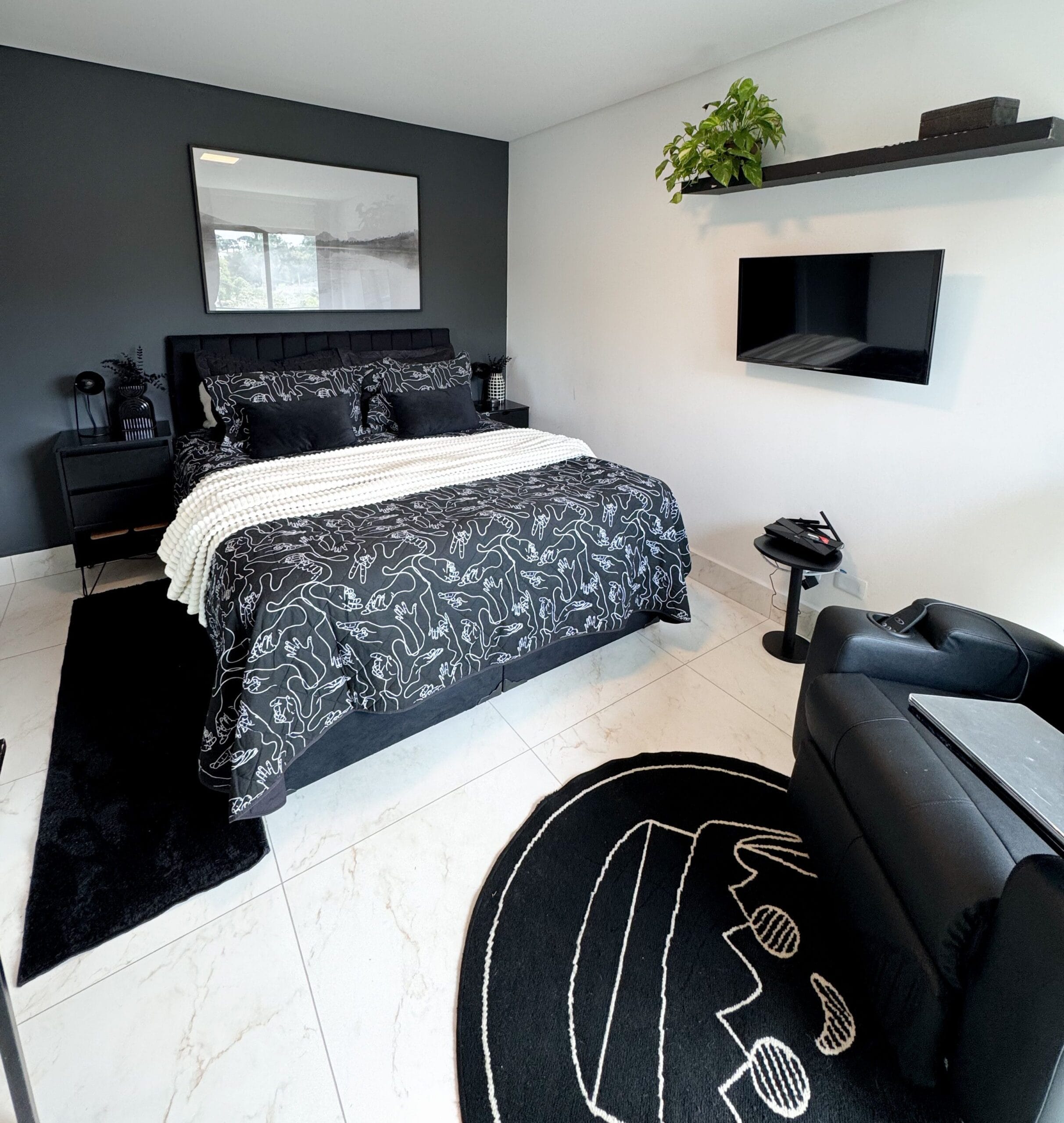
Warm lighting is especially important when decorating with dark furniture because it prevents the room from feeling cold or overly heavy in the evening. Use bedside lamps, wall sconces, floor lamps, and a soft ceiling fixture to create several layers of light. Warm bulbs can highlight wood grain, fabric texture, and metal details while making lighter bedding feel softer. Positioning lights at different heights can also prevent the room from relying too heavily on one bright overhead fixture.
Bring in Natural Materials
Natural materials can soften the appearance of dark furniture and create more visual variation. Linen curtains, cotton bedding, woven baskets, wool rugs, rattan accents, ceramic accessories, and lighter wood details can all introduce texture. You do not need to use every material together. Choose a few that complement the furniture and repeat them throughout the room so the space feels connected rather than filled with unrelated finishes.
Add One Lighter Accent Color
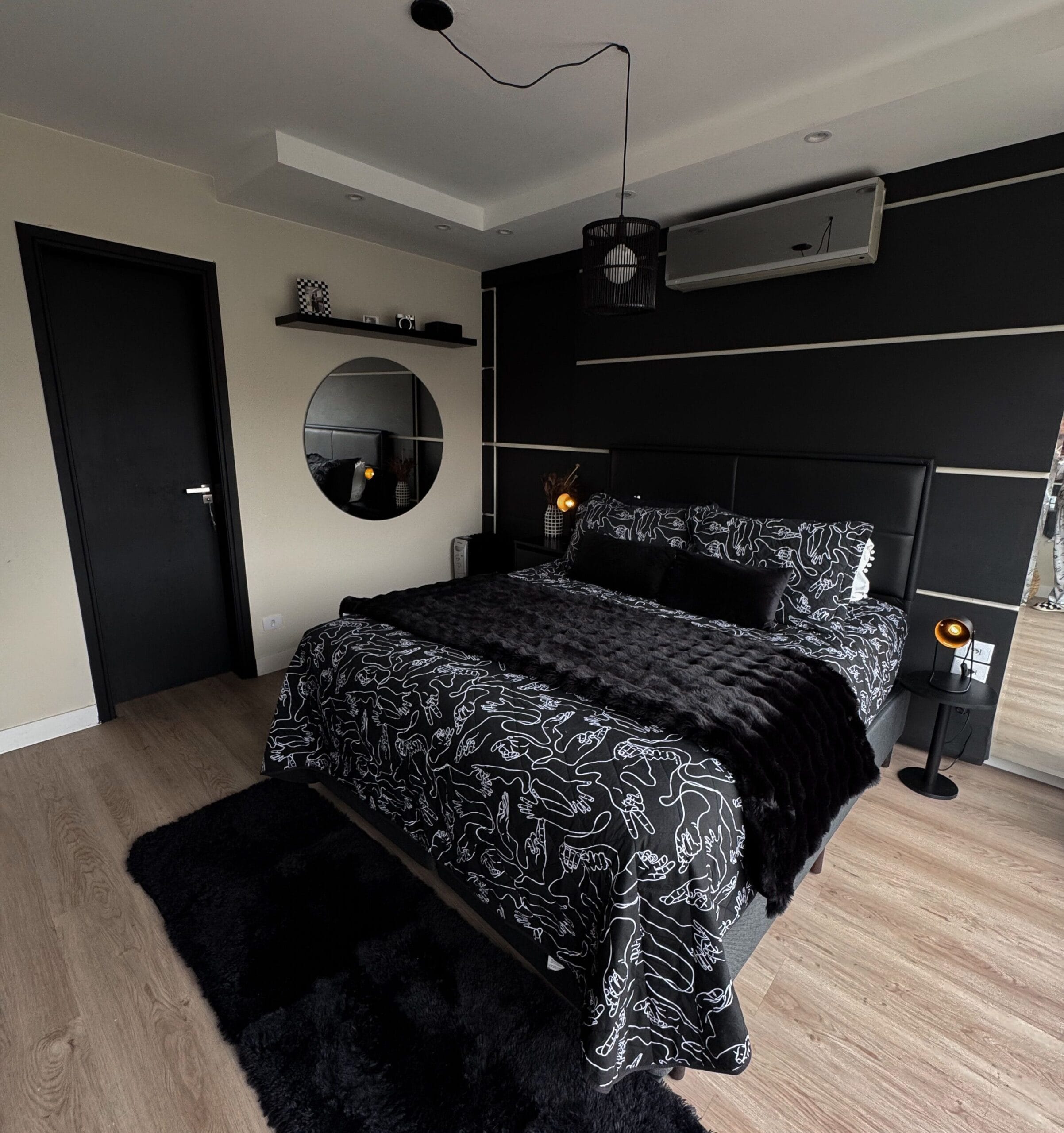
Dark furniture can work with almost any accent color when the shade is chosen thoughtfully. Muted green, dusty blue, terracotta, soft pink, cream, or warm beige can all bring personality without competing with the furniture. Choose one accent shade and repeat it through pillows, artwork, curtains, or a throw rather than scattering several unrelated colors throughout the bedroom. A controlled accent color helps connect the dark furniture with smaller decorative details.
Quick Fix
Add a light colored throw or a few lighter pillow covers to the bed if the room feels too dark. It is a simple way to create contrast without changing the furniture.
Balance the Furniture With Light Curtains
Curtains can help soften a bedroom that contains several dark furniture pieces. Choose lightweight panels in cream, warm white, beige, or another pale neutral to allow natural light to remain visible during the day. Floor length curtains can also add softness and emphasize the height of the room. If you prefer darker curtains, keep the bedding and rug lighter so there is still enough contrast throughout the bedroom.
Use Artwork to Connect the Colors
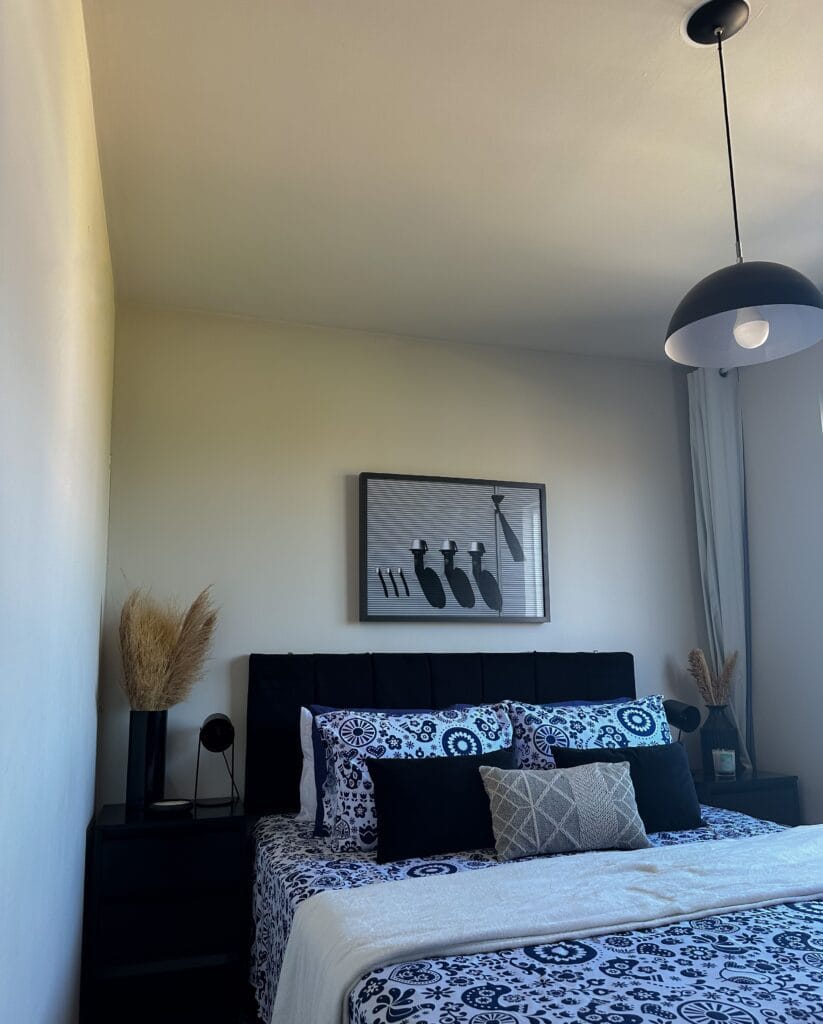
Artwork can act as a visual bridge between dark furniture and lighter bedroom elements. Choose artwork that includes both deeper and lighter shades already present in the room. A large abstract print, landscape, botanical piece, or simple photograph can connect the bed, rug, curtains, and accessories without requiring exact color matches. Choose one substantial piece or a carefully arranged group rather than filling every wall with small artwork.
Keep the Room From Becoming Too Dark
When several dark furniture pieces are already present, avoid adding dark colors to every remaining surface. Keep some areas noticeably lighter and allow natural light to remain visible where possible. Open floor space also becomes important because it prevents the dark furniture from appearing crowded together. A balanced mixture of dark furniture, light fabrics, warm wood, and open space can create depth without making the bedroom feel enclosed.
Time Saver
Take a photo of the bedroom from the doorway during both the day and evening. The images can reveal whether the room needs more light, more contrast, or simply less visual clutter.
Frequently Asked Questions
How do I decorate a bedroom with dark furniture without making it look gloomy?
Balance the furniture with lighter bedding, warm wall colors, soft rugs, light curtains, warm lighting, and natural textures. Leaving some open space also helps the room feel lighter.
What colors go best with dark bedroom furniture?
Cream, warm white, beige, taupe, muted green, dusty blue, terracotta, soft gray, and natural wood can all complement dark furniture. Choose shades that work with the undertones of the furniture.
What color bedding works best with dark furniture?
Warm white, cream, beige, soft gray, and muted colors create useful contrast. Layering different textures can make the bed feel softer and more inviting.
Should bedroom walls be light with dark furniture?
Light walls are an easy way to create contrast, especially in smaller bedrooms. However, darker walls can also work when they are balanced with lighter bedding, curtains, rugs, and warm lighting.
Can dark furniture work in a small bedroom?
Yes. Keep the surrounding colors lighter, choose furniture with an appropriate scale, maintain clear walking paths, and avoid filling every surface with dark accessories.
Bottom Line
Knowing how to decorate a bedroom with dark furniture is mainly about balancing contrast, warmth, and visual weight. Use lighter bedding and rugs, warm wall colors, layered lighting, natural textures, light curtains, and one controlled accent color to keep the room from feeling too heavy.
Dark furniture can be one of the strongest features in a bedroom when it is surrounded by the right supporting elements. Instead of trying to make every piece match, create connections through color, texture, lighting, and proportion so the entire room feels comfortable and cohesive.