
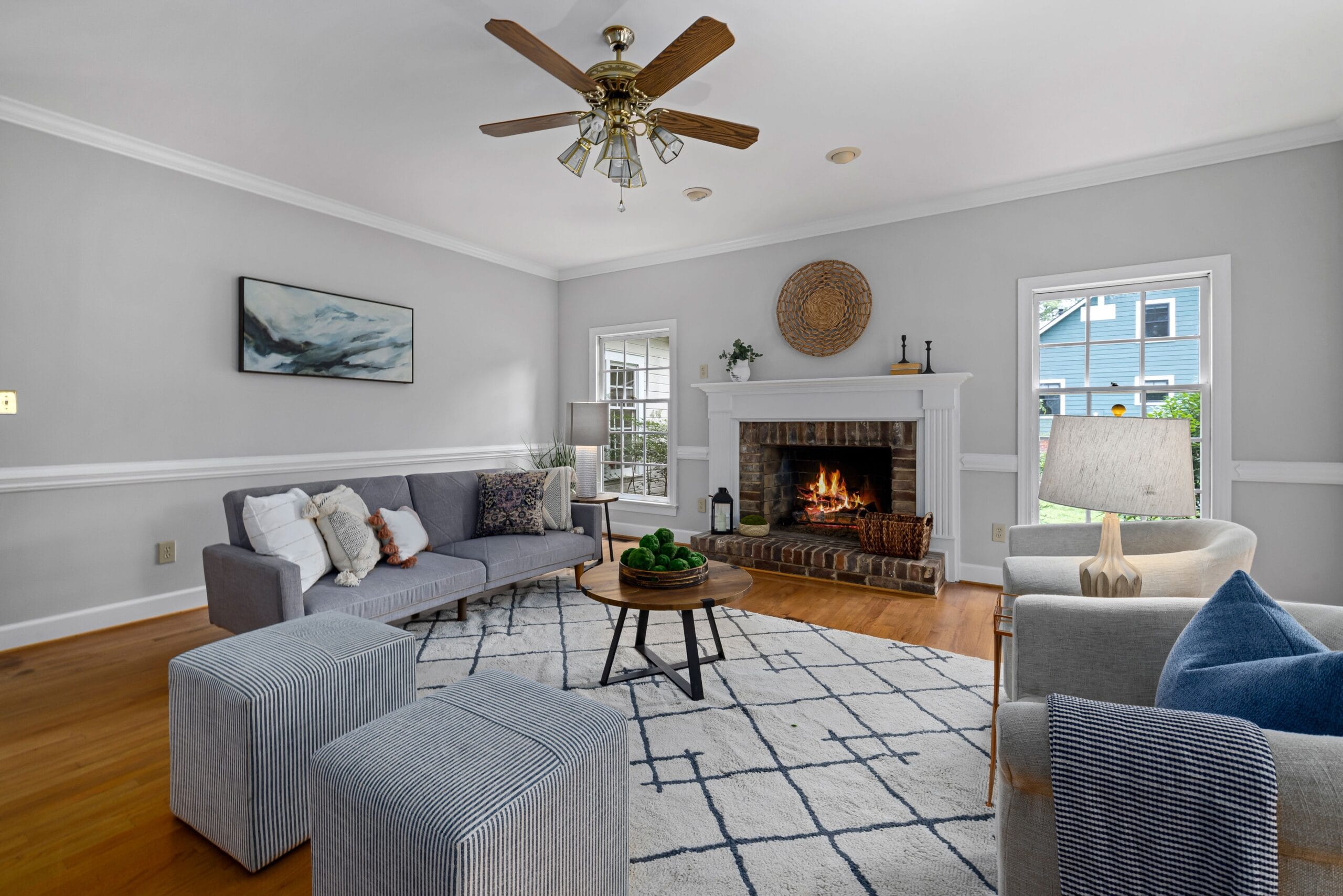
Start by making the fireplace the natural focal point, then arrange the sofa and chairs around it, anchor the seating with a properly sized rug, and balance the wall with artwork or storage. How to decorate a living room with a fireplace becomes much easier when the furniture, lighting, and décor support the fireplace instead of competing with it. The goal is to create a comfortable gathering area that feels balanced from every angle while still leaving enough room for everyday movement.
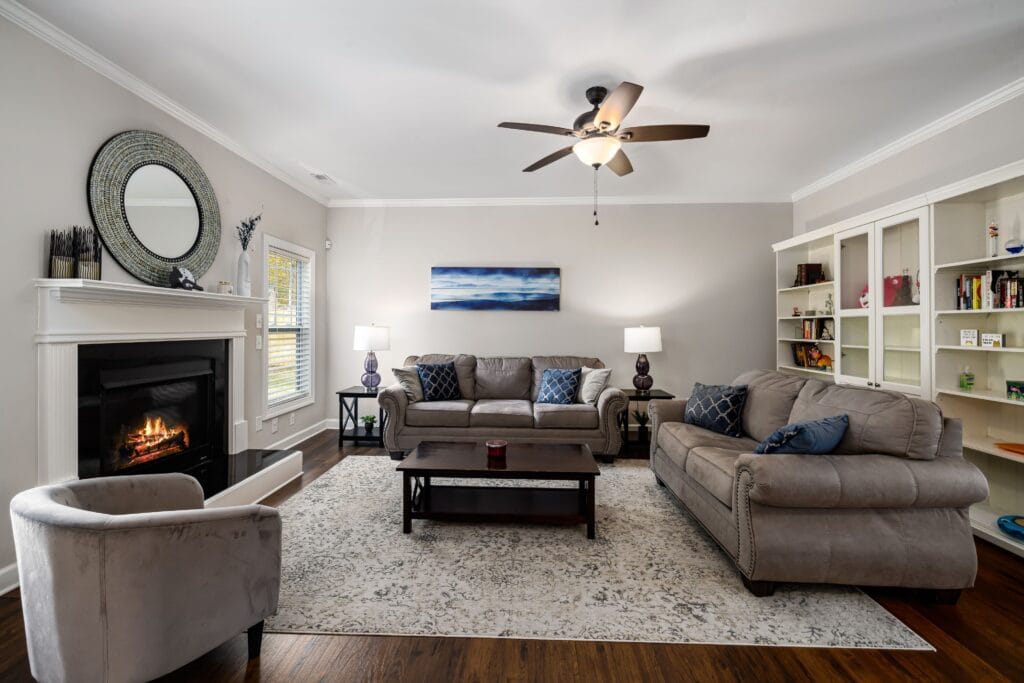
A fireplace already gives the living room a strong architectural feature, so you do not need to fill the space with excessive decoration. The best approach is to build the furniture arrangement around the fireplace and then add warmth through textiles, lighting, natural materials, and a few carefully chosen accessories. This creates a room that feels finished without making the fireplace disappear behind too many competing elements.
Arrange the Sofa Facing the Fireplace
The sofa should usually be the starting point because it is the largest piece of furniture in the room. Position it opposite the fireplace or at an angle that keeps the fire visible from the main seating area while maintaining comfortable walking paths. If the television is also part of the fireplace wall, choose an arrangement that allows both features to work together without forcing the furniture into awkward positions. The sofa should feel connected to the fireplace without being placed so close that the room becomes difficult to move through.
Add Accent Chairs for Balance
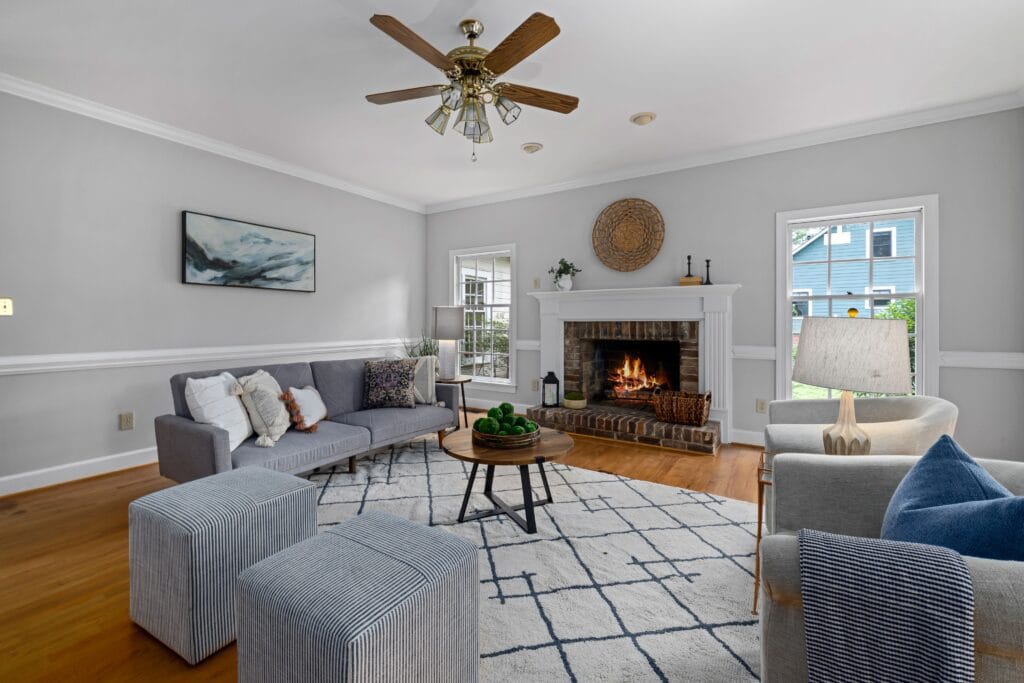
Accent chairs can help complete the seating arrangement while distributing visual weight around the fireplace. Two chairs positioned opposite the sofa or angled toward the fire create a natural conversation area and prevent the room from feeling too sofa focused. Choose chairs that complement the sofa without needing to match exactly. Similar colors, fabrics, wood tones, or proportions can make different seating pieces feel connected while still giving the room more character.
Pro Tip
Angle accent chairs slightly toward the fireplace and sofa rather than pointing them directly at the television. This creates a more natural conversation area.
Use a Large Area Rug
A large rug can visually connect the sofa, chairs, coffee table, and fireplace into one comfortable seating zone. Choose a size that allows at least the front legs of the main seating to rest on the rug so the furniture does not appear scattered around the room. Neutral rugs with subtle texture work particularly well when the fireplace already has strong architectural details, while a gentle pattern can add interest if the rest of the room is simple. The right rug also adds warmth and softness underfoot.
Balance the Fireplace Wall
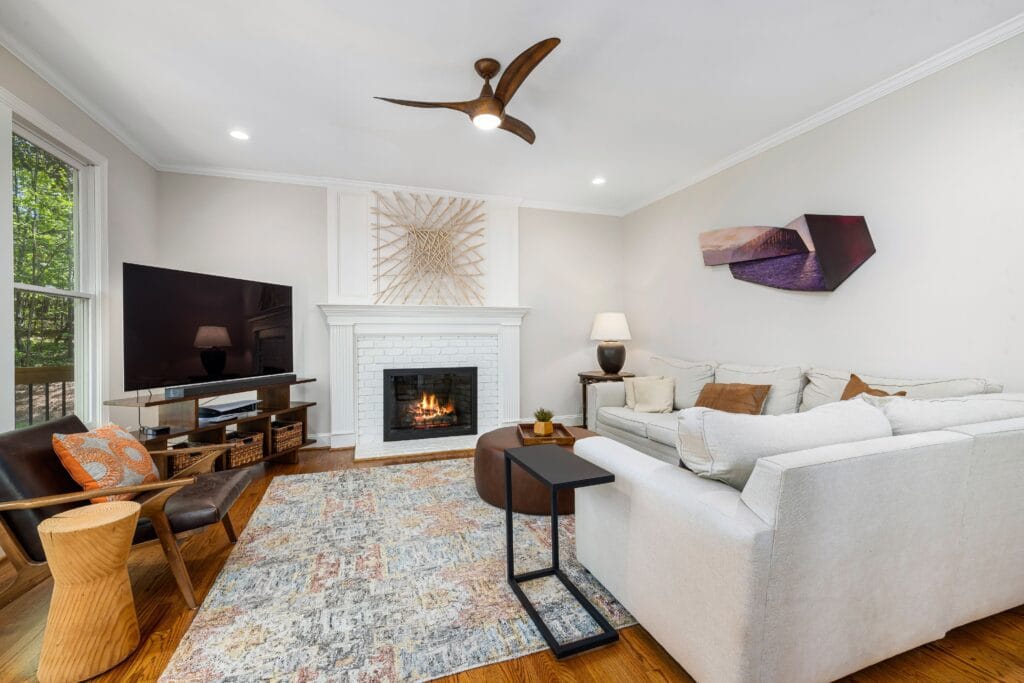
A fireplace wall can sometimes feel visually heavy on one side, especially when the mantel is large or the fireplace is positioned away from the center. Balance the composition with built in shelves, cabinets, artwork, a tall plant, or carefully placed accessories on either side. You do not need perfect symmetry, but both sides should have similar visual weight. Keeping the surrounding décor restrained allows the fireplace to remain the main feature while making the entire wall feel more complete.
Choose the Right Coffee Table
The coffee table should connect the seating arrangement without making the space feel crowded. Choose a shape that complements the furniture, such as a round table for rooms with many straight lines or a rectangular table for a more structured arrangement. The table should be proportional to the sofa and chairs while leaving enough room for people to move comfortably around it. Natural wood, stone, glass, or mixed materials can all work depending on the style of the fireplace and surrounding furniture.
Quick Fix
If the fireplace room feels disconnected, move the coffee table slightly closer to the seating and check that the front legs of the main furniture sit comfortably on the rug.
Layer Warm Lighting
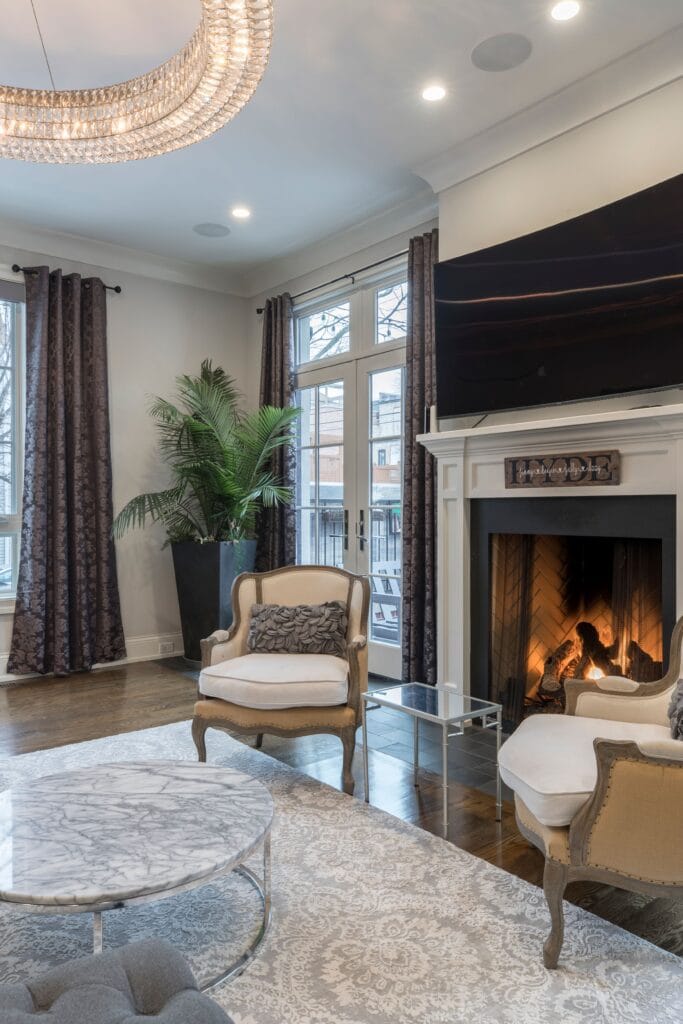
A fireplace creates a natural source of visual warmth, but additional lighting is still important once the fire is not being used. Combine table lamps, floor lamps, wall sconces, and warm accent lighting to create softer pools of light around the room. Place lamps near seating, shelving, and darker corners so the room feels balanced after sunset. Warm lighting can also highlight the texture of wood, stone, brick, and fabric while making the entire fireplace area feel more inviting.
Add Natural Materials
Natural materials can make a fireplace living room feel more comfortable and grounded. Wood furniture, woven baskets, linen curtains, wool rugs, stone accessories, and ceramic pieces can soften the harder surfaces around the fireplace while adding subtle texture. If the fireplace already has stone or brick, repeat one natural material elsewhere in the room so the feature feels connected to the rest of the design. Keeping the material palette relatively simple prevents the space from becoming visually busy.
Keep the Mantel Simple
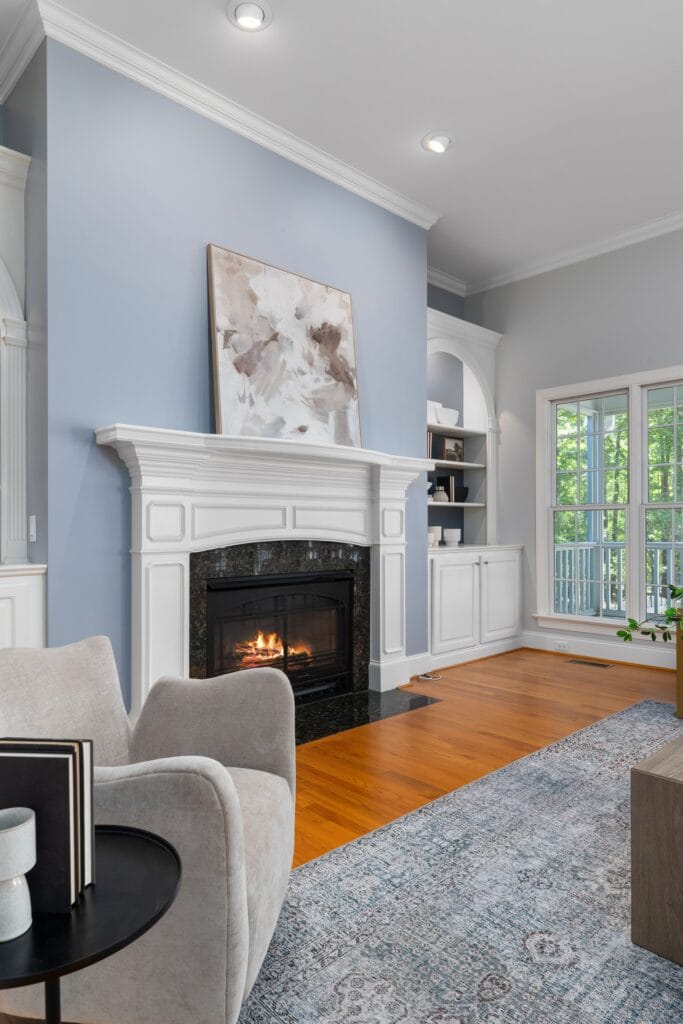
The mantel is an obvious place to decorate, but adding too many objects can weaken the fireplace as a focal point. Choose a few pieces with different heights, such as a framed artwork, ceramic vase, candle, or small sculpture, and leave some open space between them. A mirror or artwork can create a stronger vertical feature while smaller accessories can provide balance. The mantel should complement the fireplace rather than becoming a separate display that competes for attention.
Time Saver
Take a photograph of the fireplace wall after styling the mantel. The photo often makes it easier to notice when there are too many accessories or when the arrangement feels uneven.
Create Comfortable Texture
Soft textures can balance the solid materials commonly found around fireplaces. Add cushions, blankets, upholstered seating, woven baskets, and textured curtains to make the room feel more comfortable. Choose fabrics that coordinate with the rug and furniture rather than adding a completely new pattern or color scheme. Layering a few textures can make the living room feel warmer while preserving enough simplicity for the fireplace to remain the visual anchor.
Frequently Asked Questions
How should furniture be arranged around a fireplace?
Start with the sofa facing the fireplace, then add accent chairs around it to create a comfortable conversation area. Keep enough space between the fireplace and furniture for easy movement while making sure the seating has a clear relationship with the focal point.
Should a television go above the fireplace?
It can work when the room layout requires both features to share one wall, but the television should not completely overpower the fireplace. A balanced mantel, surrounding shelving, or decorative elements can help integrate both features.
What should I put on a fireplace mantel?
Choose a few pieces such as artwork, a mirror, ceramics, candles, or greenery. Vary the heights and leave some empty space so the mantel does not feel crowded.
Should a rug go in front of the fireplace?
Yes. A properly sized rug can connect the seating area while adding warmth and softness. Make sure the rug placement works with the furniture and does not interfere with fireplace safety requirements.
How do I make a fireplace living room feel cozy?
Use comfortable seating, warm layered lighting, soft textiles, natural wood, a large rug, and a restrained collection of accessories. Keeping the layout balanced is just as important as the décor.
Bottom Line
Learning how to decorate a living room with a fireplace is mainly about letting the fireplace lead the layout while using furniture, rugs, lighting, and décor to create balance around it. Arrange the main seating toward the fire, connect the pieces with a properly sized rug, add warmth through natural textures, and keep the mantel and surrounding wall visually controlled.
A fireplace already gives the room character, so you do not need excessive decoration to make it feel finished. When the seating is comfortable and every supporting detail has a clear purpose, the living room can feel balanced, warm, and inviting throughout the year.