
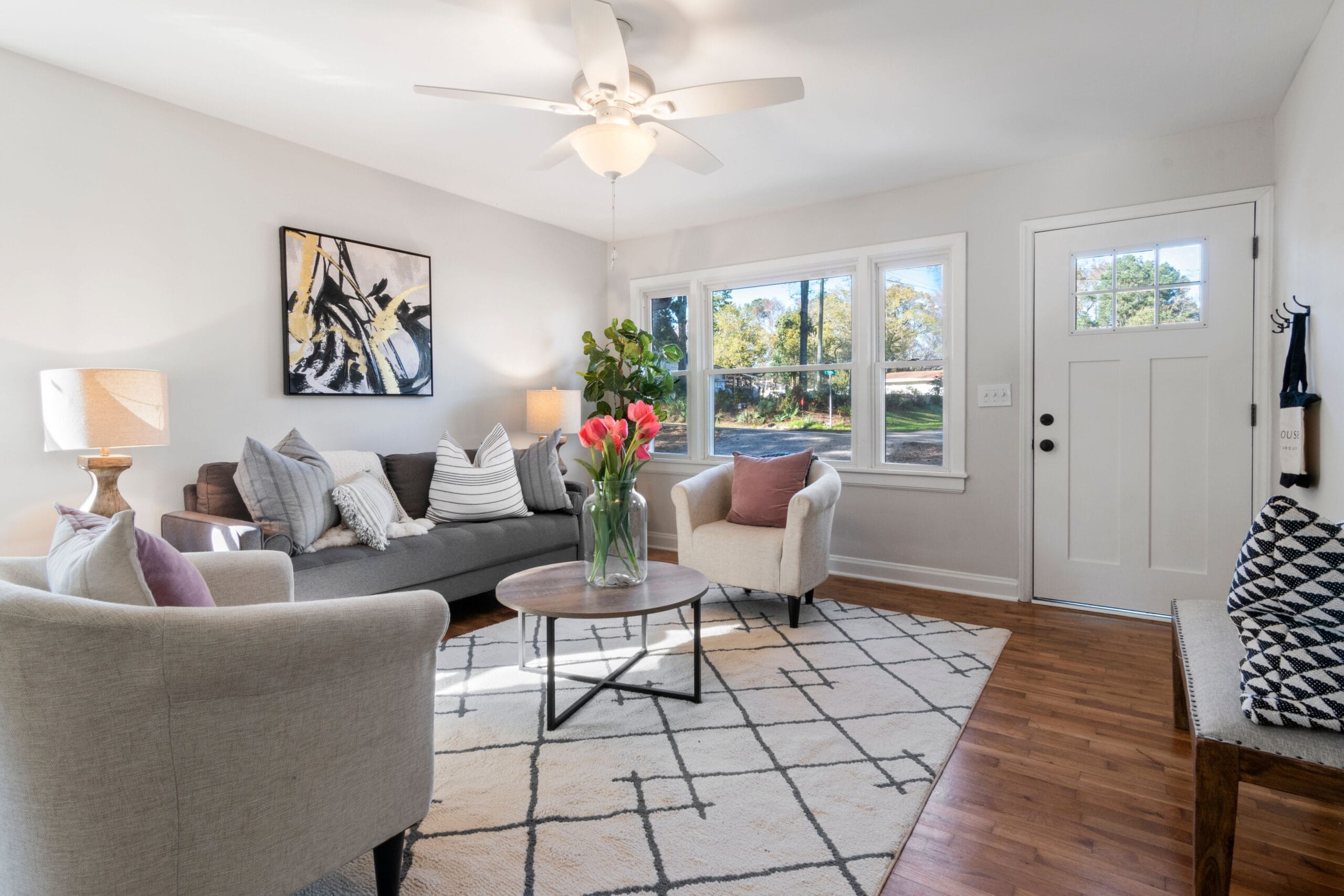
Making a living room look bigger starts with opening up the floor, choosing furniture that fits the room, using lighter colors, and bringing in more visual depth with mirrors and thoughtful lighting. These simple changes can make a noticeable difference without construction or expensive upgrades. When learning how to make a living room look bigger, focus first on removing visual obstacles and improving the way light and space move through the room.
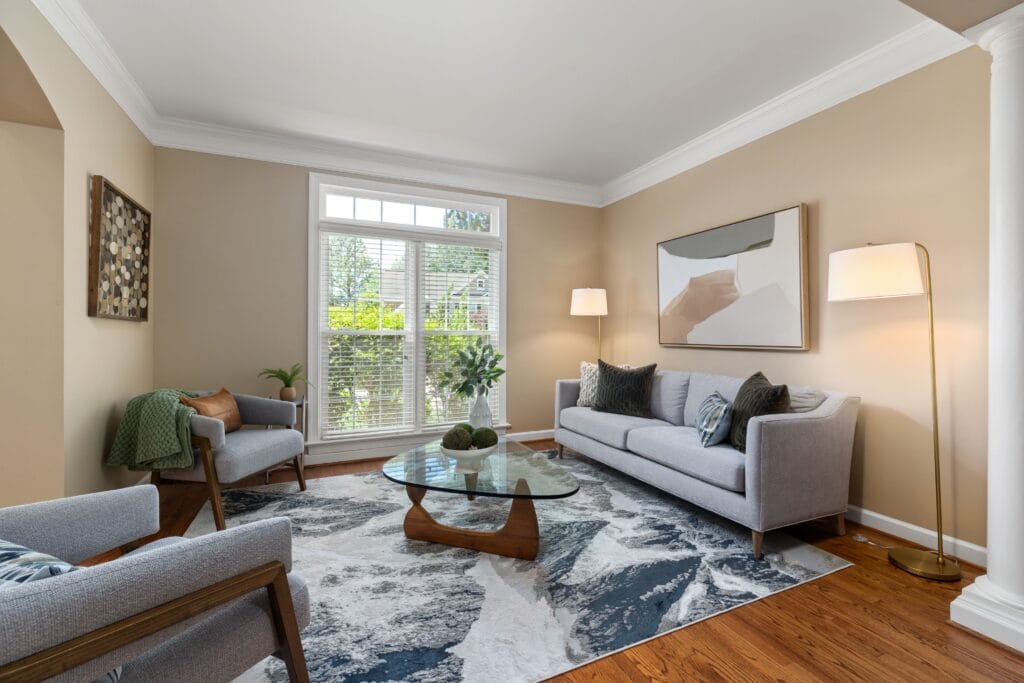
You do not need to knock down walls to make a compact living room feel more spacious. Furniture placement, rug size, window treatments, storage, and even the amount of decoration on your shelves can influence how large the room appears. The goal is to create more visible floor and wall space while keeping the room comfortable and functional.
Choose Furniture That Fits
Oversized furniture can quickly make a living room feel cramped, even when the room itself has a reasonable amount of floor space. Choose a sofa that leaves comfortable walking paths and avoid filling the room with more seating than you actually need. Furniture with slim arms, raised legs, or a lighter visual profile can also create more visible floor space. Measure the room and the furniture before buying anything so every piece has enough breathing room.
Keep the Floor Open
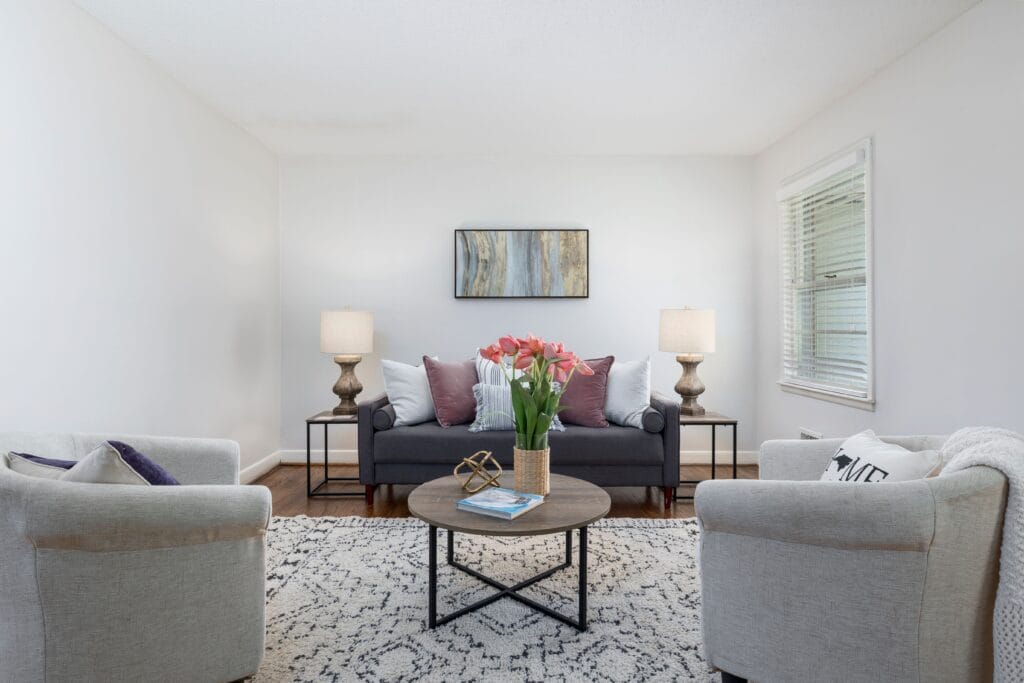
Visible floor space can make a room feel larger, so avoid placing unnecessary furniture and accessories in the main walking areas. Choose nesting tables, compact ottomans, or wall mounted storage when possible instead of bulky pieces that occupy the center of the room. A clear path between the main entrance and other areas of the home also makes the living room feel easier to navigate.
Pro Tip
Remove one piece of furniture that you rarely use and live with the room for a few days. You may find that the extra open space is more valuable than the furniture.
Use Light Colors
Lighter colors can help a living room feel brighter and more open by reflecting more available light. Warm white, cream, beige, soft gray, and other pale shades can work across walls, curtains, rugs, and larger furniture pieces. You can still use darker colors through artwork, cushions, lamps, or smaller accents. Keeping the largest surfaces lighter helps prevent the room from feeling visually enclosed.
Add a Large Mirror
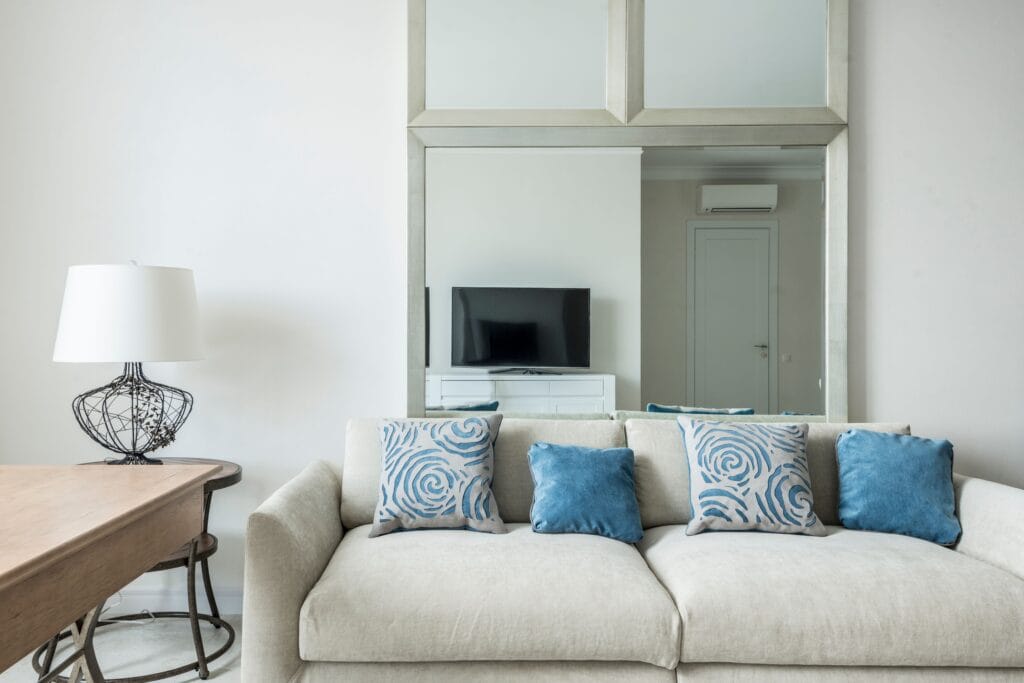
A large mirror can create the impression of more depth while reflecting natural and artificial light around the room. Place one opposite a window when possible to reflect daylight, or position it across from a lighter wall to create more visual openness. A single large mirror often works better than several small ones because it creates a stronger sense of space without adding visual clutter.
Use Curtains to Emphasize Height
Long curtains can make a living room feel taller by drawing the eye upward. Hang them closer to the ceiling rather than directly above the window frame, and let them fall near the floor. Lightweight fabrics in soft neutral shades help maintain an open appearance while adding texture. Keeping the curtains slightly wider than the window can also make the window feel more substantial and allow more natural light into the room when they are open.
Choose the Right Rug
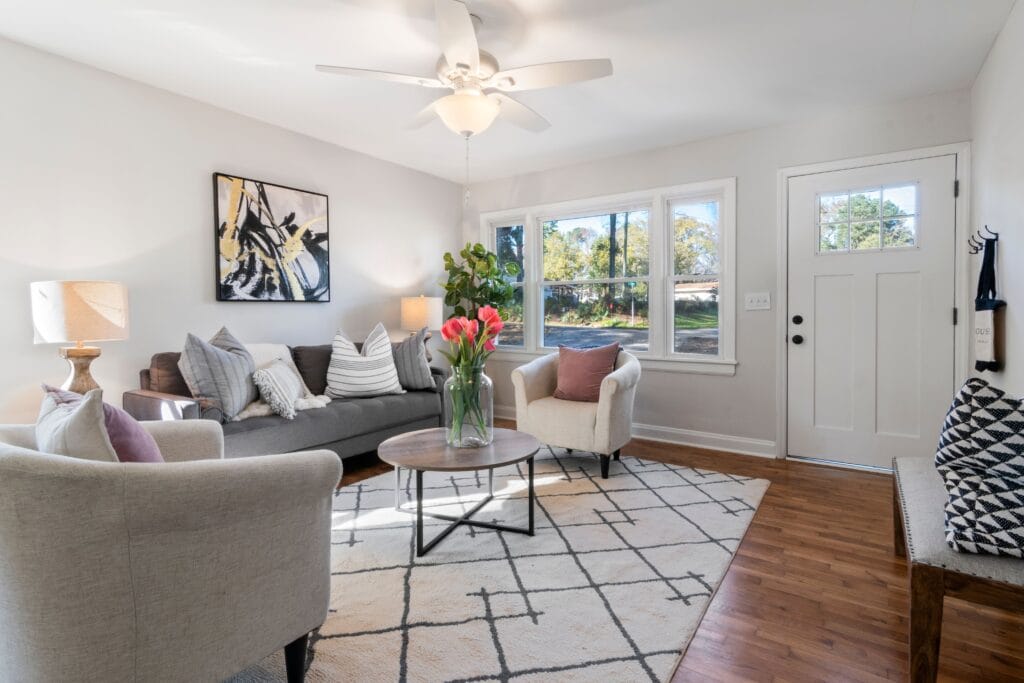
A properly sized rug can make the furniture feel connected and help define the seating area without breaking the room into small visual sections. Choose a rug large enough for at least the front legs of the main seating to rest on it. Very small rugs can make the furniture look disconnected, while a larger rug creates a stronger sense of continuity. Neutral colors and subtle textures can keep the room feeling open.
Quick Fix
Move a small rug out from directly under the coffee table and replace it with a larger rug that connects the sofa and chairs. The seating area can immediately feel more cohesive.
Use Vertical Storage
When floor space is limited, use the walls instead. Tall bookcases, floating shelves, wall mounted cabinets, and vertical storage units can provide useful space without taking over the floor. Keep the upper shelves relatively simple and use closed storage for everyday clutter. Drawing attention upward also helps emphasize ceiling height and can make the room feel taller.
Keep Décor Selective
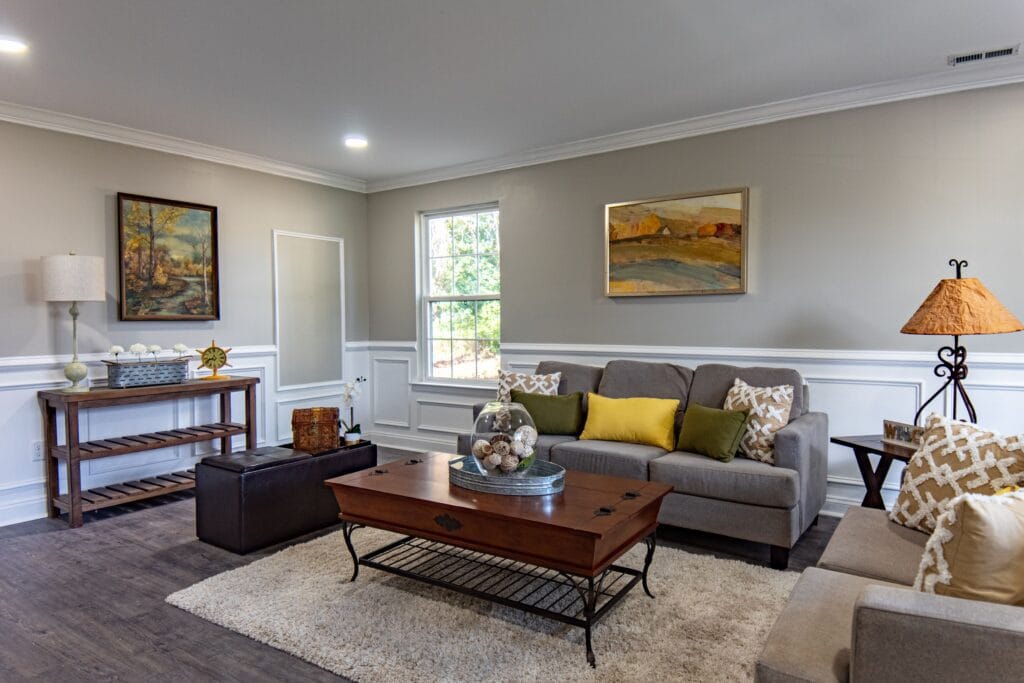
Too many accessories can make a living room feel smaller because every surface becomes visually busy. Choose a few larger or more meaningful pieces instead of covering shelves, tables, and walls with small objects. Leave some empty space around artwork and accessories so the room has visual breathing room. A simpler display allows the furniture, natural light, and open floor to become more noticeable.
Time Saver
Take a photo of the living room from the doorway. Looking at the room in a photograph makes crowded areas and unnecessary furniture much easier to spot.
Frequently Asked Questions
How can I make a small living room look bigger without remodeling?
Use appropriately sized furniture, keep walking paths clear, choose lighter colors, add a large mirror, use vertical storage, and avoid overcrowding surfaces with décor.
Does a mirror really make a living room look bigger?
A mirror can create the impression of additional depth and reflect light around the room. Positioning it thoughtfully can make the space feel brighter and more open.
Should a small living room have a large rug?
Usually, yes. A properly sized rug can connect the furniture and make the seating area feel more cohesive. A very small rug can make the room feel visually fragmented.
What color makes a living room look bigger?
Warm white, cream, beige, pale gray, and other light neutral shades can help reflect light and create a more open appearance.
Should furniture be against the walls?
Not always. Some pieces can sit slightly away from the walls if the room allows it. The main priority is maintaining clear walking paths and a comfortable furniture arrangement.
Bottom Line
Knowing how to make a living room look bigger is mostly about improving visual flow rather than changing the physical size of the room. Choose furniture that fits, keep the floor open, use light colors, add a well placed mirror, emphasize height with curtains, and use vertical storage to reduce pressure on the floor.
Small changes can make a surprising difference when they work together. A room with more visible floor, better light, fewer distractions, and properly scaled furniture will naturally feel more spacious without requiring any remodeling.