

Choosing the right shade of blue can make a bedroom feel calm, layered, and more interesting than a basic blue and white combination. Try softer shades such as dusty blue, blue gray, muted teal, slate, or deep navy, then balance them with warm white, cream, beige, natural wood, or earthy accents. These blue bedroom colors give you plenty of ways to create a bedroom that feels relaxed without relying on one predictable shade.
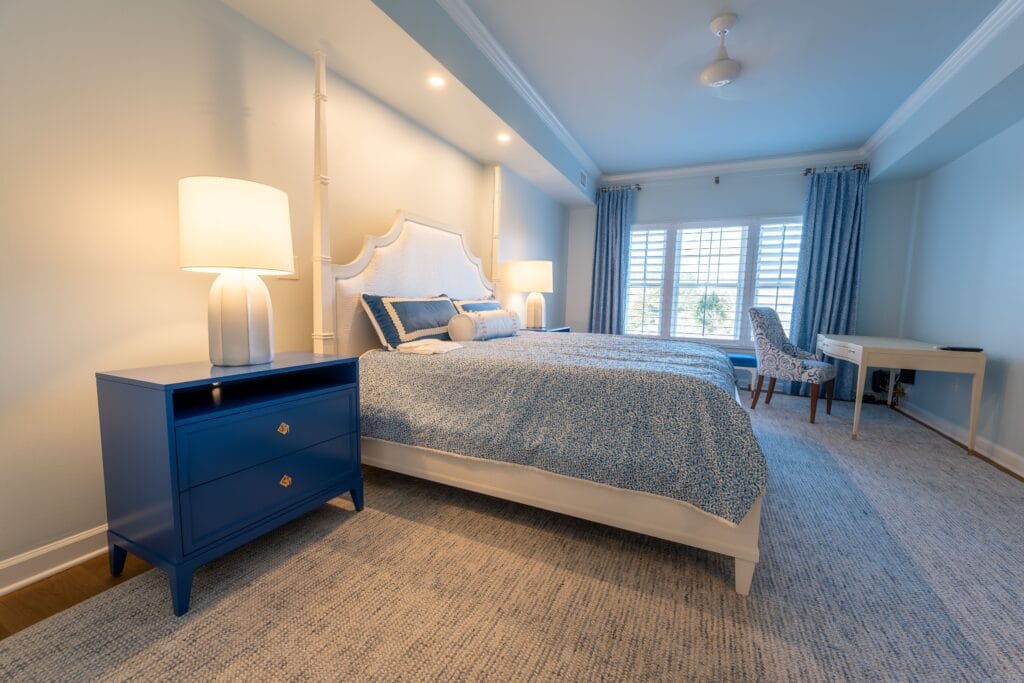
Blue is especially flexible because its appearance can change depending on its undertones and the amount of light in the room. A pale blue can feel airy during the day, while a deeper blue can create a more intimate atmosphere in the evening. The key is choosing a shade that works with the furniture, flooring, and natural light already in the bedroom.
Try Dusty Blue
Dusty blue is a softer alternative to brighter traditional blue and works well when you want color without making the bedroom feel intense. Its muted quality makes it easy to pair with cream bedding, light wood, beige rugs, and warm white walls. Use dusty blue on the walls for a subtle full room effect, or introduce it through bedding and curtains if you want to keep the walls neutral. The result feels relaxed while still giving the bedroom noticeable color.
Use Blue Gray
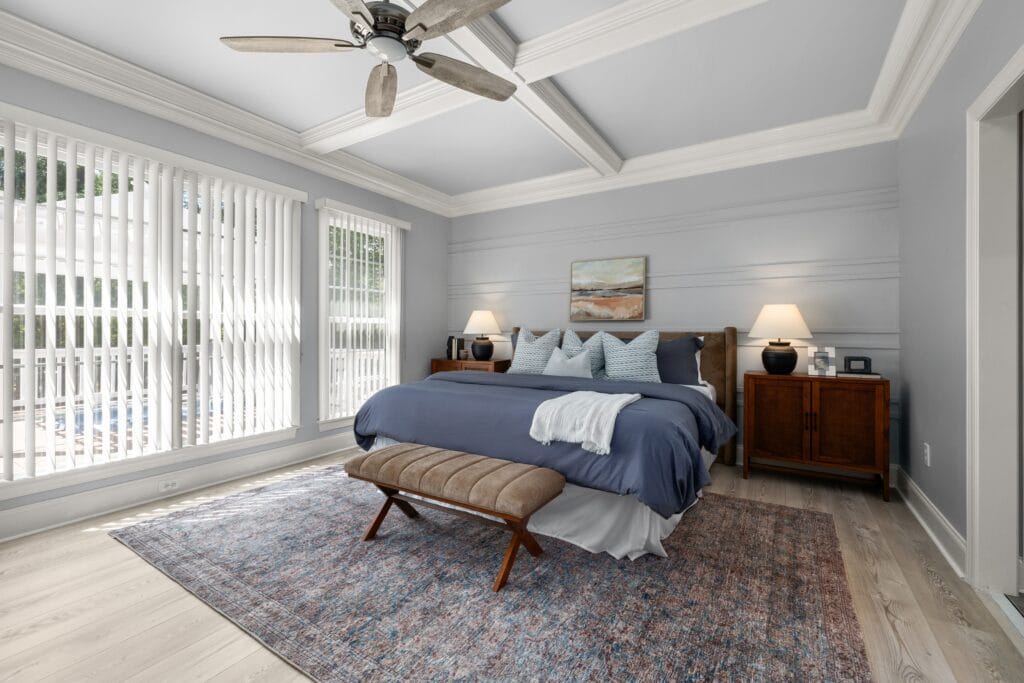
Blue gray is useful when you want the calming quality of blue with a more neutral appearance. Its gray undertones help it work with modern furniture, dark wood, white bedding, and soft neutral textiles. A lighter blue gray can make the bedroom feel open, while a deeper version can create a more atmospheric backdrop. Adding warm lighting and natural textures prevents the cooler color from feeling too stark.
Pro Tip
If your bedroom gets limited natural light, choose a blue gray with slightly warm undertones rather than an icy blue gray that could make the room feel colder.
Go Deeper With Navy
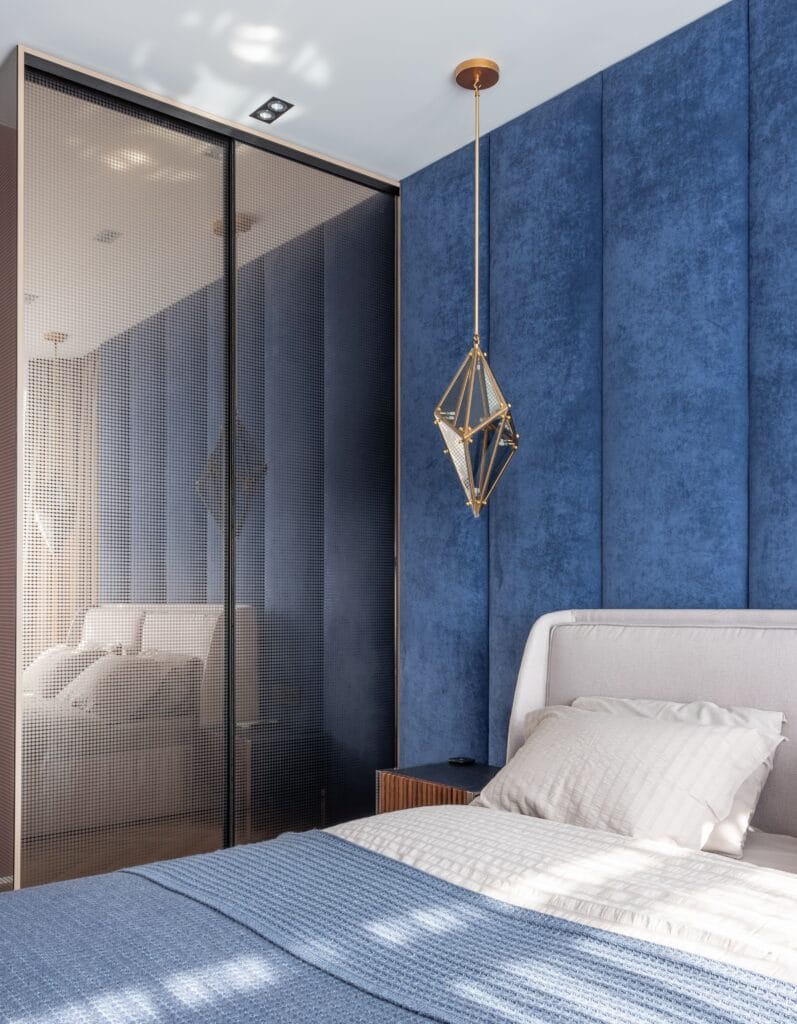
Navy can create a dramatic bedroom without relying on black or charcoal. Use it on an accent wall behind the bed, across all four walls in a well lit room, or through bedding and curtains if you want a smaller dose of the color. Balance navy with cream, warm white, light wood, brass, or tan so the room has enough contrast. Soft textiles are particularly helpful when using deep blue because they keep the darker palette from feeling too hard.
Add Muted Teal
Muted teal brings blue closer to green, creating a richer color that works particularly well with natural materials. Pair it with warm wood, cream, beige, woven textures, and earthy artwork for a relaxed bedroom. You can use teal on one wall, through an upholstered headboard, or in smaller textile accents. Keeping the rest of the palette relatively restrained allows the color to remain the main feature without overwhelming the room.
Layer Different Blue Shades
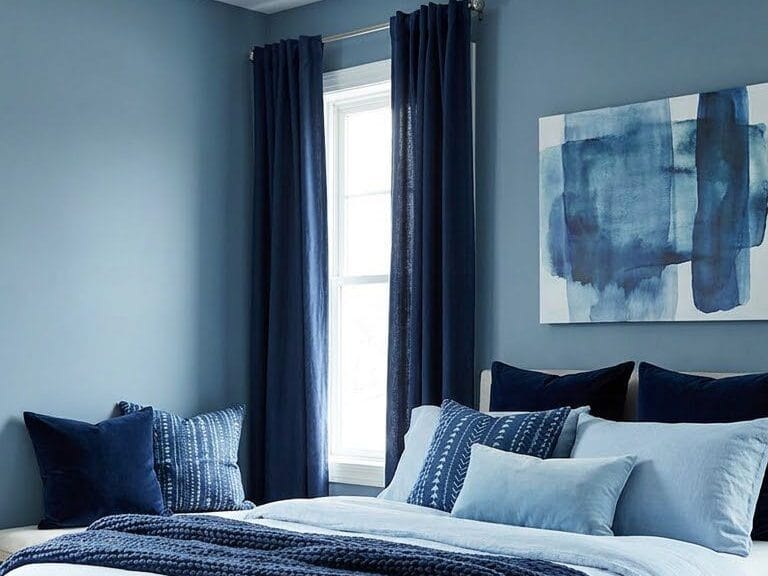
Using more than one blue can give a bedroom greater depth without requiring another dominant color. Start with one main shade for the walls or bedding, then introduce lighter or darker versions through pillows, throws, curtains, artwork, or a rug. For example, dusty blue walls can work with navy accents and pale blue bedding. Keeping the undertones compatible is important because too many unrelated blue shades can make the room feel disconnected.
Pair Blue With Warm Neutrals
Warm neutrals are one of the easiest ways to make blue feel more comfortable. Cream, beige, taupe, warm white, tan, and natural wood can soften cooler blue shades and create more balance. This combination works particularly well when you want a bedroom that feels calm without looking cold. Use blue as the main color and let warm neutrals appear through bedding, furniture, rugs, curtains, and accessories.
Try Blue With Terracotta
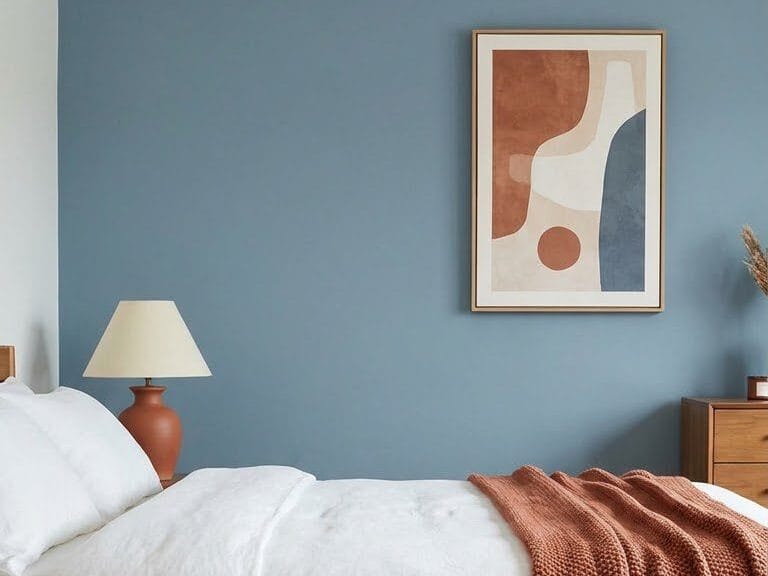
Terracotta can create an interesting contrast against blue because its warm earthy quality balances the cooler color. You do not need a large amount of terracotta to make the combination work. A throw blanket, ceramic lamp, artwork, cushion, or small rug can introduce enough warmth. Muted blue shades such as dusty blue, slate, and blue gray generally work better with terracotta than extremely bright blue.
Use Blue Through the Headboard and Bedding
If you like blue but do not want to paint the walls, make the bed the main place for the color. A blue upholstered headboard, duvet, quilt, or layered pillows can create a focal point while keeping the surrounding walls neutral. This approach also makes it easier to change the color later. Pair the blue bedding with cream or white sheets and a neutral rug to keep the bed from feeling too visually heavy.
Frequently Asked Questions
What is the most relaxing shade of blue for a bedroom?
Soft dusty blue, muted blue gray, and gentle slate shades can create a relaxed atmosphere without feeling overly bright. The best shade depends on the room’s natural light and existing colors.
What colors go well with blue in a bedroom?
Cream, warm white, beige, taupe, natural wood, terracotta, muted green, and soft brown can all work well with blue. The right combination depends on the specific blue and its undertones.
Is navy too dark for a bedroom?
Not necessarily. Navy can work well when balanced with lighter bedding, warm lighting, and contrasting furniture or textiles. It can also be limited to one accent wall if you do not want the entire room to feel dark.
Can I mix different shades of blue?
Yes. Combining light, medium, and deep blue shades can make the bedroom feel more layered. Keep their undertones compatible so the different shades feel connected.
What blue works best with dark wood furniture?
Dusty blue, muted teal, blue gray, and deeper navy can all complement dark wood. Warm white, cream, or beige textiles can help balance the darker elements.
Bottom Line
The most interesting blue bedroom colors go beyond basic blue. Dusty blue, blue gray, navy, muted teal, slate, and layered blue shades can each create a different atmosphere while remaining comfortable enough for a bedroom.
Start with one main blue, then balance it with warm neutrals, natural wood, soft textiles, or a small amount of an earthy accent color. This keeps the room from feeling predictable while giving the blue enough room to stand out.