

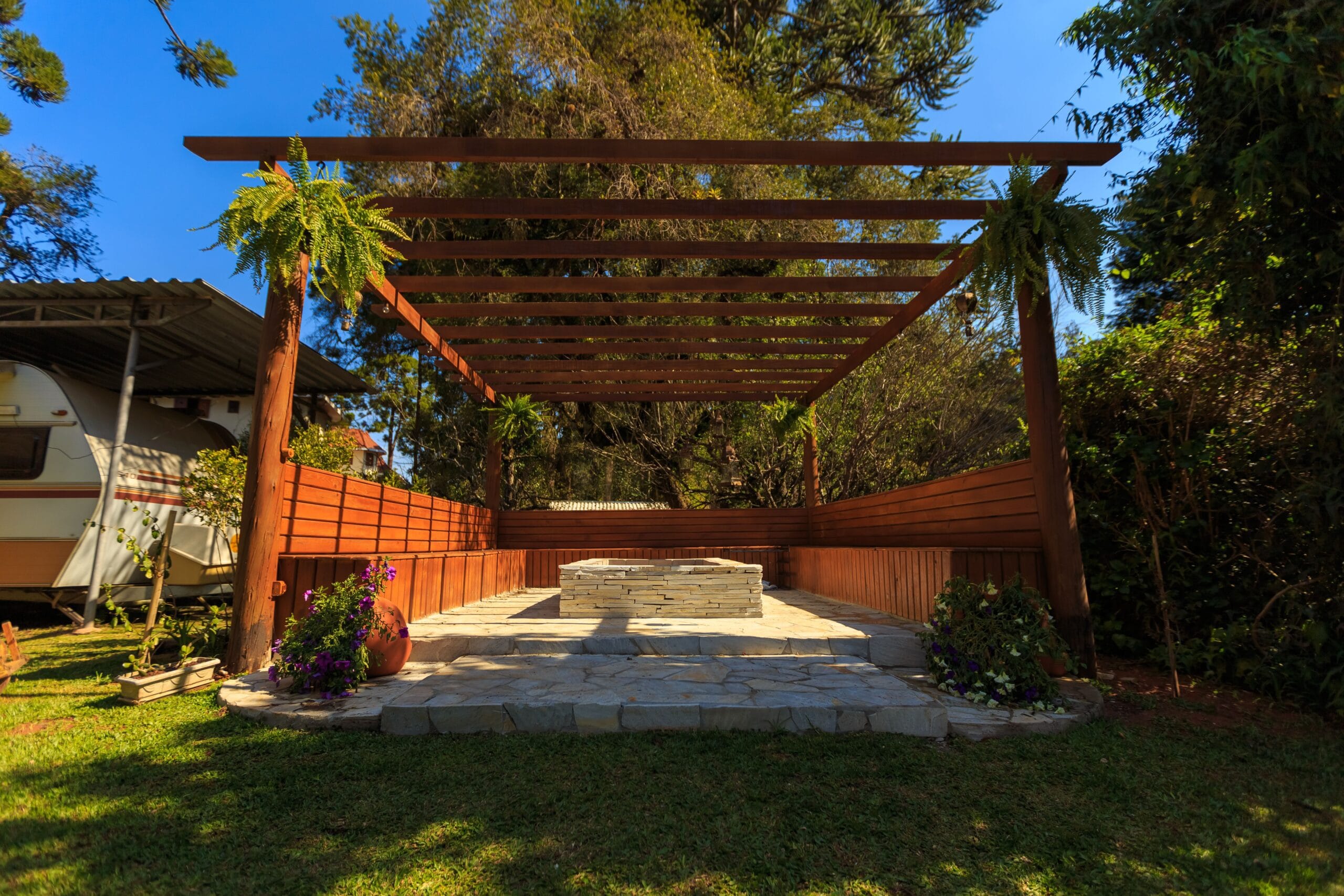
DIY pergola ideas can help you create a comfortable outdoor space without taking on an overly complicated building project. A pergola adds shade, defines seating areas, and gives your backyard a finished look while remaining achievable for beginners with basic tools and careful planning. Starting with a simple design allows you to build confidence while creating a feature you can enjoy for years.
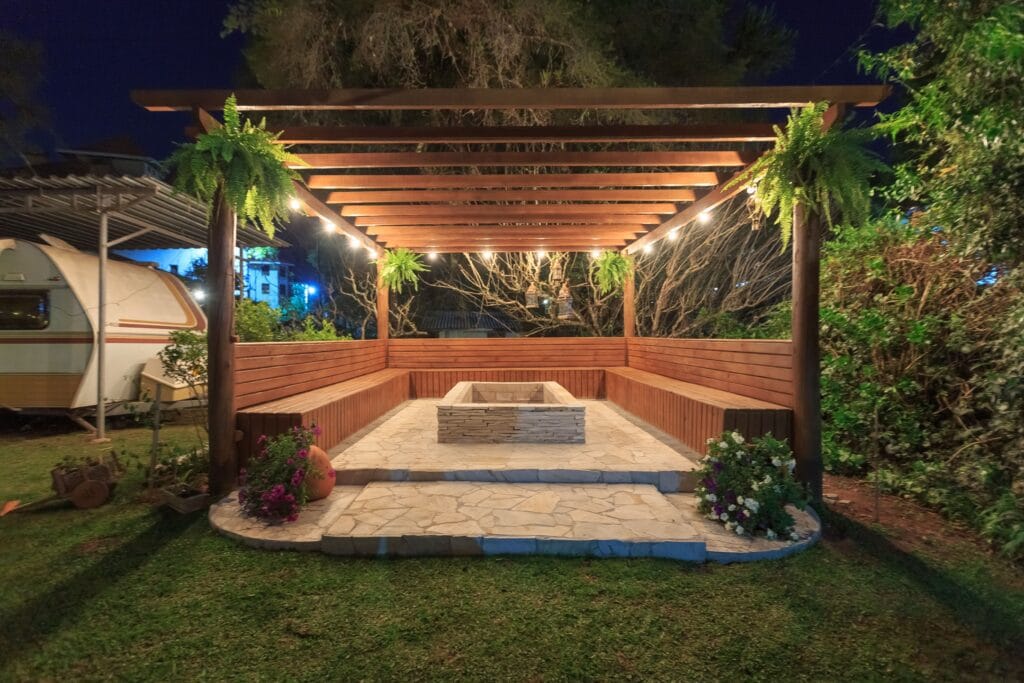
You do not need advanced carpentry skills to build an attractive pergola. By choosing straightforward designs, durable materials, and a realistic size, first time builders can complete a project that looks professional while staying within a manageable budget. The following ideas focus on practical builds that are both functional and beginner friendly.
Build a Simple Square Pergola
One of the easiest DIY pergola ideas is a basic square design supported by four posts and topped with evenly spaced rafters. The straightforward layout makes measuring, cutting, and assembly much easier than more decorative structures. A square pergola also works well over patios, gravel seating areas, outdoor dining spaces, or small decks because its balanced proportions suit almost any backyard. Once the main structure is complete, you can personalize it later with climbing plants, outdoor lighting, or curtains without changing the overall design.
Use Pressure Treated Lumber
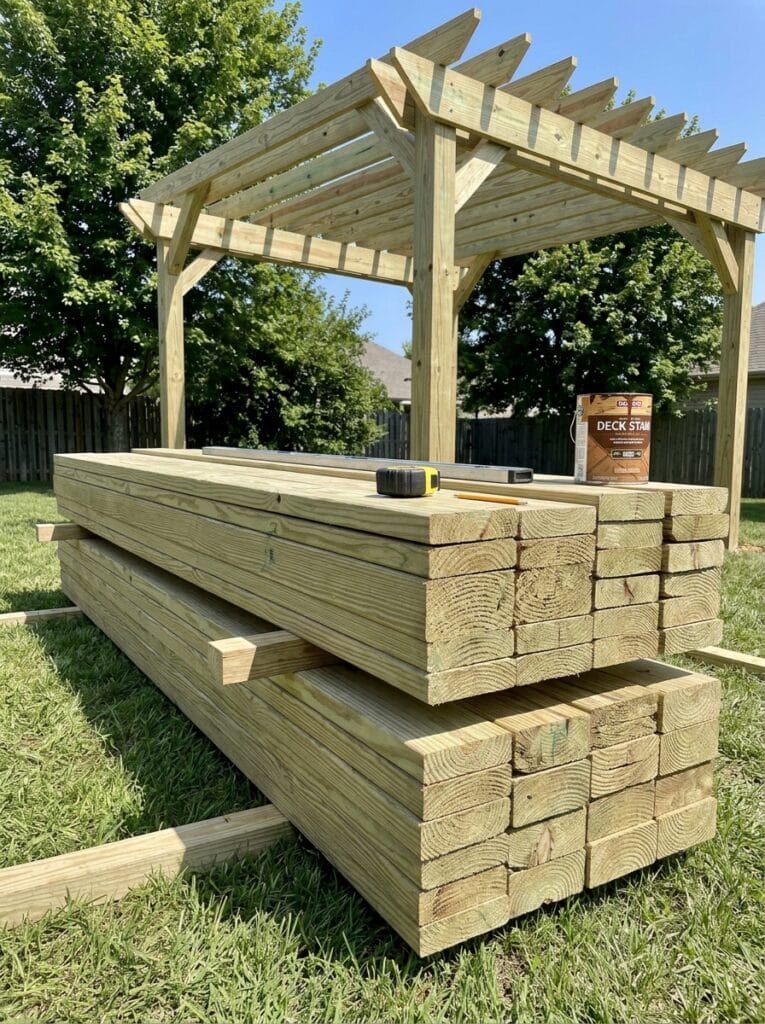
Pressure treated lumber is an excellent choice for first time builders because it is widely available, durable, and designed to withstand outdoor conditions. It is generally easier to work with than specialty hardwoods while providing a strong foundation for your pergola. After the wood has fully dried, you can paint or stain it to match your outdoor style. Starting with reliable materials helps reduce maintenance while ensuring the pergola remains sturdy through changing weather conditions.
Attach the Pergola to an Existing Patio
Building your pergola over an existing concrete patio, paver area, or deck can simplify the project because the base is already level and prepared. This eliminates the need for additional groundwork while creating an outdoor room that naturally extends your living space. Positioning the pergola above an existing patio also makes it easier to arrange outdoor furniture and define a comfortable gathering area without redesigning the entire backyard.
Pro Tip
Before purchasing materials, check local building regulations and permit requirements. Even smaller pergolas may have rules regarding size, height, or placement depending on where you live.
Add Decorative Rafters Later
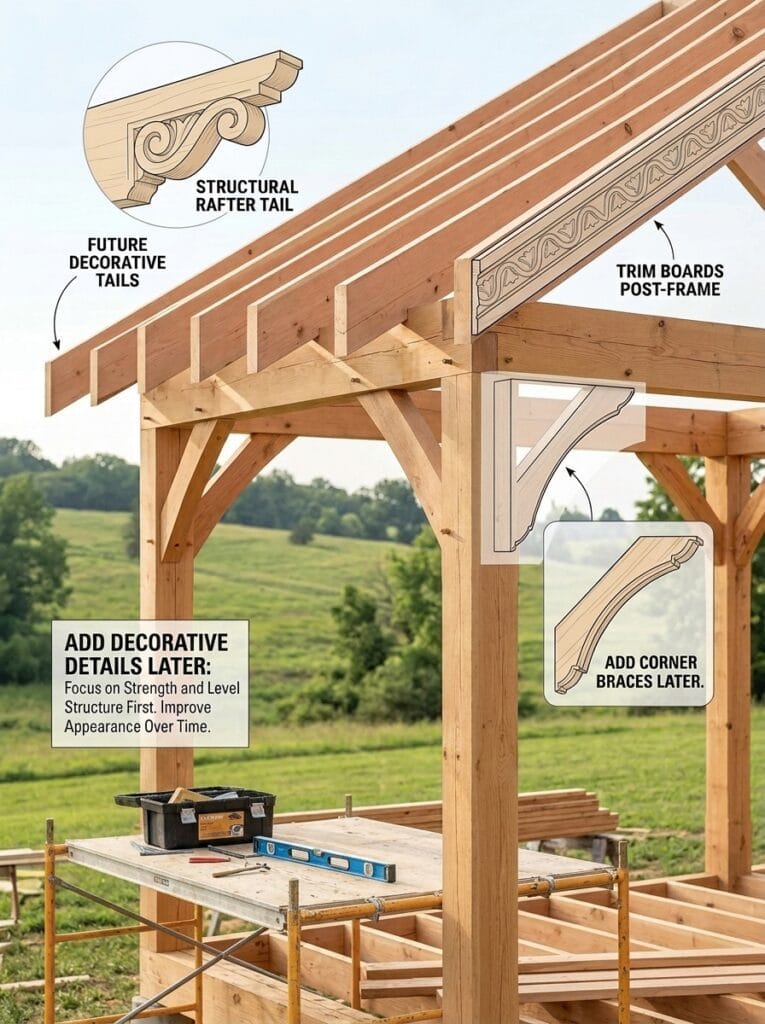
Many first time builders assume every decorative detail must be included from the beginning, but that is not necessary. Focus on completing a strong, level structure first, then add decorative rafter tails, trim boards, or corner braces after the main frame is finished. This approach keeps the initial build simpler while allowing you to improve the appearance over time as your confidence and woodworking skills grow.
Keep the Design Proportional
A pergola should complement your backyard instead of dominating it. Choosing a size that fits comfortably within the available space leaves room for landscaping, pathways, and outdoor furniture. Measure carefully before construction begins and imagine how people will move around the finished structure. A well proportioned pergola not only looks better but also creates a more comfortable outdoor area for relaxing and entertaining.
Builder Tip
Lay out the pergola footprint with stakes and string before digging post holes. Seeing the full size on the ground makes it much easier to adjust the design before construction begins.
Create Shade With Climbing Plants
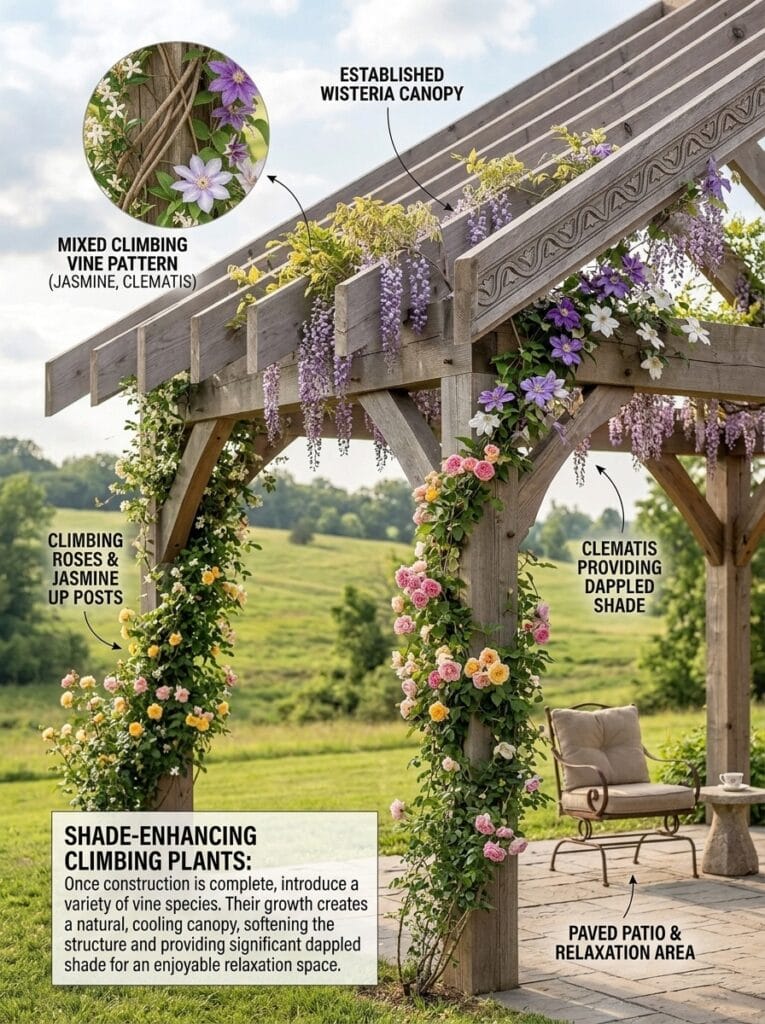
Once the structure is complete, climbing plants can make your DIY pergola ideas feel more natural while providing additional shade during warmer months. Vines such as jasmine, wisteria, climbing roses, grapevines, or clematis gradually cover the rafters and soften the appearance of the wood. If you prefer a lower maintenance option, outdoor shade fabric or retractable canopies can provide similar comfort without waiting for plants to mature. Either approach helps make the pergola a more enjoyable place to relax throughout the year.
Add Simple Outdoor Lighting
Lighting allows a pergola to remain useful after sunset while creating a warm atmosphere for outdoor gatherings. String lights, wall mounted lanterns, or solar powered lights are all beginner friendly additions that require very little installation. Position the lights to highlight the structure rather than overpower it, allowing the pergola to become an inviting focal point in the backyard during the evening. Good lighting also improves safety by making pathways and seating areas easier to navigate after dark.
Pro Tip
Finish building the pergola before adding decorative features. Completing the structure first makes it easier to identify where lighting, curtains, or climbing plants will have the greatest impact.
Add Comfortable Seating
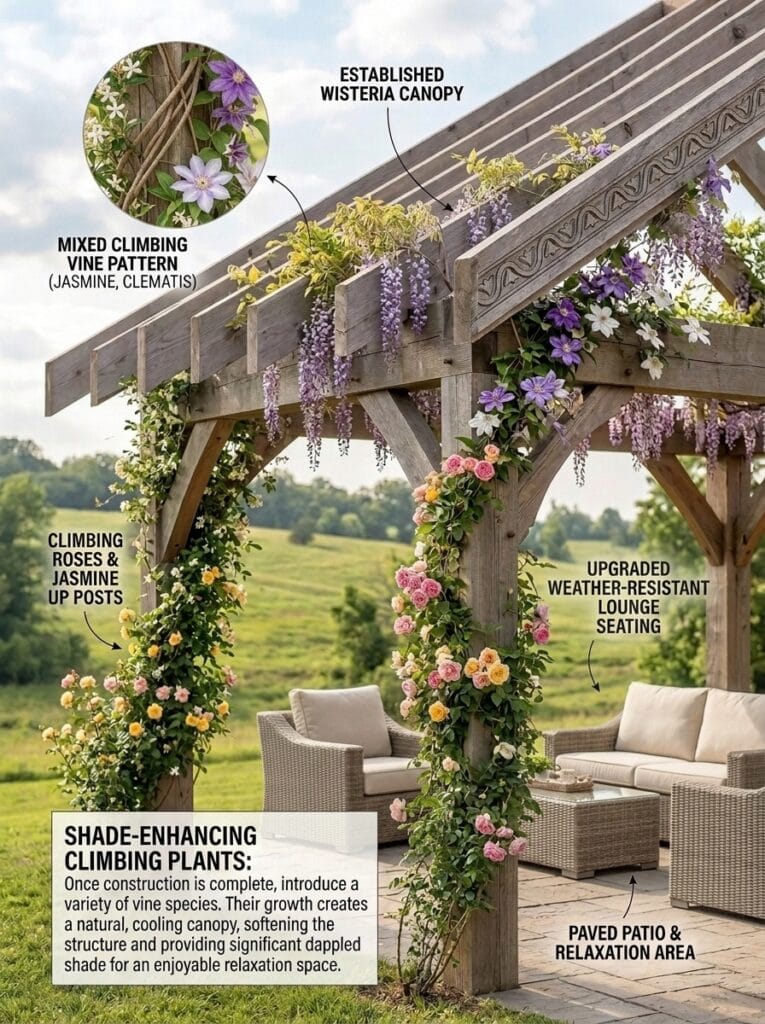
A pergola becomes much more useful when it includes furniture that encourages people to spend time outdoors. Depending on the available space, consider a dining table, outdoor sofa, lounge chairs, or a simple wooden bench. Choosing weather resistant furniture in neutral colors keeps the area looking timeless while allowing plants and landscaping to provide most of the visual interest. Keeping enough open space around the furniture also ensures the pergola remains comfortable to move through.
Finish With a Protective Stain or Paint
Applying a quality exterior stain or paint helps protect the wood from moisture, sunlight, and changing weather conditions while extending the life of the pergola. Transparent stains showcase the natural grain of the wood, while solid stains and paint offer more color options to match your home and landscaping. Regular maintenance every few years will keep the structure looking fresh while preventing unnecessary repairs in the future.
Builder Tip
Allow treated lumber to dry completely before staining or painting it. Applying a finish too early can prevent the wood from absorbing the product properly and may reduce its durability.
Frequently Asked Questions
What is the easiest pergola to build?
A simple four post square pergola is one of the easiest designs for beginners because it uses straightforward measurements, basic joinery, and readily available materials.
What wood is best for DIY pergola ideas?
Pressure treated lumber is a popular choice because it is durable, affordable, and easy to find. Cedar is another excellent option if you prefer a naturally weather resistant wood with a more refined appearance.
Can I build a pergola without professional experience?
Yes. Many DIY pergola ideas are suitable for first time builders when the design is kept simple, accurate measurements are taken, and quality materials are used throughout the project.
Do I need a permit to build a pergola?
Permit requirements vary depending on your location and the size of the structure. Check local building regulations before starting your project to determine whether approval is required.
Bottom Line
DIY pergola ideas do not have to be complicated to create a backyard that feels more comfortable and functional. A simple design, durable materials, careful planning, and a step by step approach allow first time builders to complete a project they can enjoy for many years.
Start with a manageable design, focus on building a strong structure, and add decorative features gradually as your confidence grows. With thoughtful planning and attention to detail, even a beginner can build a pergola that looks timeless and fits naturally into the surrounding landscape.