

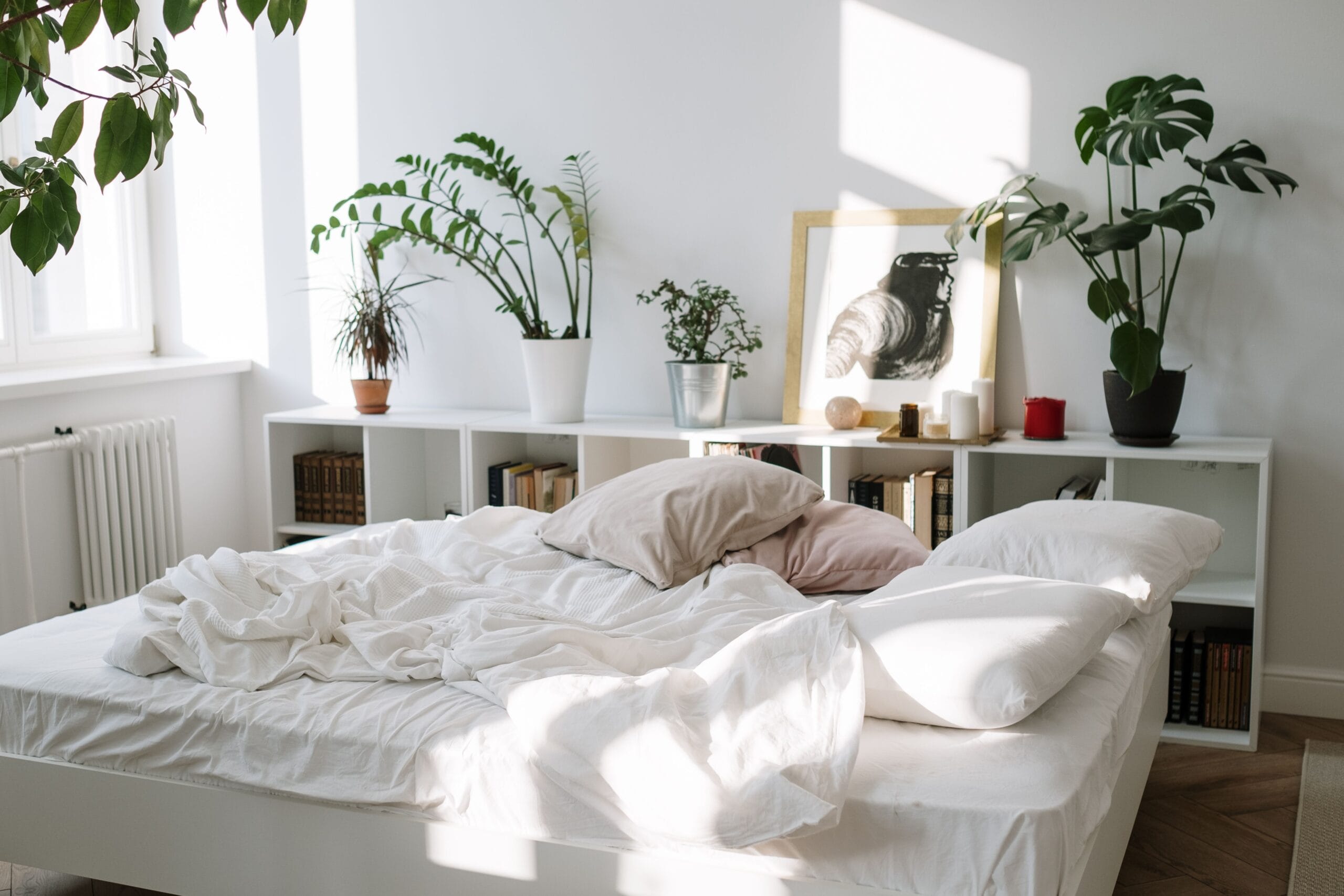
How to create a biophilic bedroom is about much more than adding a few houseplants. Biophilic design focuses on strengthening the connection between your home and nature by using natural materials, soft colors, organic textures, and plenty of natural light. The result is a bedroom that feels calmer, more relaxing, and more enjoyable to spend time in every day.
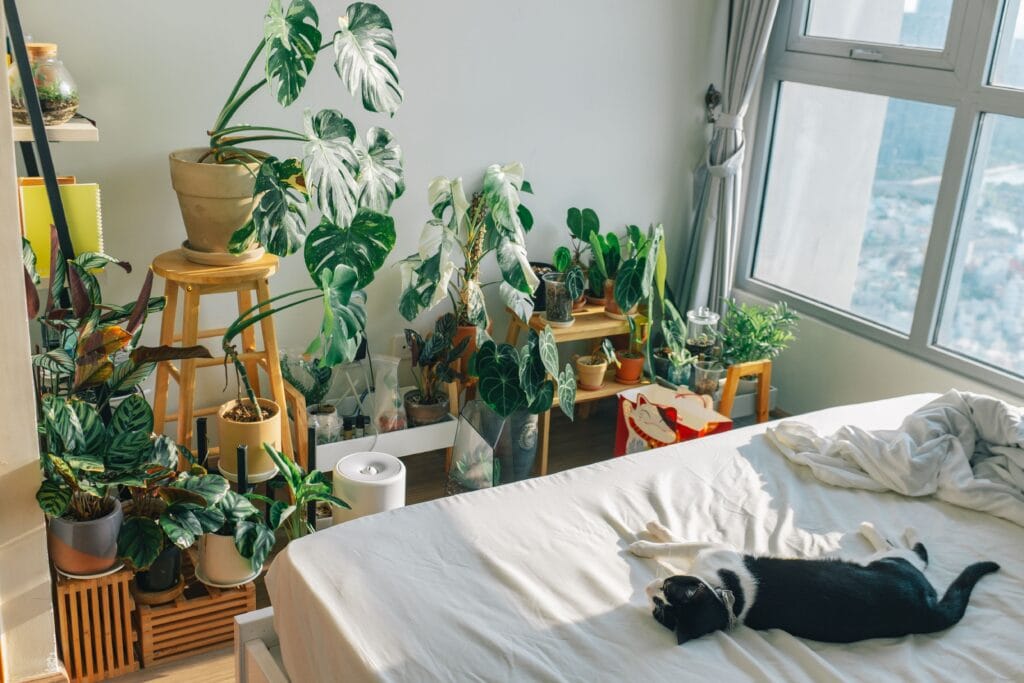
You do not need a complete renovation to embrace this design style. A few thoughtful changes can completely shift the atmosphere of your bedroom. By layering natural elements throughout the space, you can create a room that feels peaceful, balanced, and connected to the outdoors without sacrificing comfort or practicality.
Start With Natural Colors
A biophilic bedroom begins with colors inspired by nature. Soft greens, warm whites, earthy browns, muted beige, gentle gray, and sandy tones create a calm foundation that feels relaxing instead of overwhelming. Rather than using strong contrast, allow the colors to blend naturally so the room feels cohesive. Keeping larger surfaces such as walls, bedding, and rugs within the same natural color family makes it easier to introduce wood, plants, and textured fabrics later without creating visual clutter.
Bring Real Plants Into the Room
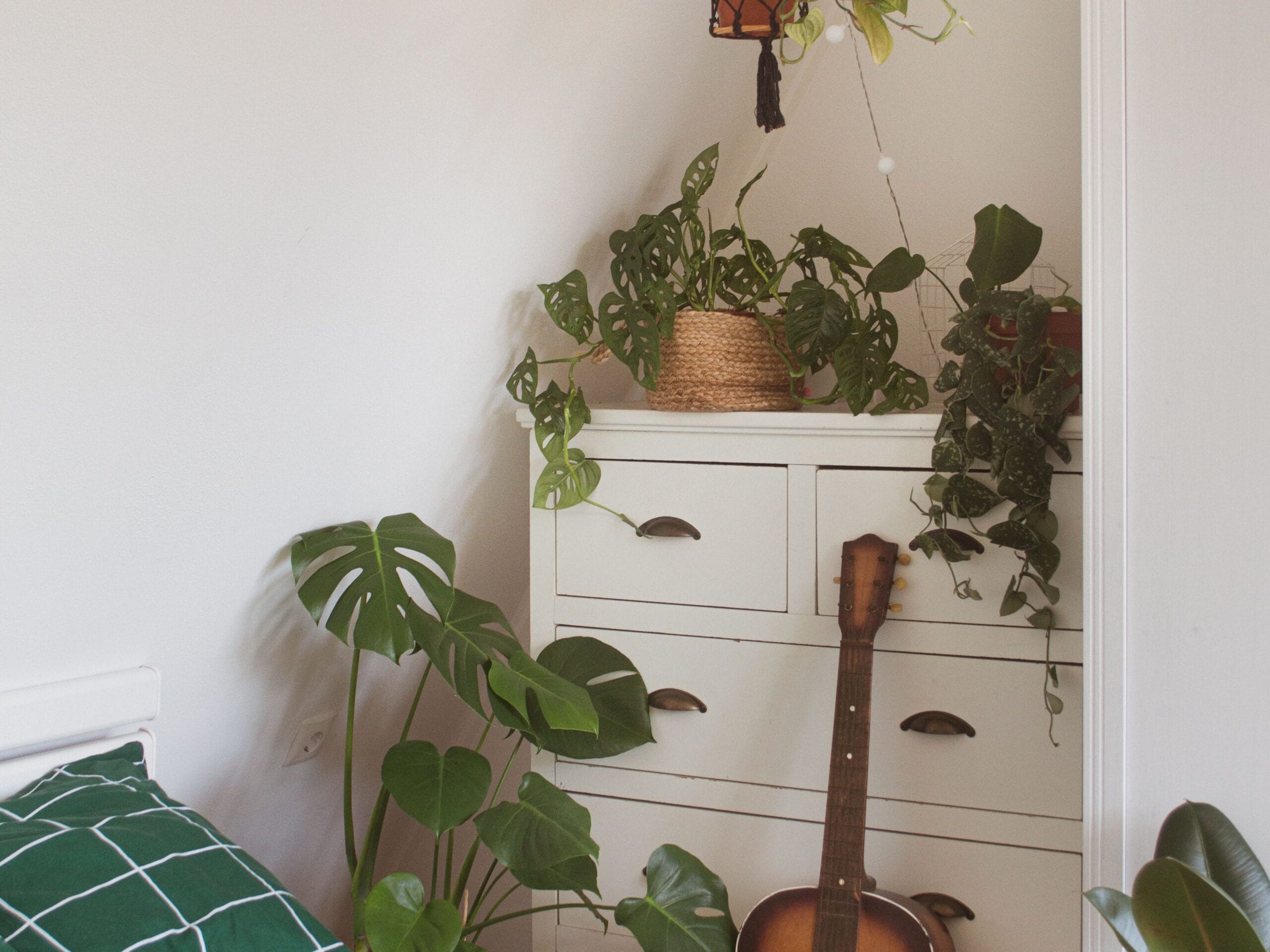
Living plants are one of the most recognizable features of biophilic design because they introduce color, texture, and a stronger connection to nature. Choose plants that suit the amount of natural light your bedroom receives and group them throughout the room instead of placing them all in one corner. Even two or three healthy plants can soften the space and make it feel noticeably more inviting. If maintaining live plants is difficult, start with one low maintenance variety before gradually adding more.
Choose Natural Materials
Natural materials help create the warmth that defines a biophilic bedroom. Wood furniture, linen bedding, cotton throws, woven baskets, ceramic planters, and stone accessories all add texture while reinforcing the connection to the outdoors. Combining different materials creates depth without relying on bold colors or excessive decoration. Over time, these materials also develop character, making the room feel more comfortable and lived in.
Pro Tip
Choose natural materials whenever possible instead of glossy plastic finishes. Wood, linen, cotton, and stone create a softer atmosphere that complements biophilic design.
Maximize Natural Light
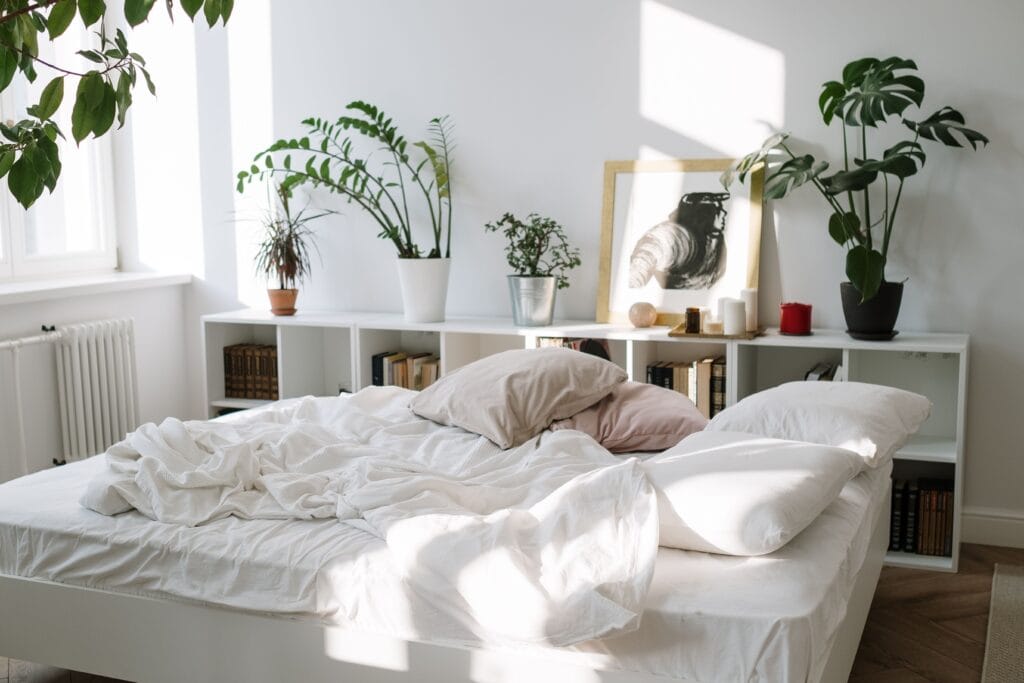
Natural light is one of the most important elements of biophilic design. Keep windows as open as possible during the day, choose lightweight curtains that filter sunlight, and avoid blocking windows with oversized furniture. If your bedroom receives limited daylight, use warm lighting in the evening to maintain a comfortable atmosphere that feels closer to natural light than harsh white bulbs.
Add Organic Shapes and Textures
Nature rarely follows perfectly straight lines, and your bedroom does not have to either. Rounded mirrors, woven rugs, textured pottery, curved furniture, and handmade decorative pieces introduce softer forms that make the room feel more relaxed. Mixing these organic shapes with natural fabrics and greenery creates a layered look that feels welcoming without becoming overly decorative.
Quick Fix
Remove plastic decorations and replace one or two of them with natural materials such as wood, woven baskets, ceramic accessories, or indoor plants. Even a few small changes can noticeably shift the atmosphere of the room.
Create Layers With Natural Fabrics
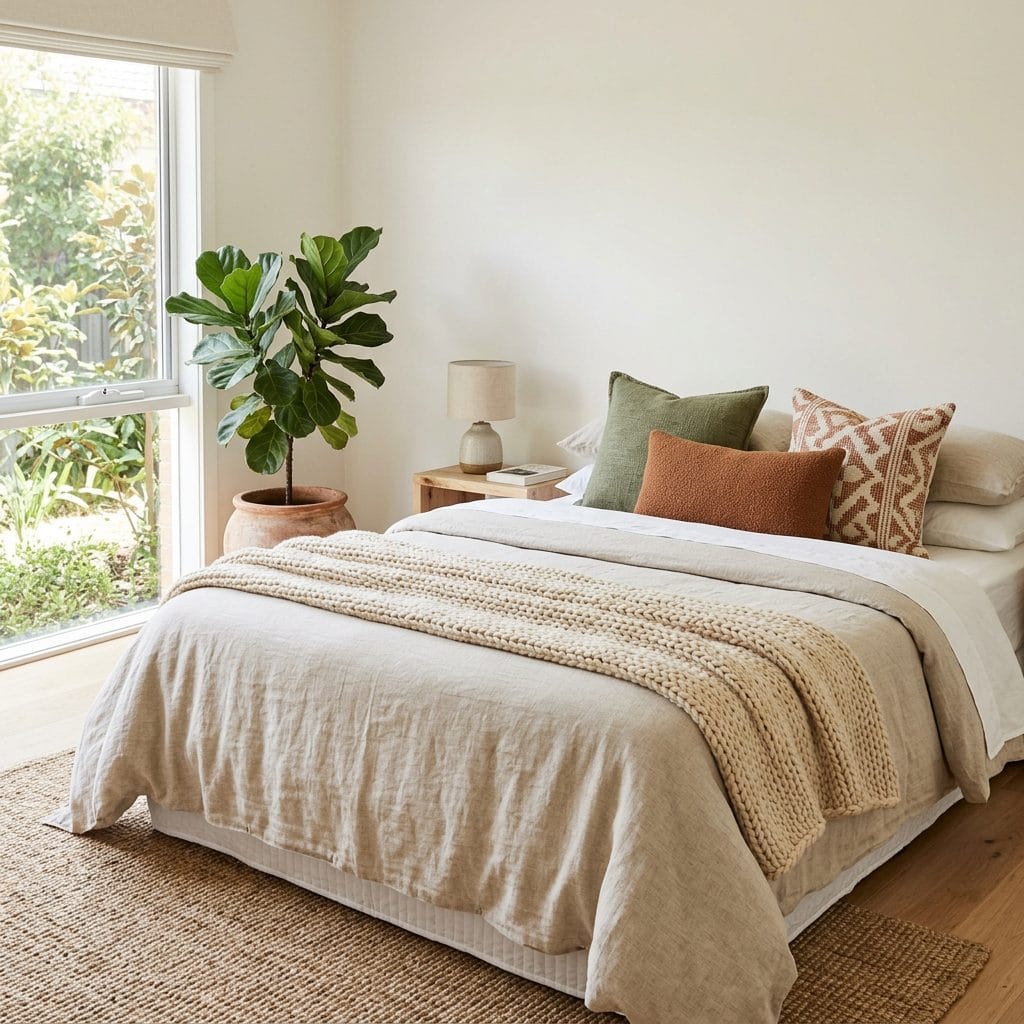
Soft, breathable fabrics help make a biophilic bedroom feel comfortable throughout the year. Linen bedding, cotton sheets, wool throws, and textured cushions create warmth without making the room feel heavy. Layering different natural fabrics also adds visual depth while keeping the overall design simple. Instead of filling the bed with dozens of decorative pillows, choose a few quality pieces in earthy tones that complement the rest of the room. The combination of natural materials and subtle textures creates a space that feels calm and inviting from the moment you walk in.
Reduce Visual Clutter
One of the easiest ways to strengthen the connection to nature is by removing unnecessary distractions. Clear bedside tables, organized shelves, and open floor space allow the natural materials and greenery to become the focus of the room. Decorative pieces should feel intentional rather than filling every available surface. A bedroom with less visual clutter often feels more peaceful, making it easier to relax, read, or unwind at the end of the day. Biophilic design is not about having more decorations. It is about giving the right elements enough space to stand out.
Pro Tip
Choose decorations that serve a purpose or have personal meaning. A smaller collection of thoughtful pieces creates a stronger connection to the space than filling every shelf with random accessories.
Bring Nature Into Your Décor
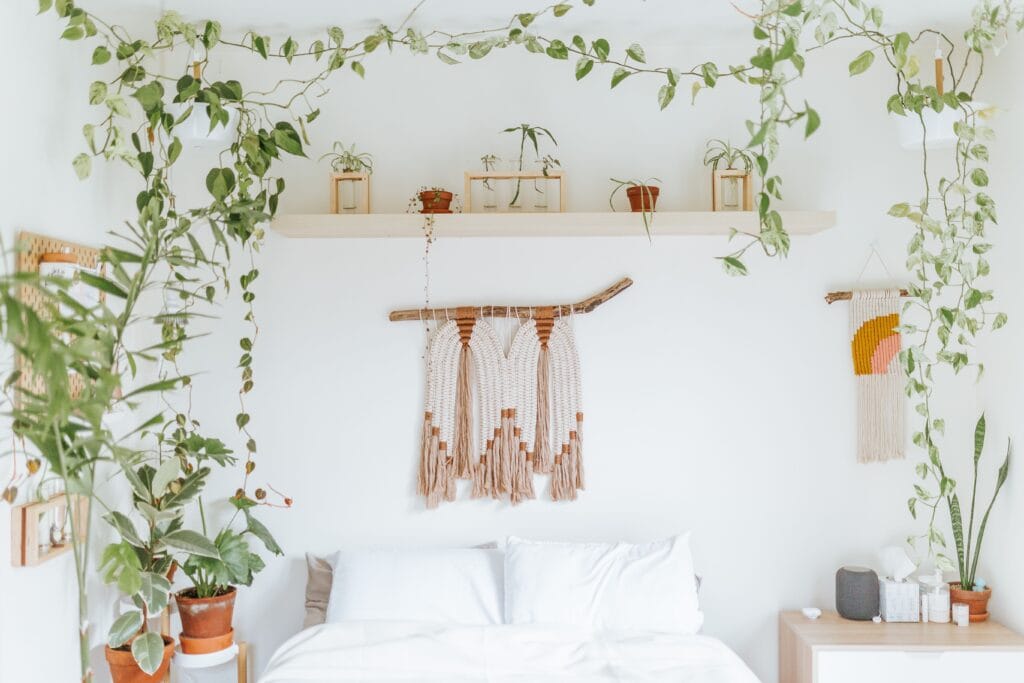
Artwork and decorative accessories can reinforce the natural theme without making the bedroom feel overly styled. Landscape paintings, botanical prints, handmade pottery, woven wall hangings, and wooden picture frames all complement a biophilic bedroom because they reflect materials and scenes found outdoors. These subtle details strengthen the overall design while allowing the room to feel personal instead of themed. Keeping the artwork within the same earthy color palette also helps maintain a calm and cohesive appearance.
Create a Relaxing Atmosphere
The final step in how to create a biophilic bedroom is focusing on how the room feels, not just how it looks. Soft lighting, comfortable bedding, natural scents, fresh air, and quiet surroundings all contribute to an environment that encourages rest. Opening the windows when possible, choosing warm lighting in the evening, and keeping the room organized help create a space that feels restorative every day. When every element works together, the bedroom becomes somewhere you genuinely enjoy spending time.
Quick Fix
Replace cool white light bulbs with warm white bulbs and keep the room free of unnecessary clutter. These two simple changes can make the bedroom feel noticeably warmer and more relaxing.c.
Frequently Asked Questions
What is a biophilic bedroom?
A biophilic bedroom is a space designed to strengthen the connection between people and nature through natural light, plants, organic materials, calming colors, and thoughtful layouts that promote comfort and wellbeing.
Do I need lots of plants for a biophilic bedroom?
No. A few healthy plants combined with natural materials, warm lighting, and earthy colors can create the same calming atmosphere without filling the room with greenery.
What colors work best in a biophilic bedroom?
Soft greens, warm white, beige, sand, earthy brown, muted gray, and other nature inspired tones create a relaxing foundation that suits biophilic design.
Can I create a biophilic bedroom on a budget?
Yes. Start with natural bedding, a few indoor plants, wooden décor, woven baskets, and better use of natural light. Small changes made over time can have a significant impact.
Bottom Line
Learning how to create a biophilic bedroom is about building a stronger connection with nature through thoughtful design rather than following decorating trends. Natural colors, layered textures, indoor plants, and quality materials work together to create a bedroom that feels peaceful, comfortable, and welcoming.
Begin with a few simple changes and build the room gradually. As natural elements become part of the space, your bedroom will feel calmer, more balanced, and somewhere you genuinely look forward to spending time every day.