

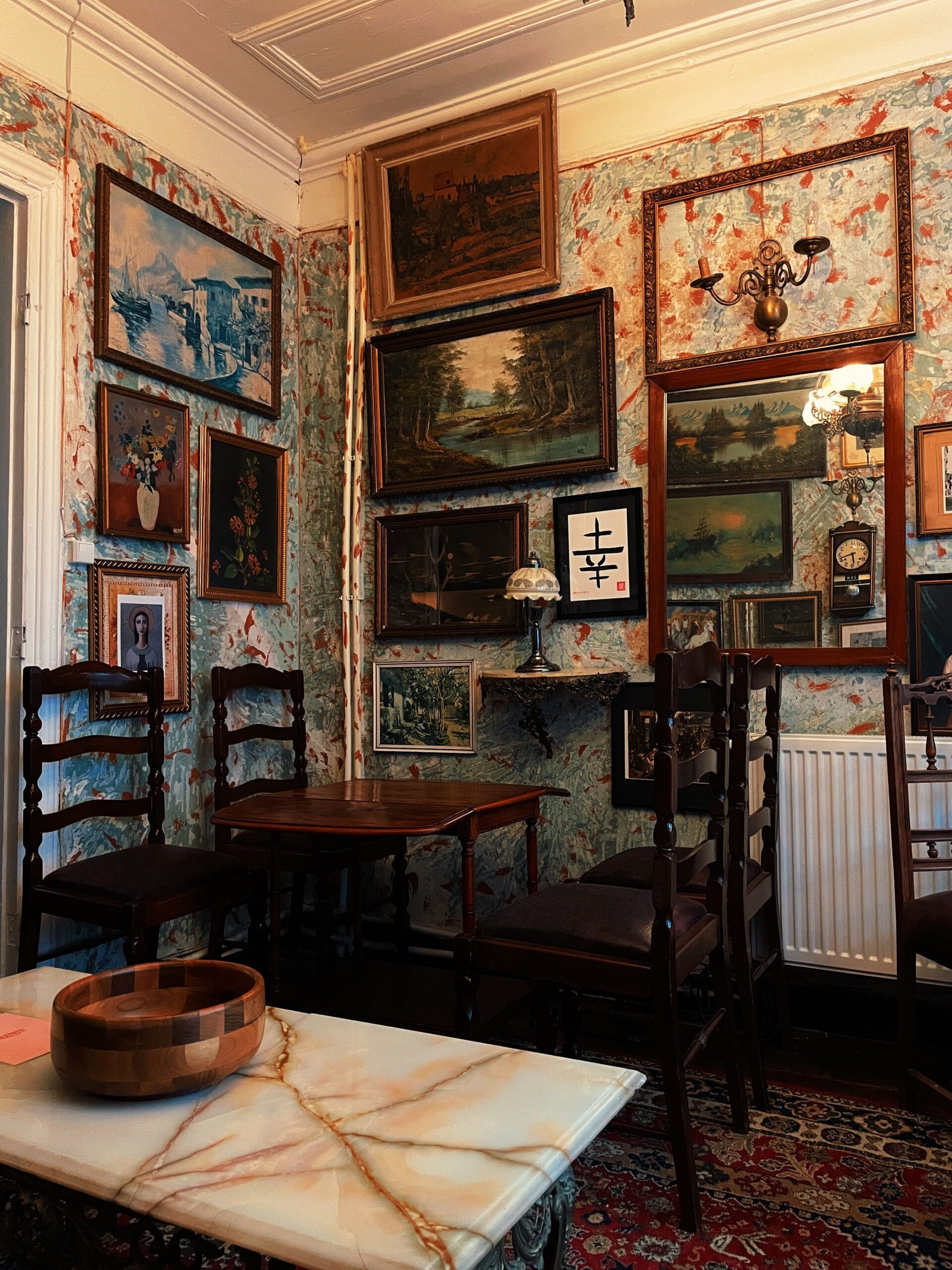
A cozy maximalist living room is filled with color, but it never feels chaotic. The secret is not using more colors than everyone else. It is choosing the right combination of shades and repeating them throughout the room in a balanced way. The most inviting maximalist interiors feel warm, layered, and personal because every color has a purpose instead of competing for attention.
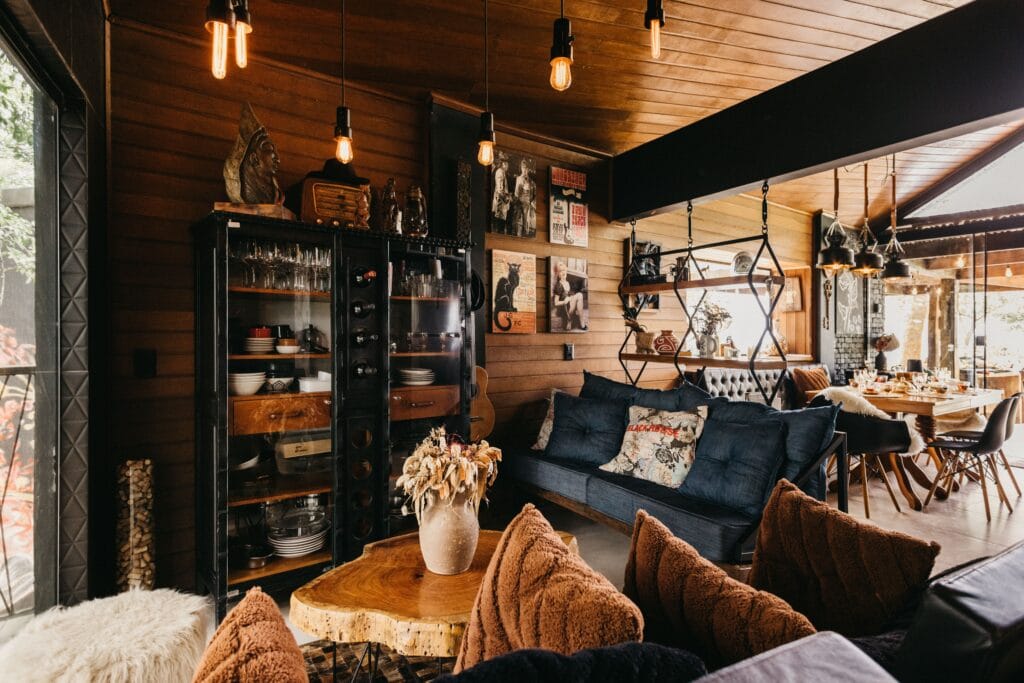
Instead of decorating with random bold pieces, think of your living room as a collection of color layers. Begin with calming foundation tones, introduce richer shades through furniture and fabrics, and finish with carefully chosen accent colors. This simple formula makes it easier to create a room that feels collected over time while remaining comfortable enough for everyday living.
Start With Warm Neutral Colors
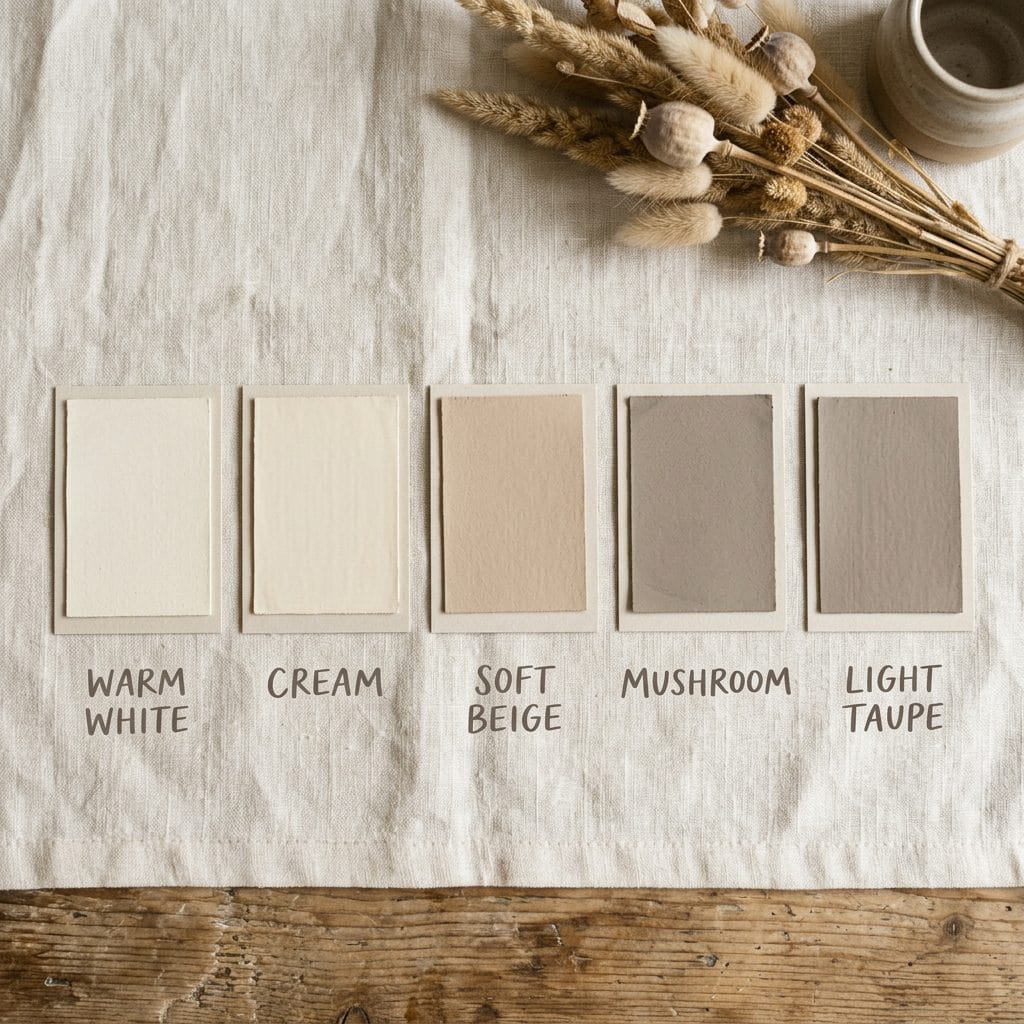
Every cozy maximalist living room benefits from a neutral foundation. Warm white, cream, soft beige, mushroom, and light taupe create a backdrop that allows richer colors to stand out without making the room feel dark or overwhelming. These shades work especially well on walls, larger furniture, curtains, and rugs because they bring balance to the space. Once the larger surfaces are neutral, it becomes much easier to introduce colorful artwork, patterned cushions, vintage furniture, and decorative accessories without making the room feel visually crowded.
Layer Rich Earth Tones
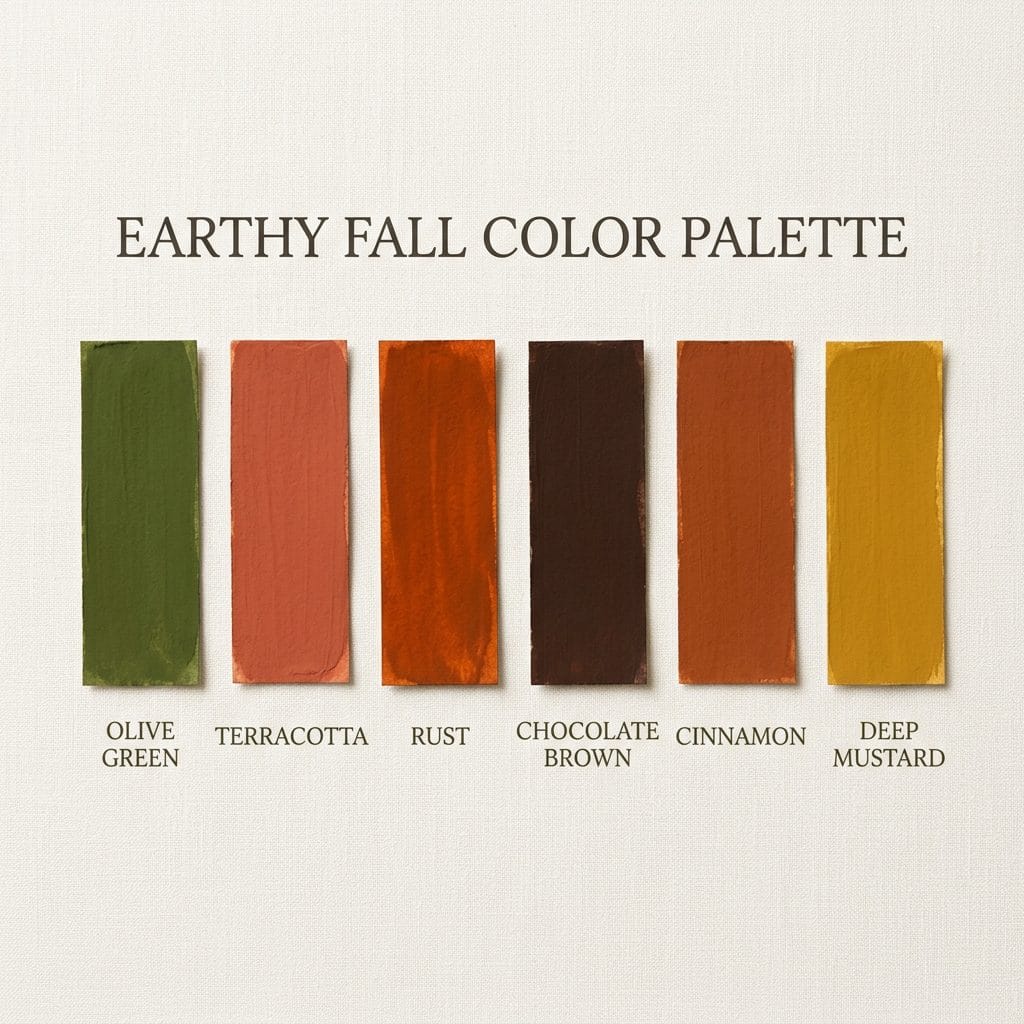
Earth inspired colors give a maximalist living room its warmth and character. Shades such as olive green, terracotta, rust, chocolate brown, cinnamon, and deep mustard create a welcoming atmosphere because they are naturally harmonious. Instead of placing all these colors in one area, repeat them throughout the room using cushions, throws, pottery, wooden furniture, and decorative accessories. This gradual layering helps the colors feel intentional while creating the comfortable lived in appearance that defines cozy maximalist interiors.
Add One or Two Statement Colors
A room filled with bold colors can quickly become overwhelming if every accent competes for attention. Choosing one or two statement colors such as emerald green, navy blue, plum, or deep teal creates a much stronger result. Repeat those shades through artwork, lamps, upholstery, books, and decorative objects so they appear naturally throughout the room. This repetition makes the color palette feel connected while still giving the living room plenty of personality.
Pro Tip
Repeat your main accent color in at least three different places around the room. This simple decorating technique helps the space feel balanced without looking overly coordinated.
Mix Different Textures
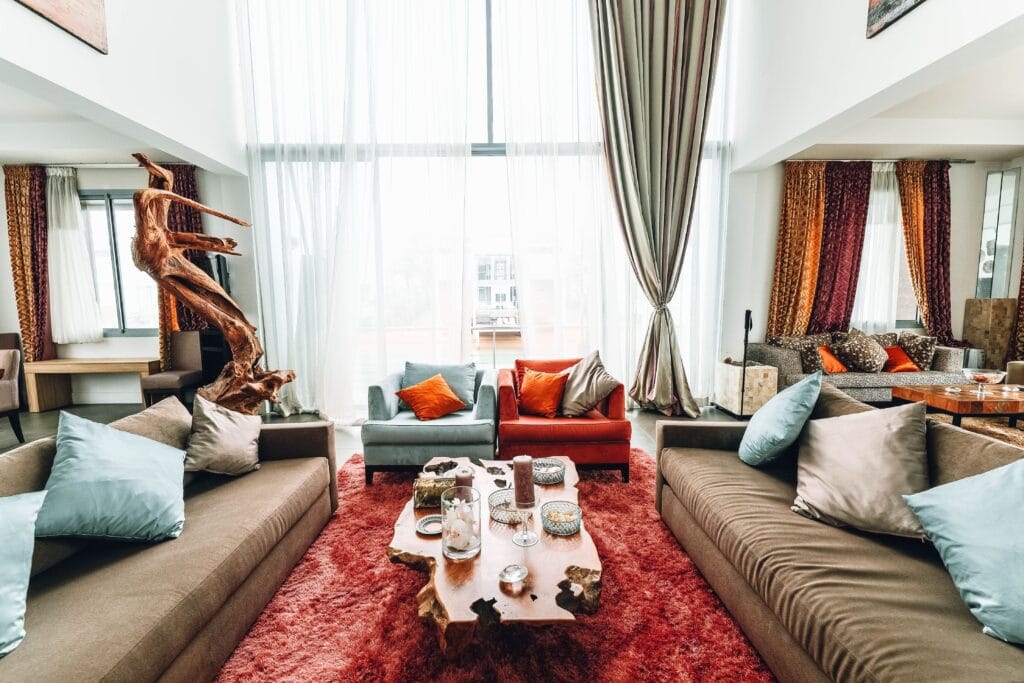
Texture is just as important as color in a cozy maximalist living room. Linen curtains, velvet cushions, wool throws, leather accents, woven baskets, ceramic vases, and natural wood furniture all reflect light differently, making the room feel richer and more layered. Even when using a fairly limited color palette, combining different materials prevents the space from looking flat and gives every corner more visual interest.
Use Dark Details for Contrast
Dark finishes help define a room and create contrast against lighter colors. Black picture frames, bronze lighting, dark stained wood, charcoal pottery, or iron hardware add depth without making the room feel heavy. These smaller details anchor the lighter colors and help decorative pieces stand out more clearly. When used sparingly, darker accents complete the color palette while keeping the overall atmosphere warm and inviting.
Quick Fix
If your living room feels too busy, remove one accent color instead of adding more decorations. A simpler color palette often creates a warmer and more cohesive space.
Balance Light and Dark Shades
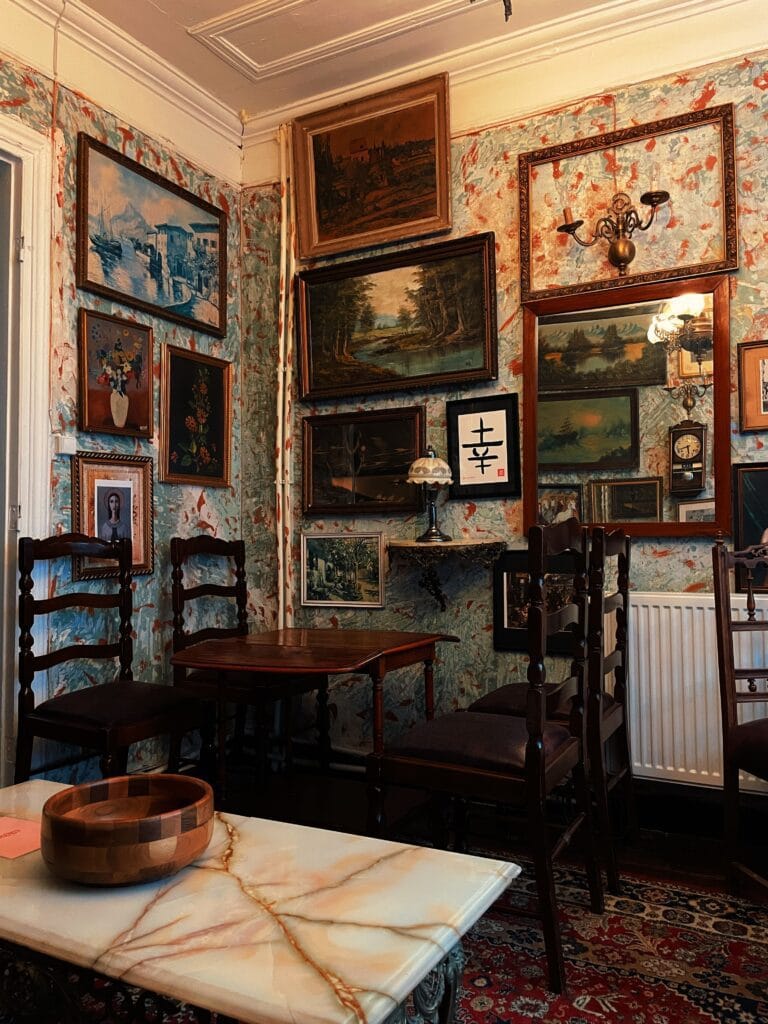
A successful cozy maximalist living room always balances lighter and darker colors instead of leaning too heavily toward one extreme. If most of your furniture is dark wood or deep upholstery, introduce lighter rugs, curtains, and cushions to brighten the room. If your walls and larger furniture are light, use darker artwork, lamps, and decorative accessories to add depth. This contrast keeps the space from feeling flat while making every layer of color stand out more naturally.
Bring Nature Into the Color Palette
Natural materials help reinforce the warmth of the room without introducing unnecessary colors. Green houseplants, wooden furniture, woven baskets, linen fabrics, stone accessories, and ceramic décor all add subtle variation while staying within the overall palette. These elements soften the room and create the comfortable, collected atmosphere that makes maximalist spaces feel welcoming rather than overwhelming. The goal is to let color and texture work together instead of relying on decorative accessories alone.
Pro Tip
When shopping for new décor, ask yourself whether it matches at least one of the main colors already in the room. Repeating familiar colors creates a stronger design than constantly introducing new ones.
Let Patterns Support the Color Scheme
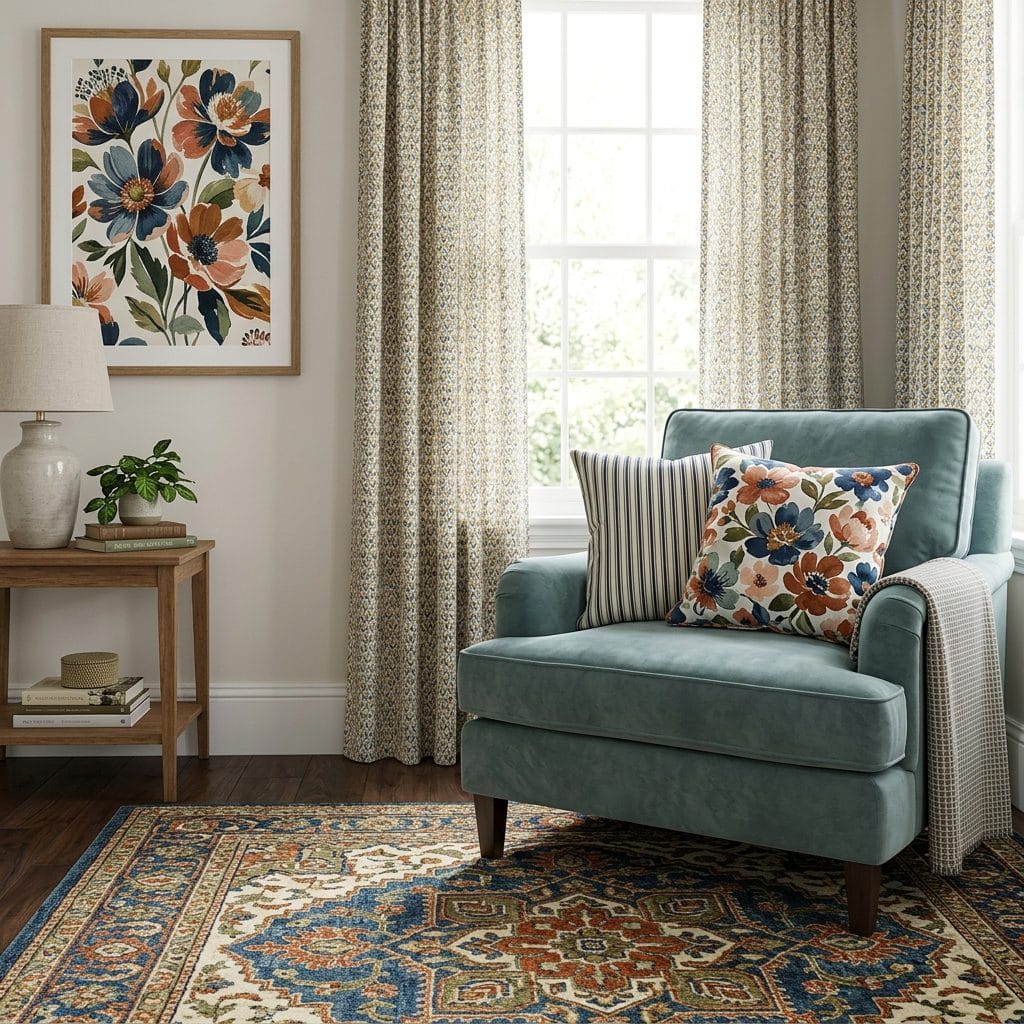
Patterns add personality, but they should reinforce your chosen colors instead of competing with them. Floral prints, traditional rugs, striped cushions, and patterned curtains can all work together when they share similar shades. Mixing different pattern sizes also creates balance, allowing larger prints to become focal points while smaller patterns provide texture without making the room feel crowded.
Finish With Small Decorative Details
The final layer of a cozy maximalist living room comes from carefully chosen accessories. Decorative books, framed artwork, candles, pottery, trays, and personal collections make the room feel lived in and unique. Rather than filling every shelf, leave a little open space between objects so each piece can be appreciated. This creates the rich, layered appearance associated with maximalist interiors while still keeping the room calm and comfortable.
Quick Fix
Place similar colored accessories in different parts of the room instead of grouping them all together. Spreading colors throughout the space makes the entire room feel more balanced and visually connected.
Frequently Asked Questions
What colors work best in a cozy maximalist living room?
Warm neutrals, olive green, terracotta, chocolate brown, rust, burgundy, deep navy, and muted jewel tones all work well together. Combining these colors with natural wood and layered textures creates a warm and inviting space.
Can a maximalist living room still feel cozy?
Yes. A cozy maximalist living room relies on a consistent color palette, layered textures, comfortable furniture, and thoughtful decorating instead of filling the room with random colors and accessories.
How many colors should a cozy maximalist living room have?
Most rooms feel balanced with one neutral foundation, two or three supporting colors, and one or two accent shades that are repeated throughout the space.
What materials suit a cozy maximalist style?
Natural wood, linen, velvet, leather, wool, woven baskets, ceramic pottery, and stone accessories all add texture while complementing the rich color palette.
Bottom Line
A cozy maximalist living room is not created by using every color you love. It comes from layering a small group of complementary colors, natural textures, and meaningful décor in a thoughtful way. When every shade is repeated throughout the room, the space feels collected, warm, and inviting instead of cluttered.
Start with a neutral foundation, introduce rich earth tones, add a few bold accents, and finish with layered textures that bring everything together. This simple color formula creates a living room that feels comfortable today and remains timeless for years to come.